How South India Turned Coffee Into Filter Kaapi
South Indian kitchens transformed a colonial crop into filter kaapi through generations of adaptation. The daily ritual blends Yemen's coffee beans, local ingenuity, and a distinctive steel filter into something entirely their own.
The soft clink of steel against steel announces morning in millions of South Indian homes, where the slow drip of coffee decoction marks the start of every day. What looks like a simple ritual is actually the story of how ordinary kitchens turned a global commodity into something distinctly their own.
The journey started in the 17th century when Baba Budan reportedly brought coffee beans from Yemen to the Chikmagalur hills. The region grew into a major coffee belt producing Arabica, but growing beans didn't create a drinking culture.
Under colonial rule, coffee became a plantation crop traded across ports and consumed by Europeans who brewed it black. South Indian households took one look at this imported habit and decided to do something completely different.
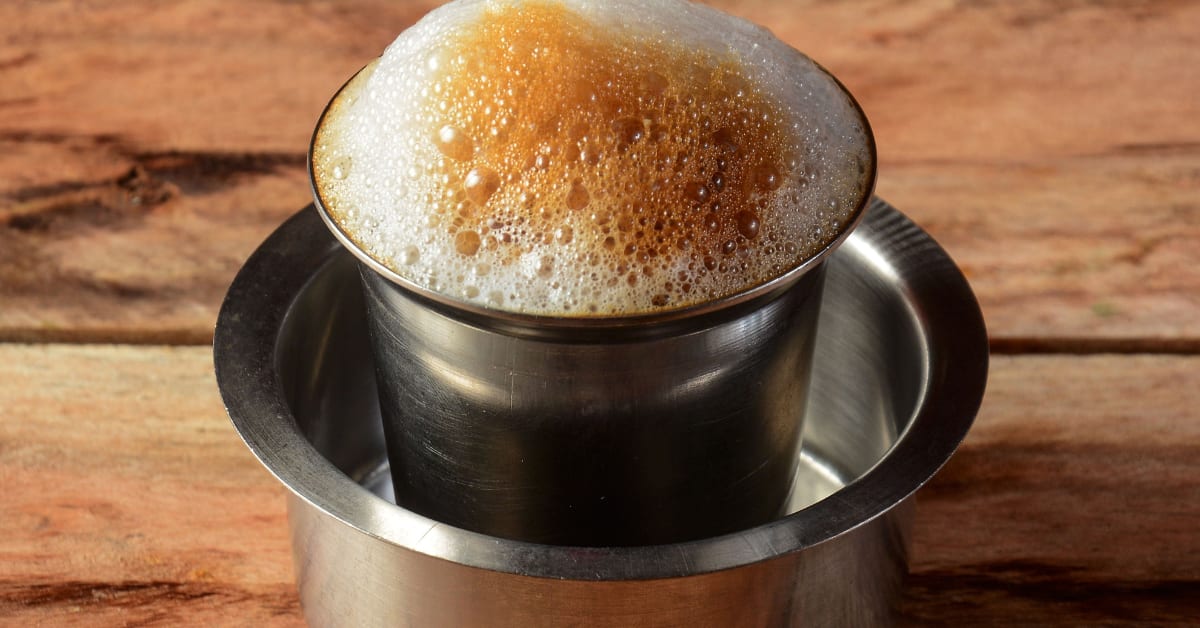
They invented a compact metal device with two stacked chambers that let hot water pass slowly through finely ground coffee. The concentrated decoction collected below, efficient and repeatable enough for daily kitchen routines.
But the real transformation came next. Instead of drinking the strong decoction straight, cooks diluted it with boiled milk, added sugar, and poured it repeatedly between a tumbler and dabarah. This simple act cooled the drink, created foam, and changed everything about how coffee tasted.
When coffee became scarce and expensive, chicory entered the blend to stretch supplies. The root added body and slight bitterness, and even after shortages ended, it stayed because people had grown to love the flavor.
The timing mattered too. Filter kaapi required waiting for water to boil, decoction to drip, and milk to heat. These pauses built the drink into daily rhythms, repeated at dawn, mid-morning, and again in the afternoon across Tamil and Kannada households.
By the mid-20th century, the drink moved beyond home kitchens into Indian-run coffee houses, then small darshinis and roadside eateries. In Kumbakonam, it earned the nickname "degree coffee" for its legendary strength and flavor.
Why This Inspires
No single inventor created filter kaapi. Generations of home cooks quietly adapted a colonial crop using practical tools, local tastes, and everyday needs until something entirely new emerged from their kitchens.
South Indian households didn't just adopt coffee—they completely reimagined how it fit into daily life, creating a ritual that now defines mornings for millions and a flavor that traveled from Chikmagalur hills to cities worldwide, one steel tumbler at a time.
More Images
%2Fenglish-betterindia%2Fmedia%2Fmedia_files%2F2026%2F05%2F05%2Fwatermelon-2-2026-05-05-12-16-16.png)

%2Ffilters%3Aformat(webp)%2Fenglish-betterindia%2Fmedia%2Fmedia_files%2F2026%2F05%2F05%2Fwatermelon-3-2026-05-05-12-23-47.png)
%2Fenglish-betterindia%2Fmedia%2Fmedia_files%2F2026%2F05%2F04%2Fice-apple-tadgola-2026-05-04-12-48-43.png)
Based on reporting by The Better India
This story was written by BrightWire based on verified news reports.
Spread the positivity!
Share this good news with someone who needs it