How to Spot 4 Spacecraft in January's Night Sky
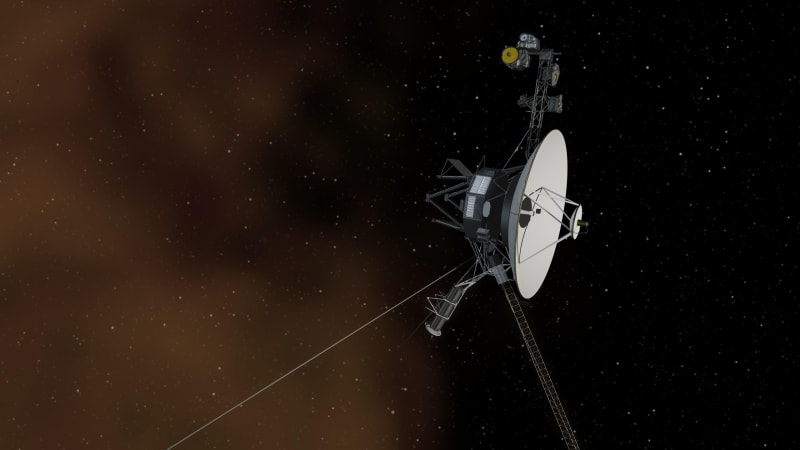
This month, you can track four legendary spacecraft on their missions across the solar system just by looking up. From the James Webb Space Telescope to Europa Clipper, these robotic explorers are making history millions of miles from Earth.
Right now, four of humanity's most incredible spacecraft are traveling through space on missions that will unlock the universe's secrets, and you can find them in the night sky this January.
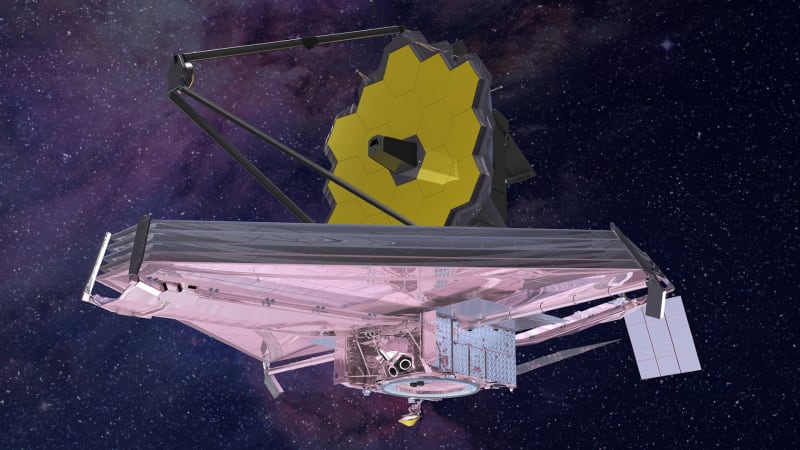
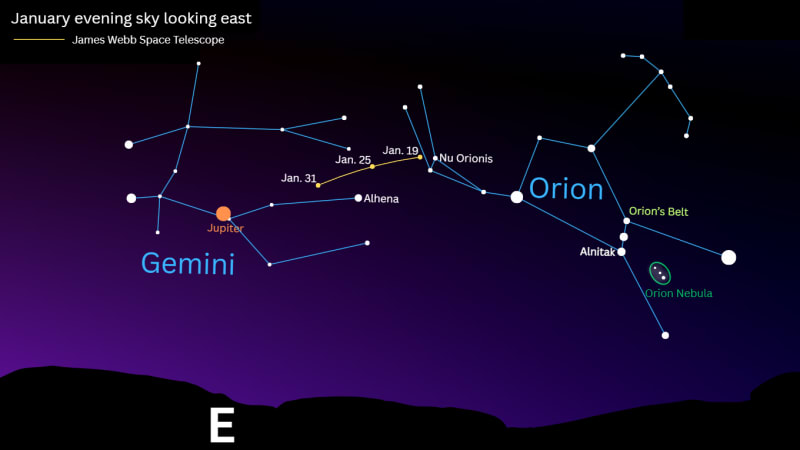
The James Webb Space Telescope has been capturing stunning images of ancient galaxies since launching on Christmas Day 2021. Throughout January, you can spot it moving across the eastern horizon after sunset, traveling from the constellation Orion toward bright Jupiter. On January 19, look for it near the star Nu Orionis in Orion's raised arm.
NASA's Europa Clipper is on a 1.8 billion mile journey to Jupiter, where it will arrive in April 2030 to study the icy moon Europa. The spacecraft launched in October 2024 and will eventually make 49 close passes of Europa to search for signs the moon could support life. To find it mid-January, look for the constellation Libra rising above the southeastern horizon around 3 a.m.
The European Space Agency's Jupiter Icy Moons Explorer will reach Jupiter in July 2031, one year after Europa Clipper. This spacecraft will study Jupiter's mysterious moons Ganymede, Callisto and Europa to learn whether their hidden oceans could harbor microbial life.
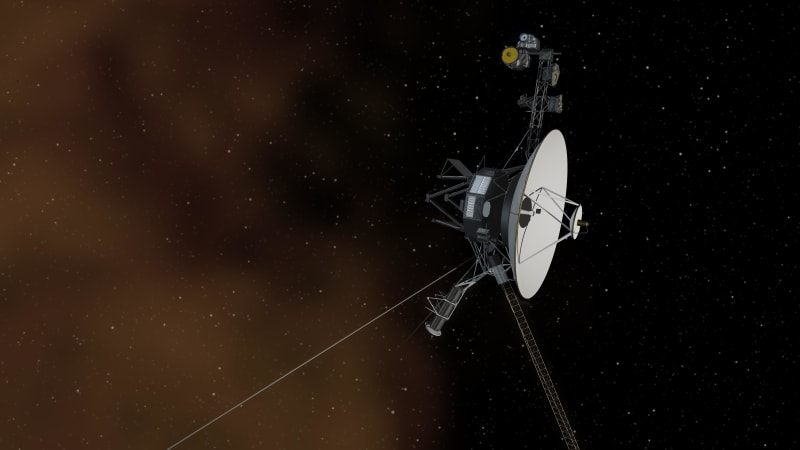
While these spacecraft are too small for even powerful telescopes to actually see, knowing where they are connects us to their incredible missions. Each represents humanity's drive to explore and understand our cosmic neighborhood.
The Bright Side
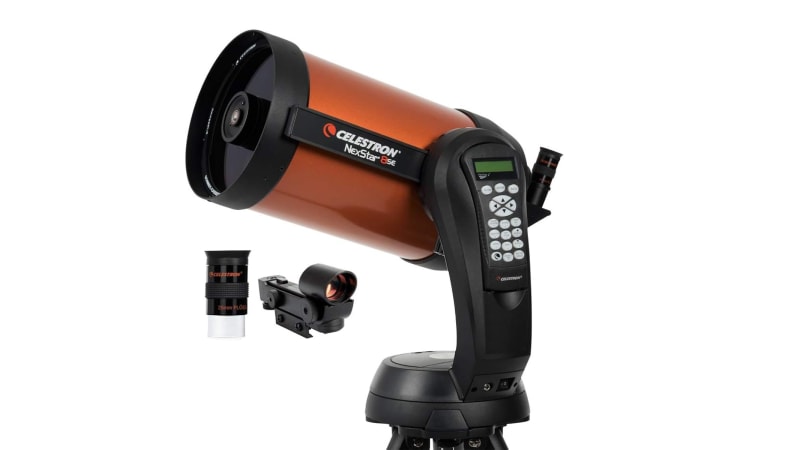
You don't need expensive equipment to participate in space exploration. While scanning the sky for these spacecraft, you can also enjoy bonus targets like the Orion Nebula, visible as a milky blur near Orion's Belt. Jupiter itself appears particularly large and bright throughout January, shining brilliantly in the western sky with the stars Castor and Pollux above it.
These robotic explorers embarked on one-way journeys to expand our understanding of the solar system. Though we'll never see them return to Earth, tracking their positions reminds us that human ingenuity is always pushing outward, discovering new worlds and answering ancient questions about our place in the universe.
More Images
Based on reporting by Google News - Science
This story was written by BrightWire based on verified news reports.
Spread the positivity!
Share this good news with someone who needs it
%2Fhttps%3A%2F%2Ftf-cmsv2-smithsonianmag-media.s3.amazonaws.com%2Ffiler_public%2F58%2F0a%2F580a77b9-7590-43c5-b70d-e3a590810348%2Fsmithmag-rockwell-edit.jpg)