Hubble Captures Dying Star's Light Show 1,000 Light-Years Away
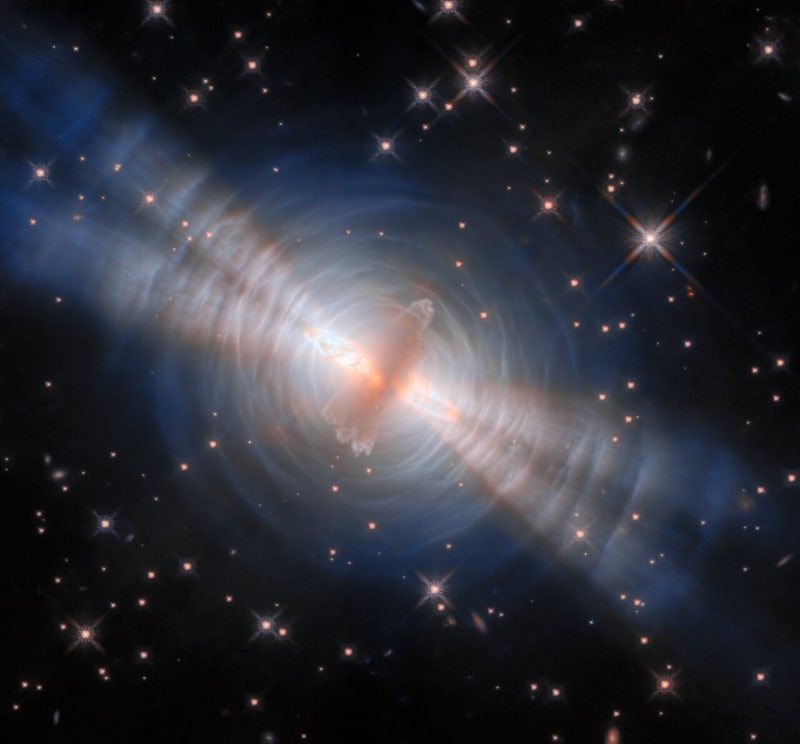
The Hubble Space Telescope has captured a stunning new image of the Egg Nebula, revealing intricate patterns of light and dust around a star in its final stages. Scientists are using this rare glimpse to understand how dying stars like our Sun create the building blocks for future planets.
A star 1,000 light-years away is putting on one of nature's most beautiful final performances, and Hubble just gave us front-row seats.
The NASA/ESA Hubble Space Telescope has captured its clearest image yet of the Egg Nebula, a cosmic light show where a dying star is shedding its outer layers in a dazzling display of dust and light. Located in the constellation Cygnus, this celestial wonder is teaching scientists how stars transform at the end of their lives.
The Egg Nebula holds a special place in astronomy as the first, youngest, and closest pre-planetary nebula ever discovered. Unlike the violent explosion of a supernova, this star is gently releasing its material in symmetrical arcs and lobes that look almost too perfect to be natural.
What makes this moment so scientifically valuable is timing. The nebula is in a transitional phase that lasts only a few thousand years, making it an incredibly rare opportunity to study stellar death while the evidence is still fresh. Twin beams of light pierce through polar lobes, illuminating patterns that suggest hidden companion stars are influencing the show through gravitational interactions.
The central star remains hidden behind a dense cloud of dust it expelled just a few hundred years ago. Light escapes through a polar opening in this dusty shroud, reflecting off the surrounding gas and creating the dramatic patterns Hubble captured.
Why This Inspires
This dying star is doing more than creating cosmic art. Stars like these forge and release the dust that eventually seeds new star systems. The carbon-enriched material being expelled from the Egg Nebula is similar to the dust that coalesced into Earth and other rocky planets 4.5 billion years ago.
Hubble has visited the Egg Nebula multiple times since 1997, and each return trip reveals something new. By comparing images taken over decades, astronomers can watch the nebula evolve in real time and refine their understanding of how all similar stellar outbursts behave.
With over 35 years of operation, Hubble continues to prove its worth as a cosmic time machine. This new image combines data from multiple observations to deliver unprecedented detail of the nebula's intricate dust shell and dramatic gas outflows.
Our Sun will undergo a similar transformation in about five billion years, eventually shedding its outer layers and contributing its own stardust to the galaxy. The Egg Nebula shows us that even in death, stars create the ingredients for new worlds and possibly new life. What looks like an ending is really a beginning written in light and dust across a thousand light-years of space.
Based on reporting by Google News - Science
This story was written by BrightWire based on verified news reports.
Spread the positivity!
Share this good news with someone who needs it