Hubble Catches Comet Breaking Apart in Once-in-a-Lifetime Shot
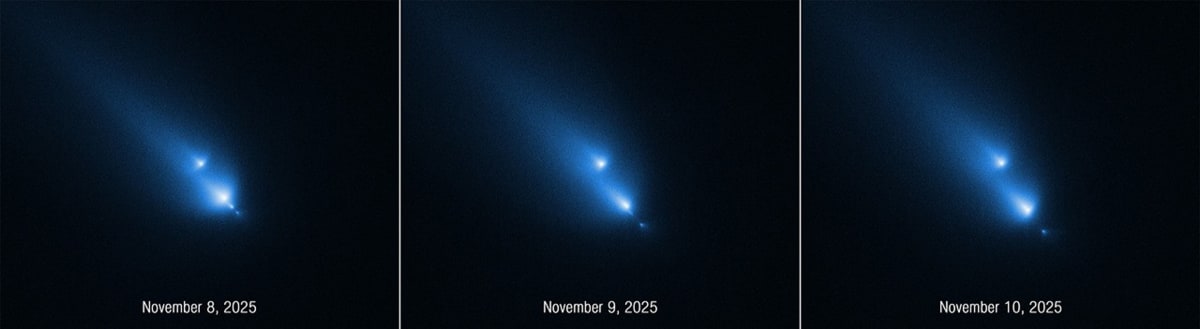
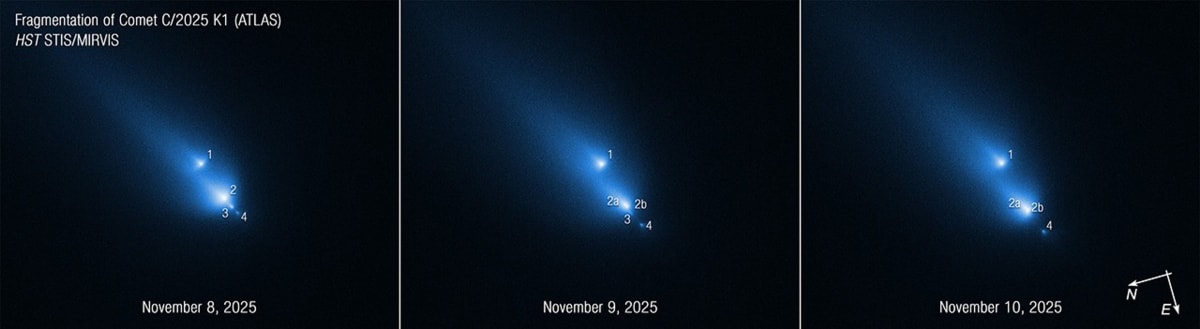
NASA's Hubble Space Telescope accidentally witnessed a comet fragmenting into four pieces, capturing an incredibly rare cosmic event that scientists had been trying to observe for years. The lucky discovery is revealing ancient secrets about how our solar system formed.
📺 Watch the full story above
Sometimes the universe has perfect timing. NASA's Hubble Space Telescope just witnessed a comet breaking apart in real time, catching an event so rare that scientists call it "the slimmest of slim chances."
The discovery happened completely by accident. Researchers at Auburn University had planned to observe a different comet, but technical constraints forced them to switch targets to Comet C/2025 K1. When they checked the images the next day, they couldn't believe their eyes.
"I saw that there were four comets in those images when we only proposed to look at one," said research professor John Noonan. "We knew this was something really, really special."
The team had spent years proposing Hubble observations to catch a comet breaking up, never successfully scheduling one. Then it happened right in front of them without warning. The cosmic irony wasn't lost on principal investigator Dennis Bodewits: "We're just studying a regular comet and it crumbles in front of our eyes."
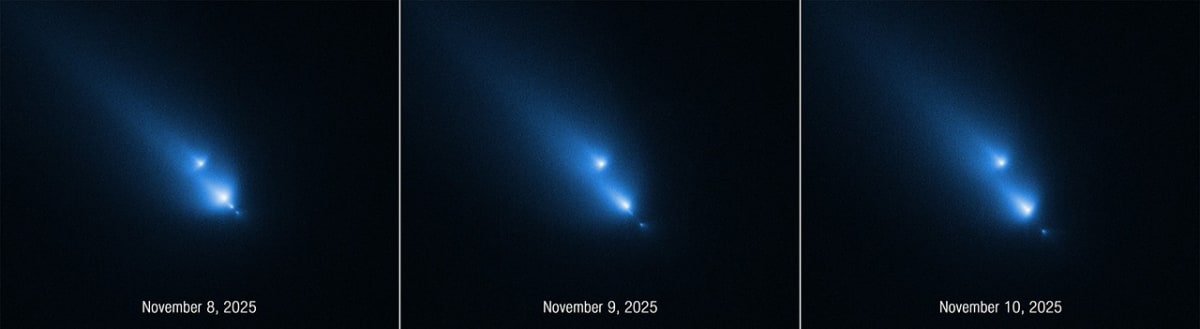
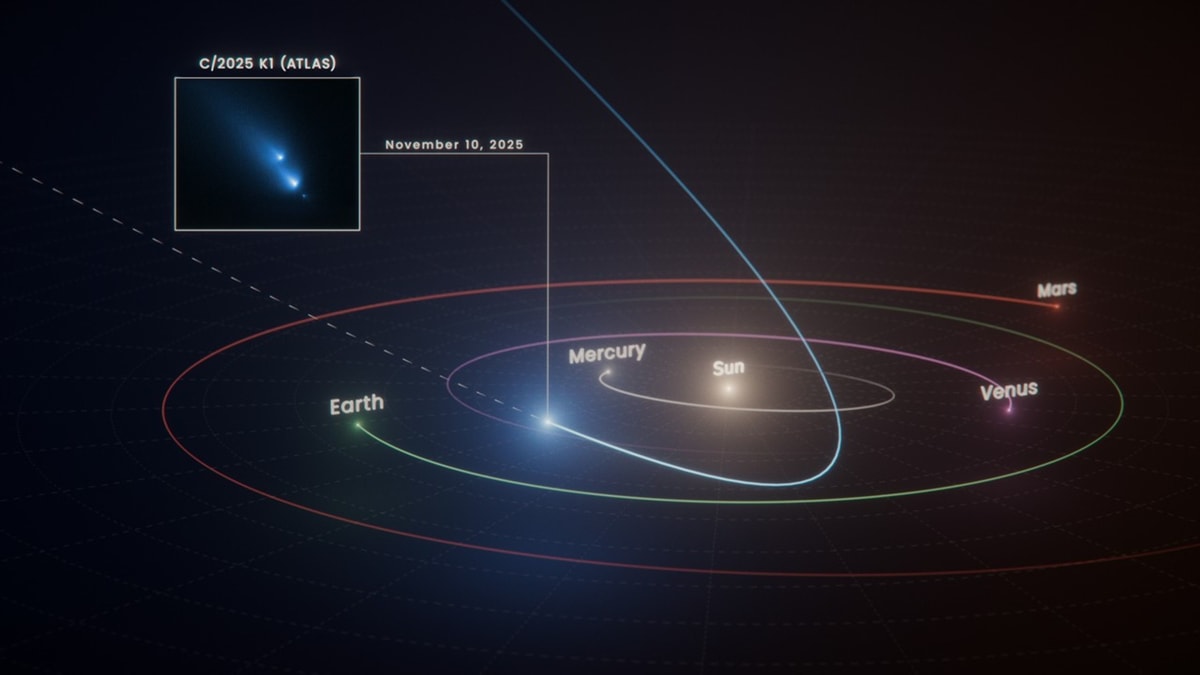
Hubble captured the comet splitting into at least four distinct pieces over three days in November 2025, just a month after K1 swung dangerously close to the Sun. The intense heat and stress from that close approach, inside Mercury's orbit, likely triggered the breakup.
What makes this discovery so valuable goes beyond luck. Comets are frozen time capsules from when our solar system formed over 4 billion years ago. By cracking open, K1 is revealing primordial materials that have been locked away inside, untouched by solar radiation and cosmic rays that weather their surfaces.
Hubble's sharp vision allowed scientists to trace the fragments backward and reconstruct exactly when the comet fell apart, just eight days before the telescope spotted it. This unprecedented timing revealed a mystery: there was a puzzling delay between when the comet fractured and when it brightened.
The researchers think they're witnessing something never seen before. Maybe dust needs to form over freshly exposed ice before it can blow off and create brightness. Or perhaps heat builds pressure below the surface before ejecting an expanding dust shell.
Why This Inspires
This accidental discovery shows how scientific breakthroughs often come from staying curious and flexible. When their original plan fell through, the Auburn team didn't give up. They adapted, chose a backup target, and ended up making history.
The comet itself tells an inspiring story about resilience. After traveling through space for potentially millions of years, K1 is finally revealing its secrets. Ground-based analysis already shows it's chemically unusual, significantly depleted in carbon compared to other comets.
Scientists are now analyzing gases from the fragmenting comet using Hubble's advanced instruments. Every piece of data brings us closer to understanding our cosmic origins and how Earth became the life-supporting planet we call home.
The fragments of K1 now drift about 250 million miles from Earth, continuing their ancient journey through space. Thanks to one perfectly timed accident, they've already taught us more than scientists hoped to learn in years of planned observations.
More Images
Based on reporting by NASA
This story was written by BrightWire based on verified news reports.
Spread the positivity!
Share this good news with someone who needs it