Hubble Spots 'Impossible' Galaxy That Cleared Early Universe
The Hubble Space Telescope discovered a young galaxy producing ultraviolet light that scientists believed would be hidden forever by cosmic fog. This finding solves a 13-billion-year-old mystery about how the early universe became transparent.
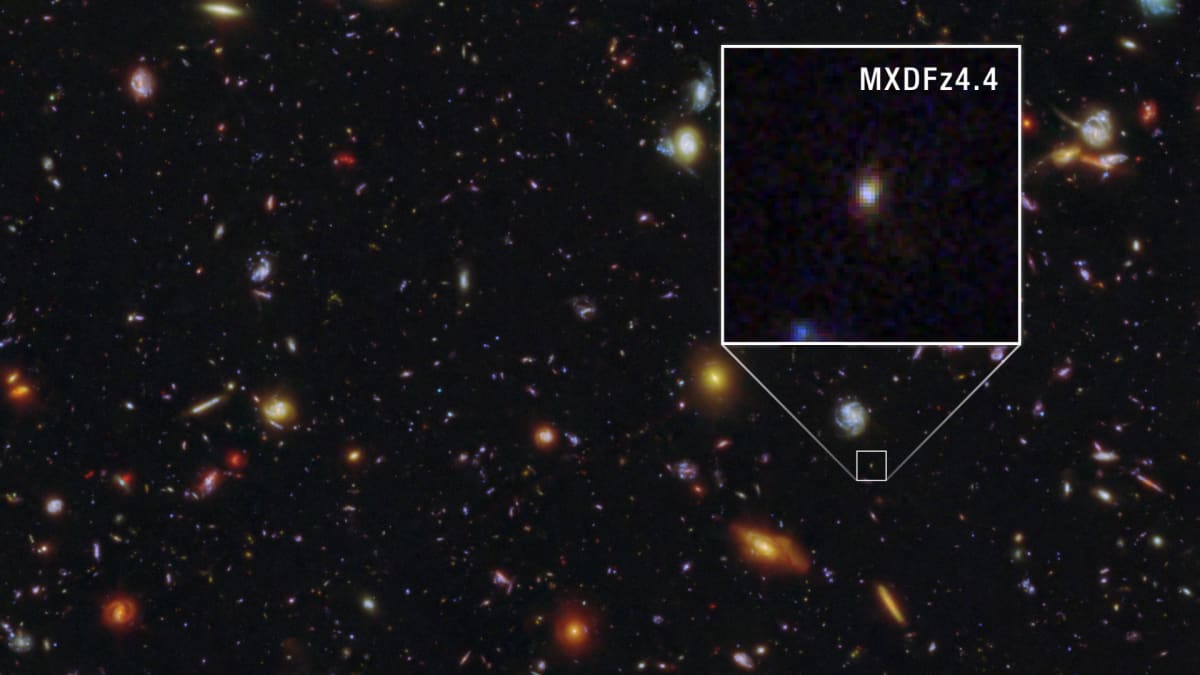
Scientists just spotted something they thought they'd never see: a galaxy from 12.4 billion years ago actively clearing away the cosmic fog that once blanketed our universe.
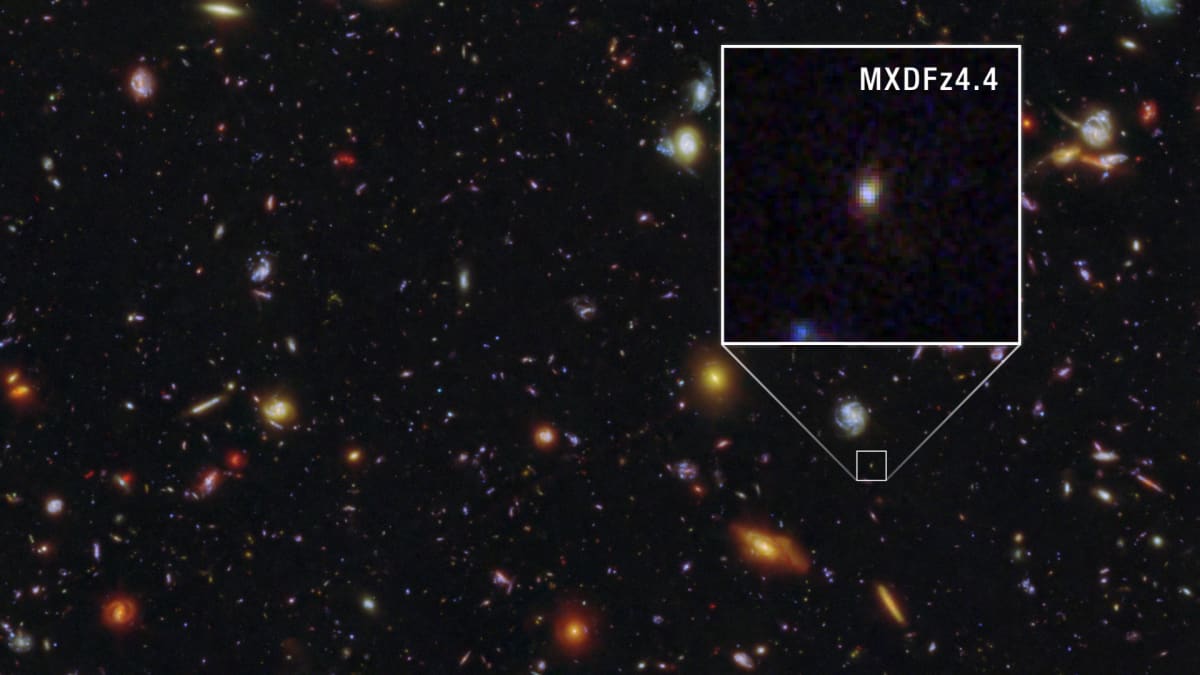
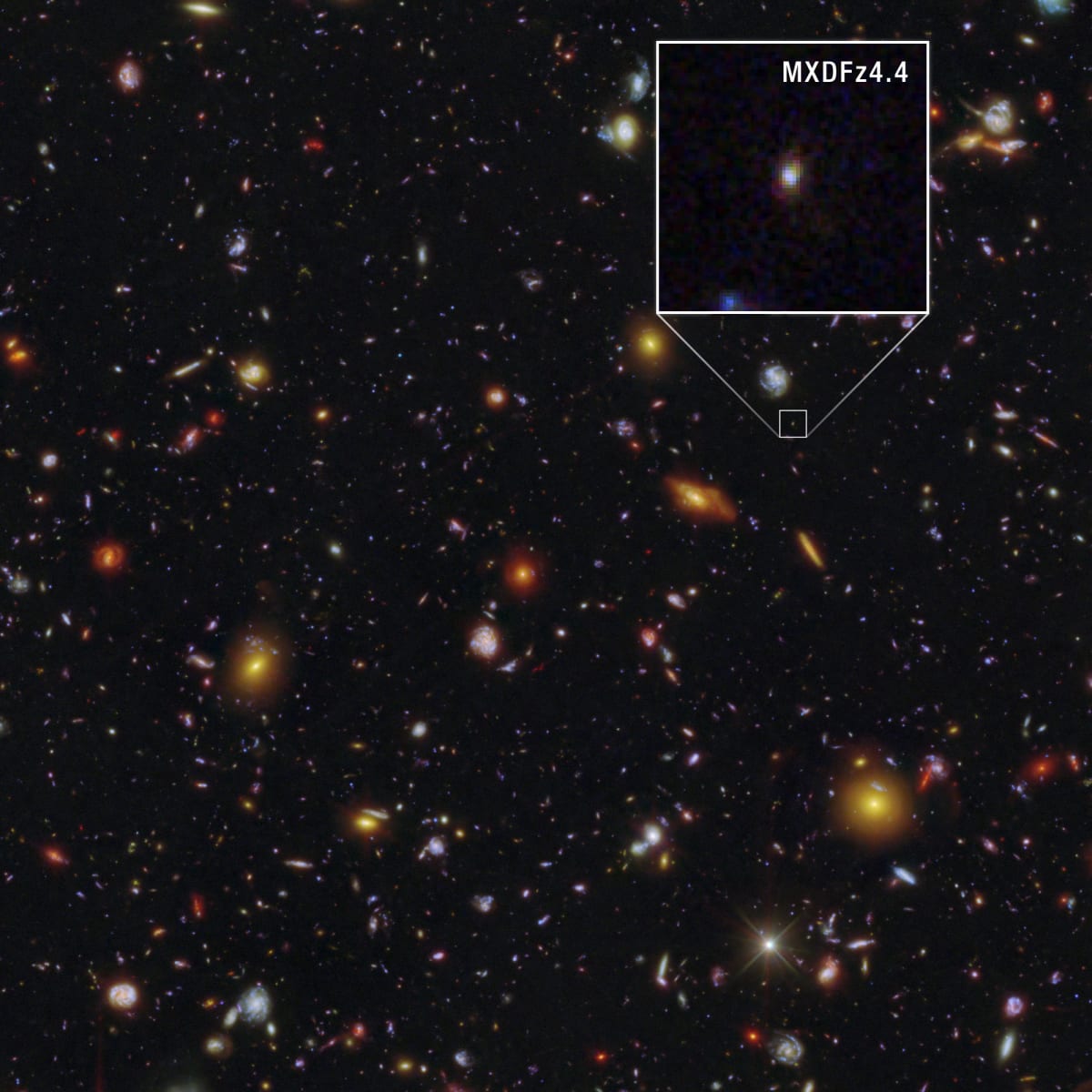
The Hubble Space Telescope detected ultraviolet light streaming from galaxy MXDFz4.4, a small but powerful star factory that existed just 1.4 billion years after the Big Bang. For context, finding this light is like spotting a lighthouse beam through thick smoke that should have blocked every photon.
"Observing a galaxy like this was thought to be impossible," said Ilias Goovaerts of the Space Telescope Science Institute, who led the discovery. Researchers expected the neutral hydrogen gas filling early space would be too thick to see through.
After the Big Bang, the universe was wrapped in a blanket of neutral hydrogen gas that absorbed ultraviolet light like a cosmic curtain. This made the first billion years of cosmic history nearly invisible to us, a period astronomers call the Epoch of Reionization.
The mystery has always been: what cleared that fog? Scientists suspected either supermassive black holes or massive young stars, but they couldn't catch either in the act because the very fog they were studying blocked the evidence.
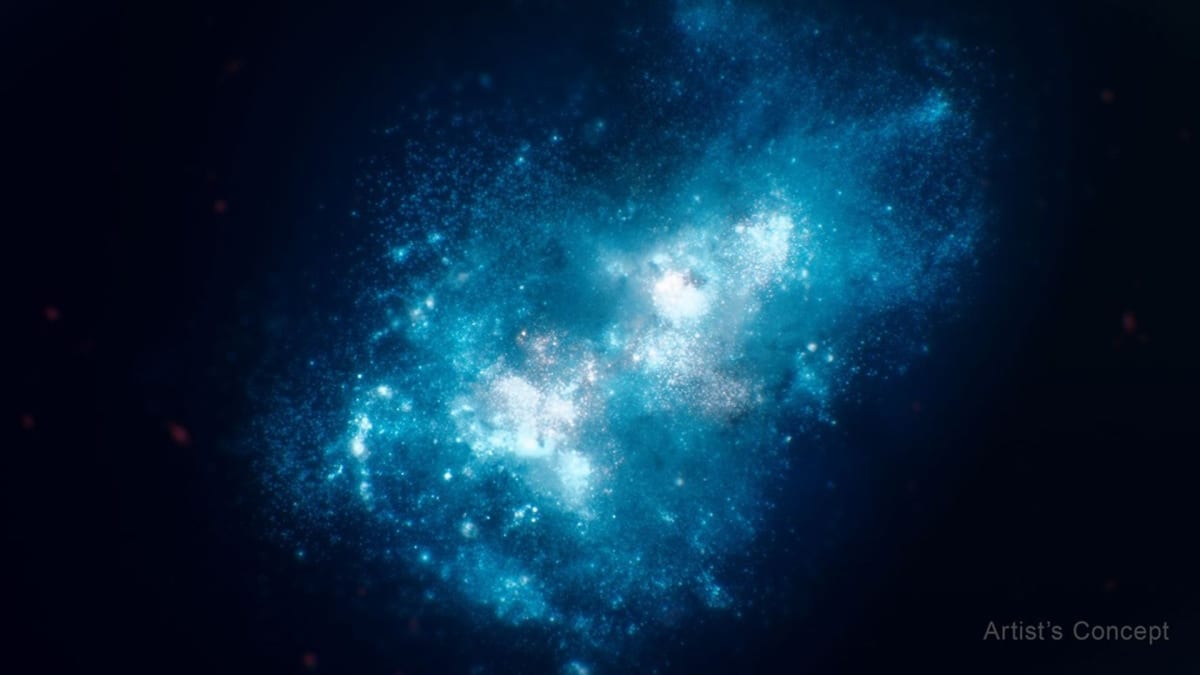
MXDFz4.4 is 100 times smaller than our Milky Way but creates stars ten times faster. At its heart sits a dense cluster of hot, massive stars packed so tightly together that their combined ultraviolet radiation blasted through the surrounding gas like a cosmic flamethrower.
The breakthrough came when researchers compared Hubble's observations with data from the James Webb Space Telescope. They discovered these stars formed in repeated bursts, each wave producing fresh blasts of ionizing radiation that cleared more neutral gas over time.
The massive stars in these clusters burn out quickly, exploding as supernovas after just a few million years. These explosions created bubbles in the gas stretching light years across, opening pathways for even more ultraviolet light to escape.
Why This Inspires
This discovery confirms that ordinary stars, not exotic black holes, were the universe's first light bringers. Countless young galaxies working together gradually transformed our cosmos from opaque to transparent, making everything we see today possible.
Marc Rafelski, Hubble Deputy Mission Head, notes that finding more galaxies like this one will help scientists understand exactly how our universe became the clear, observable place we know today.
Hubble spotted MXDFz4.4 about 250 million years after it finished ionizing its surrounding neighborhood, catching it in the aftermath of its cosmic cleanup job. The light we're seeing today left that galaxy when our universe was less than 10% of its current age.
What makes this especially hopeful is that MXDFz4.4 probably wasn't alone—thousands or millions of similar galaxies likely worked together across billions of light years to clear the entire universe. One small galaxy at a time, the cosmos opened its eyes to light.
More Images

Based on reporting by Google News - Science
This story was written by BrightWire based on verified news reports.
Spread the positivity!
Share this good news with someone who needs it