Hubble Telescope Celebrates 36 Years with Cosmic Sea Slug
NASA's school bus-sized telescope has spent 36 years capturing wonder from orbit, and just shared a stunning new look at a glowing cosmic nursery. The Hubble has made 1.7 million observations and sparked over 22,000 scientific papers since launching in 1990.
A telescope the size of a school bus just marked 36 years of revealing the universe's most breathtaking secrets.
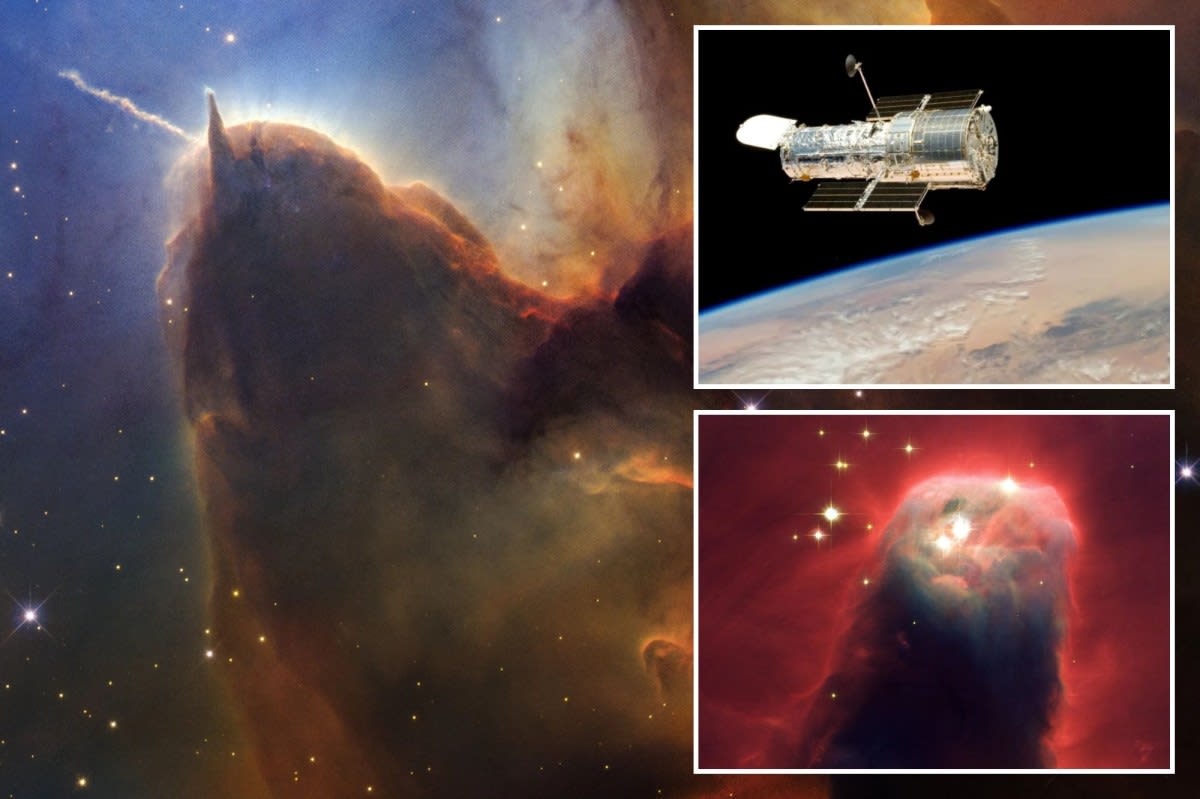
NASA celebrated the Hubble Space Telescope's anniversary by releasing a stunning new image of the Trifid Nebula, a star-forming region about 5,000 light-years from Earth. The glowing bubble of gas and dust, nicknamed the "Cosmic Sea Slug," showcases newborn stars actively shaping their surroundings.
Hubble first photographed this cosmic nursery back in 1997. Nearly 30 years later, the telescope returned with sharper vision, capturing intricate details of how massive young stars carve out glowing caverns with their powerful ultraviolet light.
The new image reveals a jet streaming from Herbig-Haro 399, showing the dynamic processes that trigger waves of new star formation. These stellar nurseries give scientists a front-row seat to understanding how stars are born and evolve.
Since its launch on April 24, 1990, Hubble has transformed our understanding of the cosmos. The telescope has made nearly 1.7 million observations of roughly 55,000 astronomical objects, from distant galaxies to neighboring planets.
Those observations have fueled over 22,000 scientific papers and earned more than 1.3 million citations. That makes Hubble one of the most influential scientific instruments ever built, changing how we understand everything from the age of the universe to the existence of dark energy.
The Bright Side
Hubble keeps defying expectations. Designed for a 15-year mission, the telescope has operated for more than twice that long, continuing to deliver groundbreaking discoveries alongside newer instruments like the James Webb Space Telescope.
The anniversary images remind us that Hubble isn't just collecting data. It's capturing beauty that makes the universe feel more accessible, turning abstract science into art that inspires millions of people worldwide.
From the Butterfly Nebula's technicolor wings to the six-light-year-wide Crab Nebula remnant, Hubble has given humanity a gallery of cosmic wonders. Each image represents both scientific achievement and a reminder of our place in something vast and beautiful.
After 36 years, this school bus-sized telescope continues proving that the best discoveries often come from simply looking up with wonder.
More Images


Based on reporting by Google News - Science
This story was written by BrightWire based on verified news reports.
Spread the positivity!
Share this good news with someone who needs it