Hubble's 25-Year View Shows Crab Nebula Still Expanding
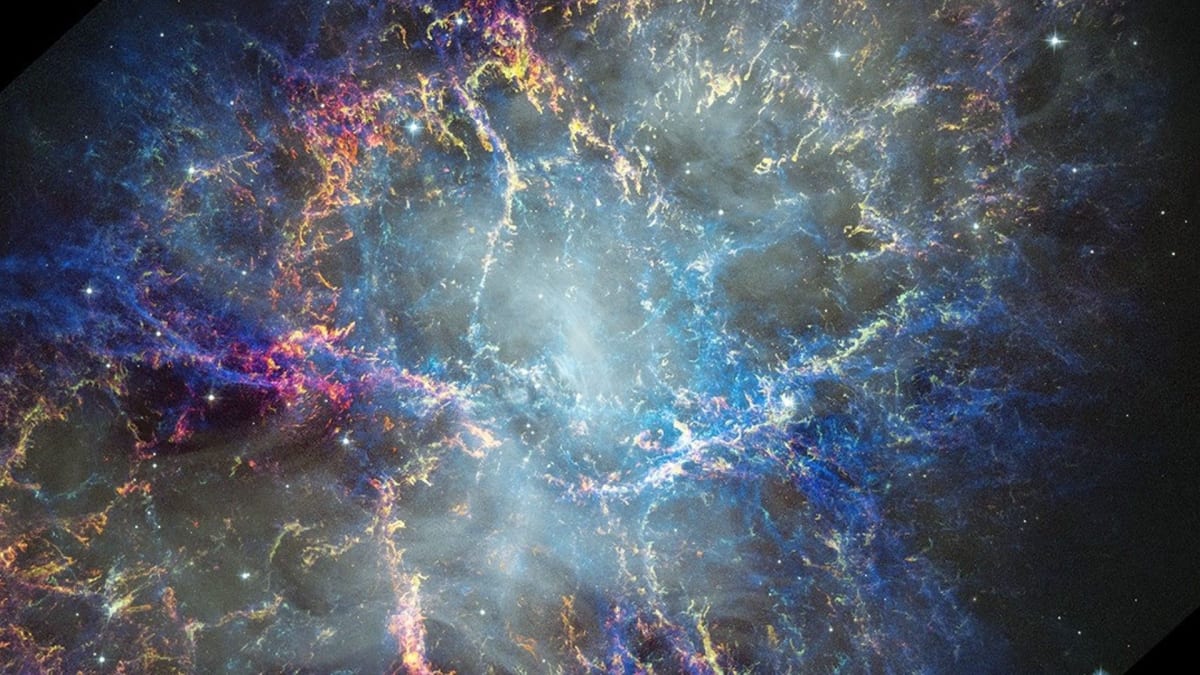
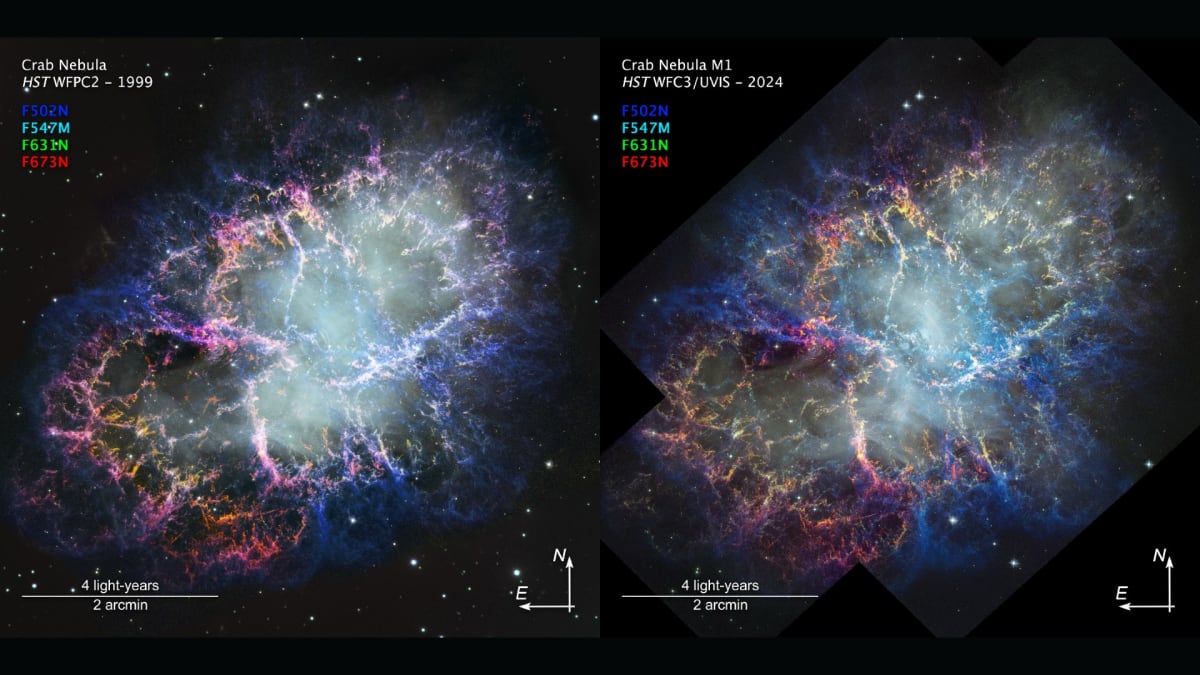
NASA's Hubble Space Telescope captured stunning new images of the Crab Nebula, revealing how the remnant of a supernova from 1054 AD continues to change and expand nearly a millennium later. The comparison shows scientists how cosmic explosions evolve across decades.
The universe is still revealing secrets from an explosion that happened nearly 1,000 years ago, and we're finally able to watch it unfold in real time.
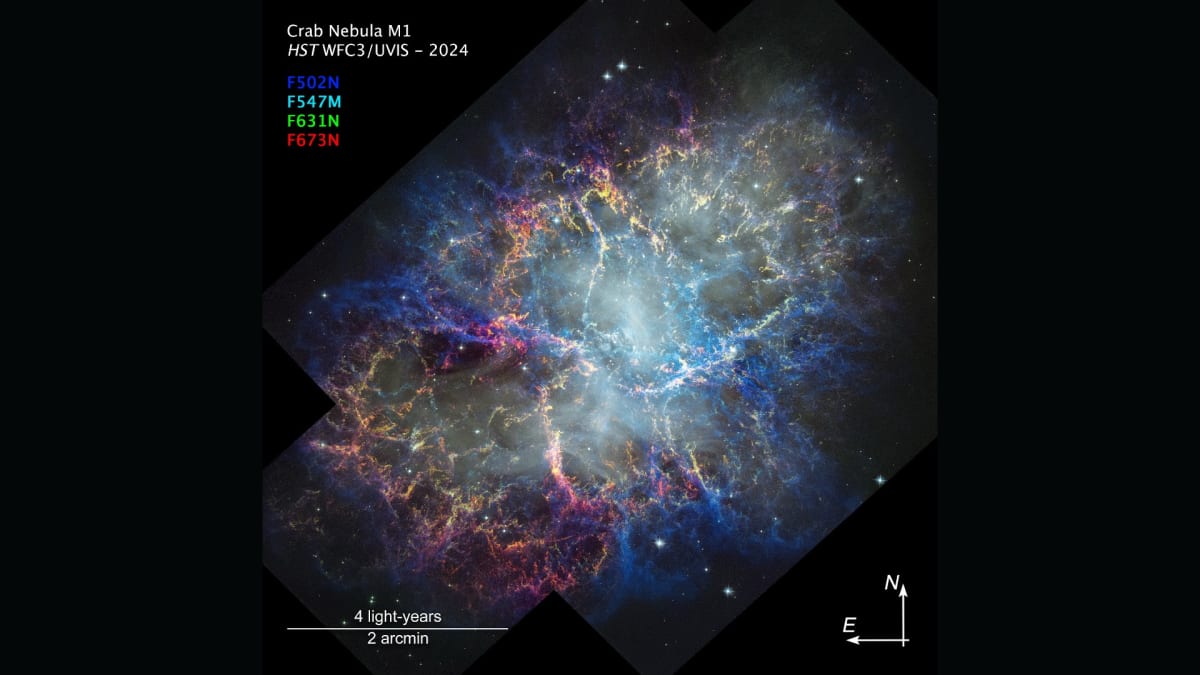
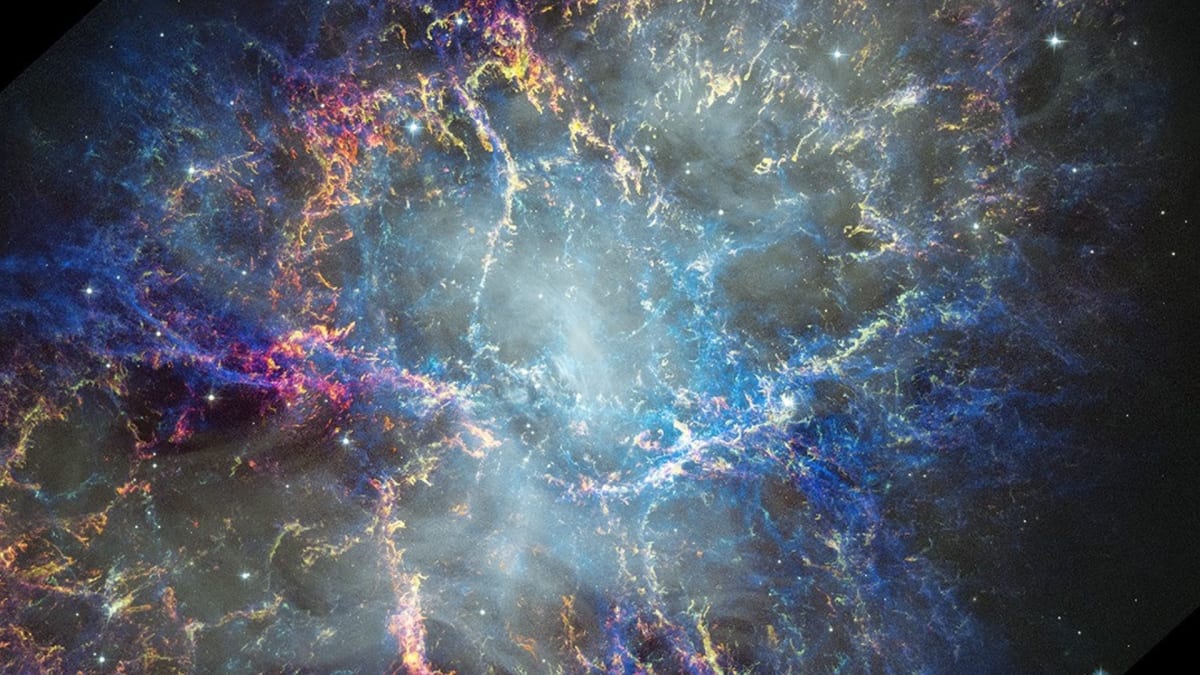
NASA released stunning new images from the Hubble Space Telescope showing the Crab Nebula, a colorful cloud of gas 6,500 light-years away that marks the site of a supernova explosion witnessed by astronomers in the year 1054. That ancient blast was so powerful it could be seen during daylight on Earth.
Now, by comparing images taken 25 years apart, scientists can actually see the nebula changing. Gas filaments are rushing outward from the explosion site at an incredible 3.4 million miles per hour, and the temperature, density, and chemistry of those gases have shifted noticeably since Hubble first photographed them in 1999.
The breakthrough came thanks to a camera upgrade astronauts installed on Hubble in 2009 during a space shuttle mission. That Wide Field Camera 3 gave the telescope much sharper vision, allowing astronomers to capture details in 2024 that weren't visible in the original images.
Why This Inspires
Hubble has been watching our cosmos for over three decades, long enough that even ancient cosmic events reveal their motion. What seemed frozen in time is actually dynamic and evolving, just on a timescale that usually escapes human observation.
"We tend to think of the sky as being unchanging, immutable," said Johns Hopkins University astronomer William Blair. "However, with the longevity of the Hubble Space Telescope, even an object like the Crab Nebula is revealed to be in motion, still expanding from the explosion nearly a millennium ago."
The Crab Nebula sits in the constellation Taurus, where it's become one of the most studied objects in space. Scientists call it Messier 1 because it was the first entry in astronomer Charles Messier's famous catalog of cosmic objects.
These observations prove that patience pays off in science. By maintaining telescopes across generations, we gain the ability to measure cosmic change happening right before our eyes, turning the night sky from a static painting into a living laboratory where we can watch the universe's story continue to unfold.
More Images

Based on reporting by Space.com
This story was written by BrightWire based on verified news reports.
Spread the positivity!
Share this good news with someone who needs it