Humanoid Robot Works 8-Hour Factory Shift in Germany
A humanoid robot just completed an eight-hour shift alongside human workers at a Siemens factory in Germany, successfully handling 90% of its logistics tasks. The breakthrough trial could help solve labor shortages while showing AI-powered machines can adapt to real production environments.
A humanoid robot has successfully worked a full factory shift alongside people, marking a major step toward AI helping solve workplace challenges.
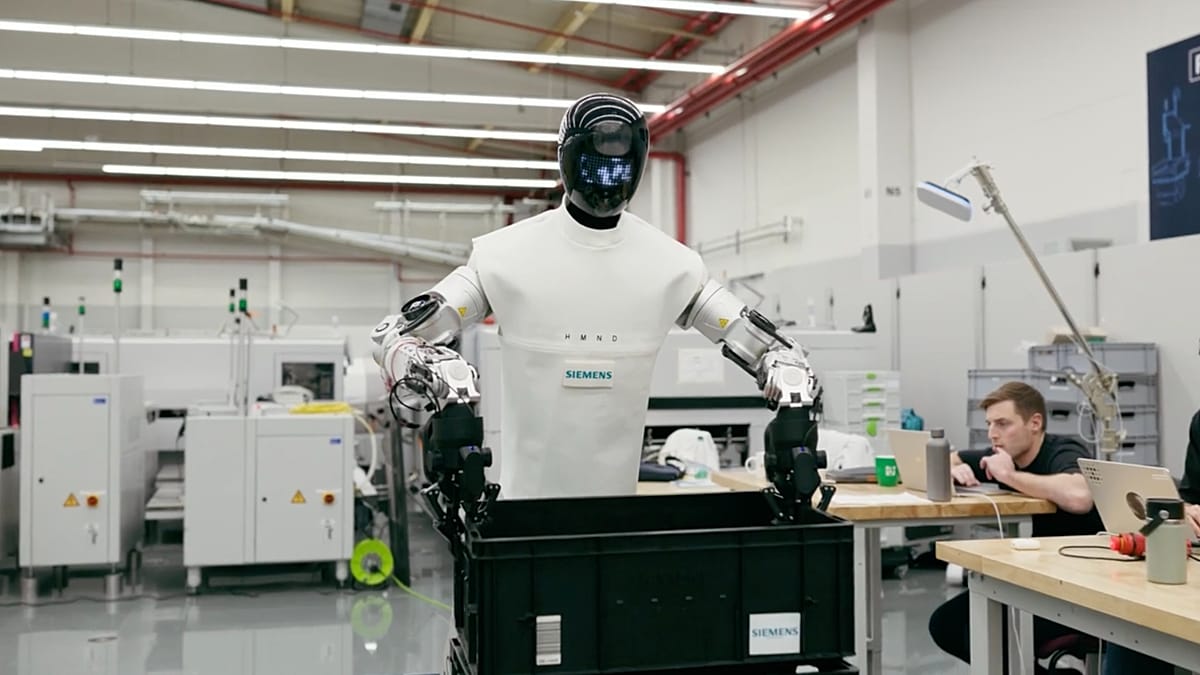
Siemens and NVIDIA tested the HMND 01 robot at a live electronics plant in Erlangen, Germany, where it performed logistics tasks for more than eight hours. The robot picked up, moved, and placed containers used by human workers, completing over 90% of its assigned tasks and handling around 60 containers per hour.
The robot operated autonomously throughout the shift, powered by NVIDIA's AI technology that helps it perceive its surroundings, make decisions, and adapt to changing conditions. Unlike traditional factory robots that repeat the same motions in fixed positions, this humanoid could navigate the floor and work flexibly alongside people.
What makes this trial particularly exciting is how quickly the robot learned its job. Using NVIDIA's simulation and training tools, the companies developed the robot's skills virtually, cutting typical design time from two years down to just seven months. This faster development process could accelerate how quickly helpful robots reach factories facing worker shortages.
The robot didn't replace human workers but instead took on routine tasks that currently require human involvement because traditional automation struggles with them. This partnership approach addresses a real challenge: many factories need help with labor shortages but also need the flexibility and problem-solving that only humans currently provide.
The Ripple Effect
This successful trial opens doors for factories worldwide struggling to find enough workers for physically demanding roles. By handling repetitive logistics tasks, humanoid robots could free human workers to focus on more complex, rewarding work that requires creativity and judgment.
The partnership between Siemens, NVIDIA, and UK-based Humanoid represents what the companies call "physical AI" moving from vision to industrial reality. While they didn't announce when such systems might roll out more widely, this live factory test proves the technology works in real production conditions, not just controlled labs.
The test also demonstrates that AI and robotics can create solutions that help both businesses and workers rather than simply replacing jobs. Robots that adapt and learn could tackle the tasks that are hardest to fill while working safely alongside people.
For communities facing manufacturing job shortages or physically demanding roles that are hard to staff, this technology offers hope for keeping factories running and competitive.
More Images

Based on reporting by Euronews
This story was written by BrightWire based on verified news reports.
Spread the positivity!
Share this good news with someone who needs it