Humans Invented 'Writing' 40,000 Years Ago in German Caves
Ancient ivory sculptures discovered in German caves reveal that our Paleolithic ancestors were encoding complex information in carved symbols tens of thousands of years before we thought writing existed. The statistical fingerprint of these mysterious marks tells a story of human ingenuity stretching back 40 millennia.
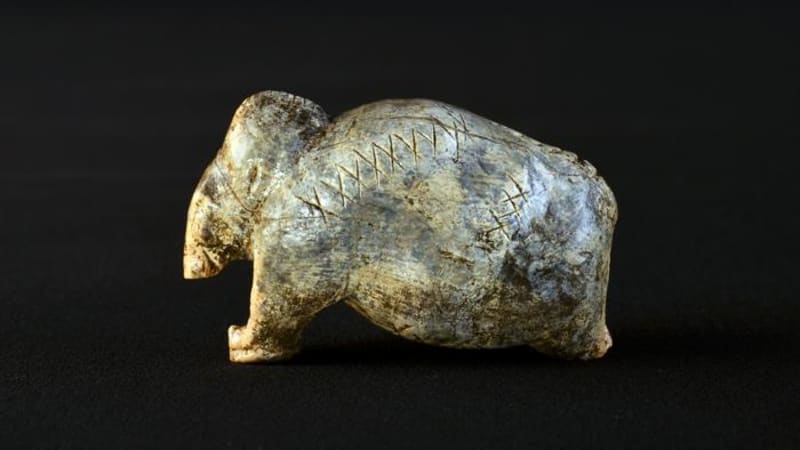
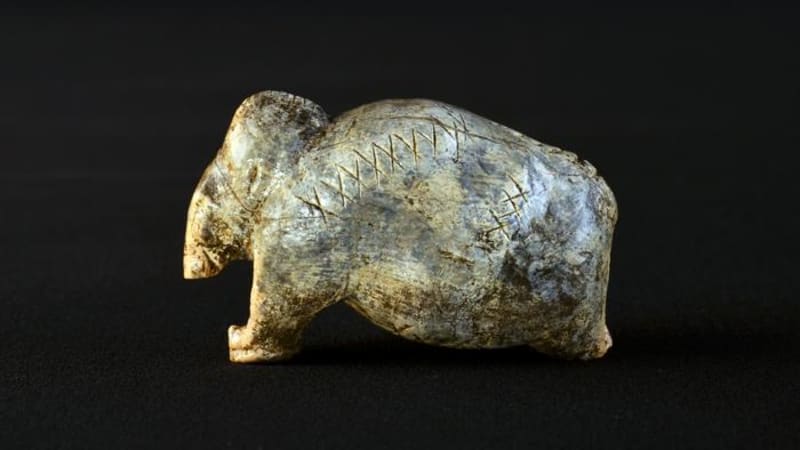
Carved crosses and dots on a 40,000-year-old mammoth figurine are rewriting what we know about human communication. Researchers analyzing over 3,000 mysterious markings on ancient tools and sculptures from southern Germany have discovered they're not just decorative doodles but an early sign system that encoded information.
When modern humans arrived in Europe 55,000 years ago, they brought sophisticated tools and an urge to communicate. They decorated cave walls with animals and geometric shapes, but archaeologists have puzzled over the meaning of symbols carved into their everyday objects for decades.
Now linguist Christian Bentz and archaeologist Ewa Dutkiewicz have cracked part of the code. Using computational analysis, they compared these Paleolithic symbols to proto-cuneiform, the earliest known writing system from ancient Mesopotamia dating to 3000 B.C.
The surprise? The information density and complexity of these Ice Age symbols matched their Mesopotamian counterparts created 35,000 years later.
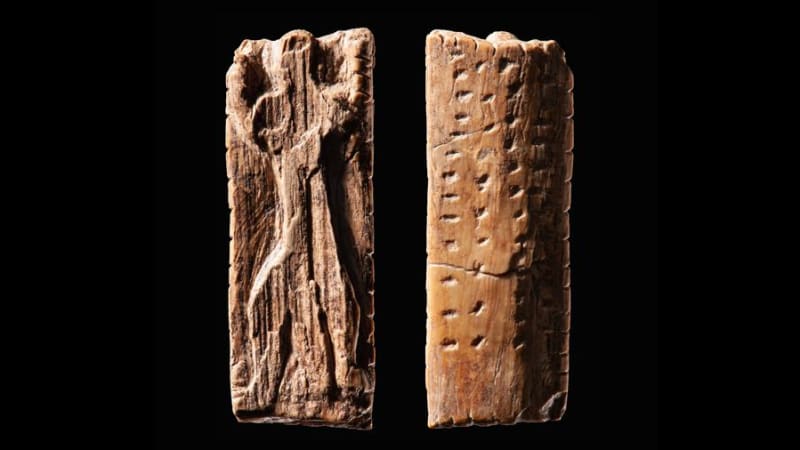
The researchers cataloged intentional symbols like lines, points, crosses, stars, grids and zigzags carved into 260 ancient objects, most from cave sites in the Swabian Jura mountain range. The patterns showed clear intention and structure, not random decoration.
"Our research is helping us uncover the unique statistical properties of these sign systems, which are an early predecessor to writing," Bentz explained. The signs repeated in sequences like cross, cross, cross, line, line, line, different from spoken language but packed with potential meaning.
One fascinating discovery: figurines carried higher information density than tools did. Perhaps ancient artists chose special objects to convey more complex messages, much like we might save important announcements for formal occasions.
Why This Inspires
What's truly remarkable is the consistency. While cuneiform evolved rapidly in Mesopotamia over a millennium, this Paleolithic system remained stable for nearly 10,000 years, suggesting a shared cultural understanding passed down through hundreds of generations.
The researchers haven't decoded what the symbols meant, but that's not the point. The discovery reveals that our ancestors' capacity for abstract thought and symbolic communication runs far deeper than we imagined.
This isn't the first hint that Paleolithic people were more sophisticated than we thought. A 2023 study suggested dots and lines in 20,000-year-old cave paintings functioned as early calendars, while researcher Genevieve von Petzinger has documented three dozen symbols appearing in caves worldwide.
"The human ability to encode information in signs and symbols was developed over many thousands of years," Bentz noted. Writing as we know it is just one specific form in a long tradition of human ingenuity.
These Ice Age innovators weren't waiting for civilization to develop complex thought; they were already finding ways to preserve and share knowledge across time and space.
More Images


Based on reporting by Live Science
This story was written by BrightWire based on verified news reports.
Spread the positivity!
Share this good news with someone who needs it