Humans Thrived in African Rainforests 150,000 Years Ago
Ancient stone tools discovered in Côte d'Ivoire prove humans lived deep in West African rainforests 150,000 years ago, more than double the previous record. The finding rewrites what scientists thought possible about our ancestors' incredible adaptability.
Scientists just discovered that our ancient ancestors were thriving in African rainforests 150,000 years ago, shattering everything researchers believed about early human survival.
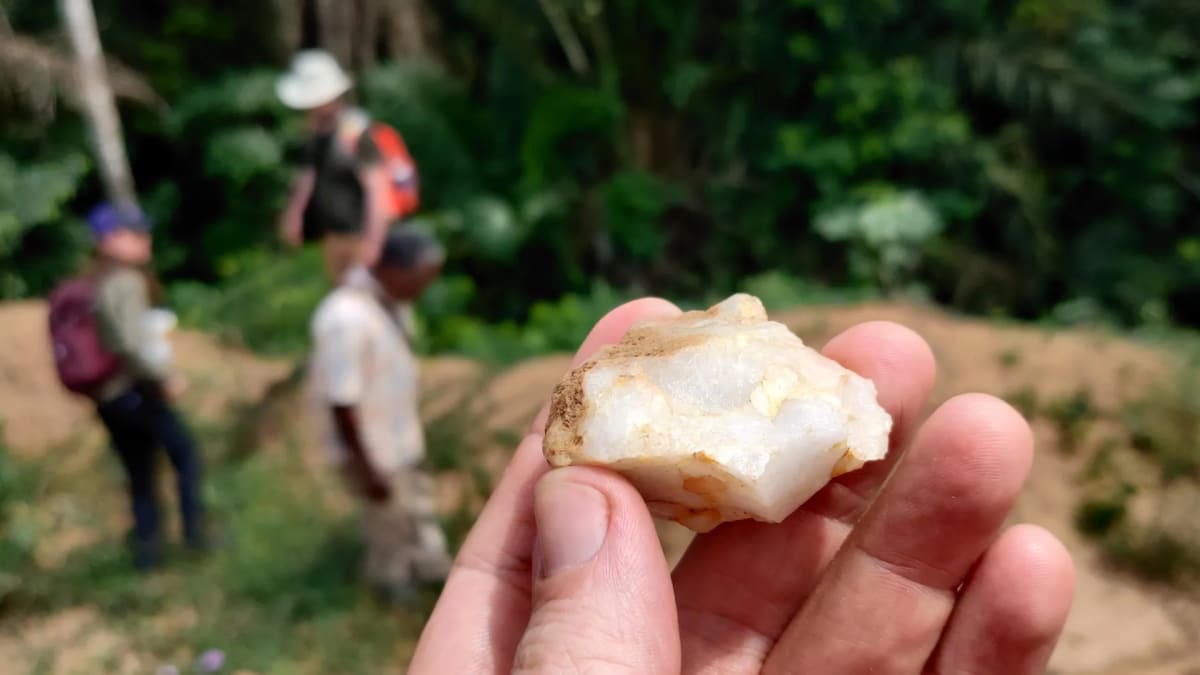
For decades, experts assumed early humans stuck to open grasslands and coastal areas, avoiding dense tropical forests as too difficult to survive. That story just got completely rewritten thanks to stone tools unearthed in present-day Côte d'Ivoire.
An international team returned to a site first excavated in the 1980s, this time armed with modern technology. Working with Professor Yodé Guédé, who investigated the location during the original Ivorian-Soviet mission, researchers relocated the ancient trench and made a stunning discovery.
Dr. James Blinkhorn of the University of Liverpool explains they used state of the art methods unavailable forty years earlier. The timing proved critical because mining has since destroyed the site, making this recovered data irreplaceable.
Multiple dating techniques pointed to human occupation around 150,000 years ago. But the real breakthrough came from analyzing pollen, plant structures, and chemical traces in the sediments.
The evidence showed unambiguously that the area was heavily forested when humans lived there. Scientists found pollen and plant waxes from humid West African rainforests, with very low grass levels proving dense woodland surrounded the site rather than scattered trees.
This discovery pushes back the oldest known evidence of rainforest living by more than double. Before this, the earliest proof of humans in African rainforests dated to just 18,000 years ago, while the global record from Southeast Asia reached only 70,000 years.
Why This Inspires
This finding proves our ancestors were far more resourceful and adaptable than anyone imagined. Early humans weren't limited to easy environments or stuck in one type of landscape.
The discovery suggests Homo sapiens succeeded across Earth partly because of this incredible flexibility. While other human relatives disappeared, our ancestors figured out how to thrive everywhere from deserts to dense forests.
Professor Eleanor Scerri, senior author of the study, says ecological diversity sits at the heart of our species. Different populations learned to live in vastly different regions and habitat types, creating a complex history of innovation and survival.
The research also opens exciting new possibilities. Rainforest archaeology remains incredibly challenging because fossils rarely survive in hot, humid conditions and dense vegetation makes excavation difficult.
Scientists now suspect far older rainforest sites could be waiting across Africa. Several unexplored locations in the region might reveal humans adapted to forest life even earlier than 150,000 years ago.
Researchers are also asking bigger questions about how ancient populations might have shaped tropical ecosystems through hunting, fire use, and plant management thousands of years before anyone thought possible.
This remarkable discovery reminds us that human ingenuity and adaptability run deeper than we ever knew.
Based on reporting by Science Daily
This story was written by BrightWire based on verified news reports.
Spread the positivity!
Share this good news with someone who needs it

%2Fhttps%3A%2F%2Ftf-cmsv2-smithsonianmag-media.s3.amazonaws.com%2Ffiler_public%2F12%2F05%2F120524e1-9e51-48cf-8d22-2d033533e6ef%2Fodyssey-fragment.png)