Humpback Whales Teaching Each Other to Bubble Hunt
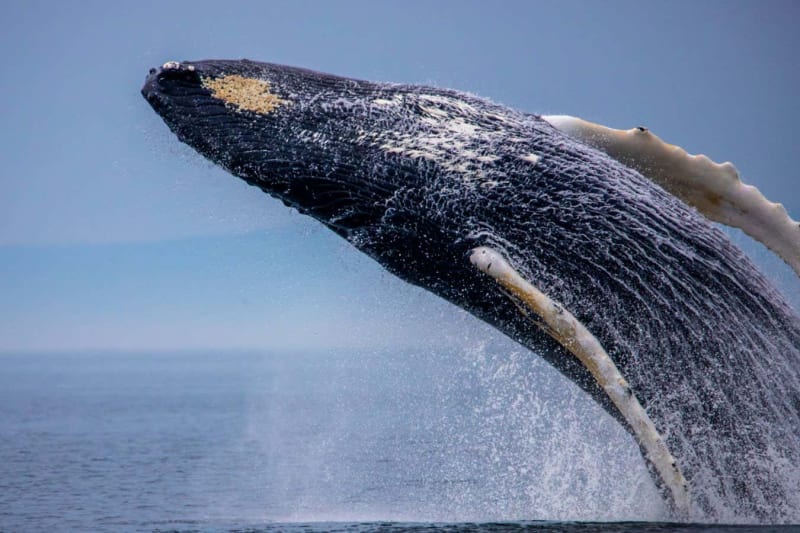
Humpback whales in Canadian waters are passing on an ingenious fishing technique through their social networks, proving that culture and learning may be key to their survival. When ocean temperatures spiked and food became scarce, these remarkable animals adapted by teaching each other a cooperative bubble-trap hunting method.
Humpback whales off the coast of British Columbia have started teaching each other a brilliant hunting trick, and scientists just watched it spread through their community like a viral dance craze.
The technique is called bubble-net feeding, and it's as clever as it sounds. Groups of whales blow bubbles in coordinated circles to trap schools of fish, then surge upward together with their mouths open to feast on the corralled catch.
Researchers from the University of St Andrews tracked 526 individual whales in the Kitimat Fjord System from 2004 to 2023, identifying each whale by their unique tail patterns. They discovered that 254 whales learned the bubble-feeding trick, and 90 percent of the time, they did it as a team effort.
The real breakthrough came after 2014, when a massive marine heatwave hit the northeastern Pacific and fish populations plummeted. As food became harder to find, whales that could adapt their hunting strategies had a real advantage in getting enough calories each day.
Here's where it gets fascinating. Whales didn't just randomly figure out this technique on their own. They learned it from their friends and family members who already knew how to do it.
The behavior spread through stable social groups and was carried forward by influential whales who taught others in their networks. While some whales likely migrated from Alaska where the technique has been used for decades, most of the spread happened locally through social learning.
The Ripple Effect
This discovery reveals something profound about whale conservation. It's not enough to just count how many whales exist. Scientists now understand that protecting whale culture and their social structures matters just as much as protecting the animals themselves.
When whale populations rebuild after threats like hunting or climate disruption, they need their experienced elders and tight-knit social groups intact. Those relationships carry the knowledge that helps entire communities survive tough times.
The whales' ability to adapt and teach each other new survival strategies in response to environmental challenges shows a resilience that gives conservationists real hope for their future.
These ocean giants are proving that cooperation, communication, and community might be their greatest strengths.
More Images


Based on reporting by New Scientist
This story was written by BrightWire based on verified news reports.
Spread the positivity!
Share this good news with someone who needs it