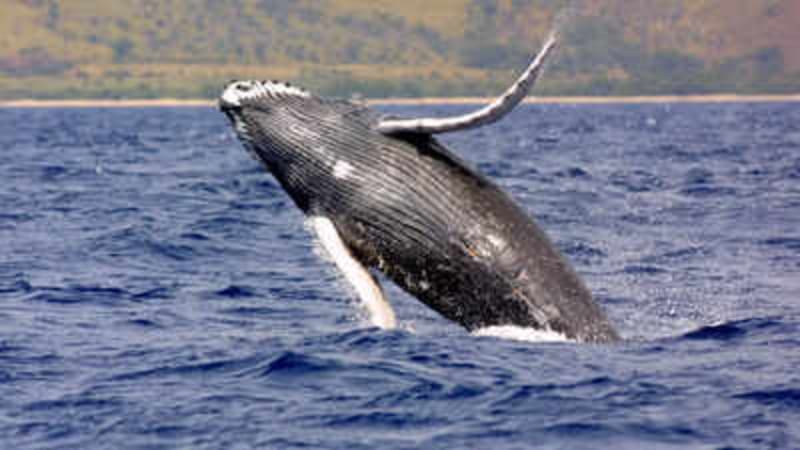
Humpback Whales Travel 5,000 Miles, Stage Ocean Shows
These 40-ton giants migrate thousands of miles each year, performing jaw-dropping breaches and bubble-net feeding displays that remind us why protecting our oceans matters. After nearly being wiped out by whaling, humpback populations are bouncing back thanks to conservation efforts.
Imagine a creature the size of a school bus launching itself completely out of the water, then crashing back down in an explosion of spray. That's just another Tuesday for humpback whales.
These ocean giants can reach 60 feet long and weigh up to 40 tons. Some live nearly 90 years, spending their lives traveling between tropical breeding grounds and cold, food-rich waters where krill and small fish gather in massive schools.
The annual journey covers up to 5,000 miles each way. North Pacific humpbacks swim from Alaska to Hawaii in just 28 days, while their Atlantic cousins travel from the Gulf of Maine to the Caribbean. It's one of the longest migrations of any mammal on Earth.
But distance isn't their only superpower. Humpbacks are problem solvers with a flair for drama.
When hunting, groups coordinate a technique called bubble-net feeding. They swim in circles beneath schools of fish, blowing bubbles that rise and trap their prey in a shrinking cylinder. Then they surge upward together, mouths wide, catching hundreds of fish in one gulp. It looks choreographed because it is.
Scientists identify individual whales by their tail patterns, which are as unique as fingerprints. These markings help researchers track the same whales across decades, revealing family bonds, migration routes, and survival stories.
Mother humpbacks typically have one calf every two to three years. The babies are born 13 to 16 feet long in warm, shallow waters and stay close to their mothers for up to a year, learning the routes and skills they'll need to survive.
The Bright Side
The fact that we can still watch these magnificent creatures is itself a victory. Before 1985, commercial whaling nearly drove humpbacks to extinction, with some populations dropping 95 percent.
The International Whaling Commission's ban helped turn things around. Today, scientists use photo identification, habitat protection, and shipping lane adjustments to keep whales safer from vessel strikes and fishing gear entanglements.
Challenges remain. Climate change is shifting ocean temperatures and food sources, forcing whales to adapt their ancient migration patterns. Underwater noise from ships interferes with their communication. Fishing gear still traps whales, leading to injuries and sometimes death.
Yet humpbacks persist. They're showing up in places they haven't been seen in generations. Populations in many areas are slowly rebuilding, proof that when humans choose protection over exploitation, nature responds.
Every breach, every haunting song echoing through the ocean depths, every calf learning to bubble-net feed is a reminder that conservation works when we commit to it.
More Images



Based on reporting by Times of India - Good News
This story was written by BrightWire based on verified news reports.
Spread the positivity!
Share this good news with someone who needs it