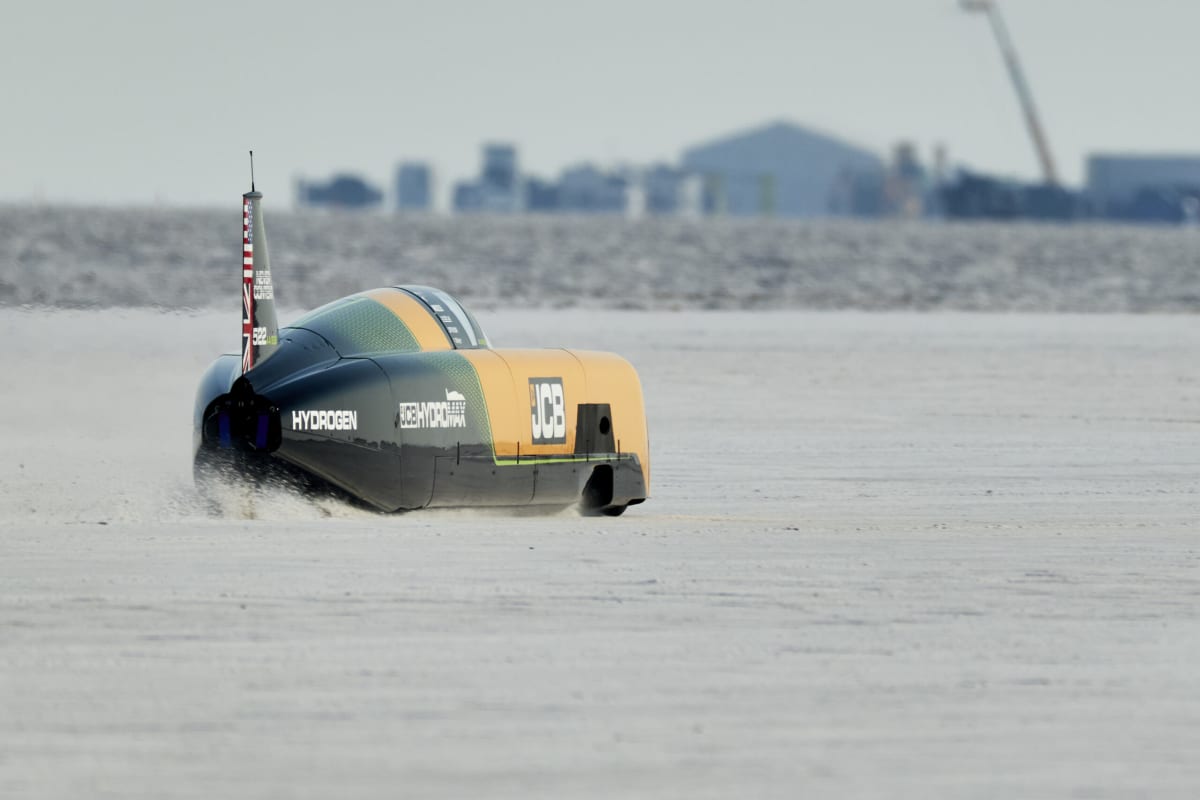
Hydrogen Car Hits 406 MPH, Smashes All Speed Records
A British engineering company just proved hydrogen power can compete with anything on wheels. The JCB Hydromax became the fastest hydrogen-powered vehicle in history, racing across Utah's salt flats at over 400 miles per hour.
A sleek hydrogen-powered car just shattered every speed record for clean energy vehicles, proving that going green doesn't mean going slow.
JCB's Hydromax streaked across the Bonneville Salt Flats in Utah at 406.320 mph, making it the fastest hydrogen-powered vehicle of any kind in history. The 32-foot twin-engine car completed two official runs required by the International Automobile Federation, more than doubling BMW's previous hydrogen combustion record of 185.5 mph set back in 2004.
The British engineering company didn't stop there. Their hydrogen racer also beat JCB's own diesel land speed record of 350 mph from 2006 and surpassed the 303 mph mark set by hydrogen fuel cell vehicles.
While that record-breaking news dominated headlines, scientists and companies worldwide are making hydrogen power more practical for everyday use. Egyptian researchers developed a new catalyst that produces hydrogen from plastic waste while creating valuable carbon nanotubes. Their breakthrough could turn pollution into clean energy and useful materials at the same time.
In Japan, Asahi Kasei received government funding to expand its hydrogen production equipment manufacturing. The company plans to build new facilities capable of producing 2 gigawatts of electrolysis equipment annually by 2028, more than tripling their current capacity.
Meanwhile, Australia is gearing up for massive hydrogen production. Perdaman selected Electric Hydrogen to provide electrolyzers for Project Helios Phase 2, which will produce over 120 metric tons of green hydrogen daily using solar power. That hydrogen will fuel Australia's largest planned ammonia and urea manufacturing facility, backed by $4.62 billion in investment.
The Ripple Effect
These advances show hydrogen moving from the laboratory into real-world applications. Germany's Sunfire just started testing high-temperature electrolysis equipment in an industrial setting, using waste heat to make hydrogen production more efficient and affordable. When companies can produce hydrogen cheaply using renewable energy and industrial waste heat, it becomes a viable alternative to fossil fuels for heavy industry, shipping, and transportation.
The speed record proves hydrogen engines can deliver extraordinary performance, while the research and manufacturing expansions show the infrastructure catching up to make it practical.
Clean energy is officially in the fast lane, and it's only accelerating from here.
More Images



Based on reporting by PV Magazine
This story was written by BrightWire based on verified news reports.
Spread the positivity!
Share this good news with someone who needs it