IBM Quantum Computer Hits 98% Accuracy Record
Scientists just achieved the most accurate quantum computing calculations ever recorded, holding near-perfect precision twice as long as previous attempts. This breakthrough could finally unlock quantum computers more powerful than today's fastest supercomputers.
Quantum computers just took their biggest leap yet toward becoming reliable enough to change the world.
A team from IBM, RWTH Aachen University, and startup Quantum Elements shattered accuracy records in quantum computing. Their breakthrough addresses the technology's biggest weakness: these incredibly powerful machines make errors constantly because their components are extraordinarily fragile.
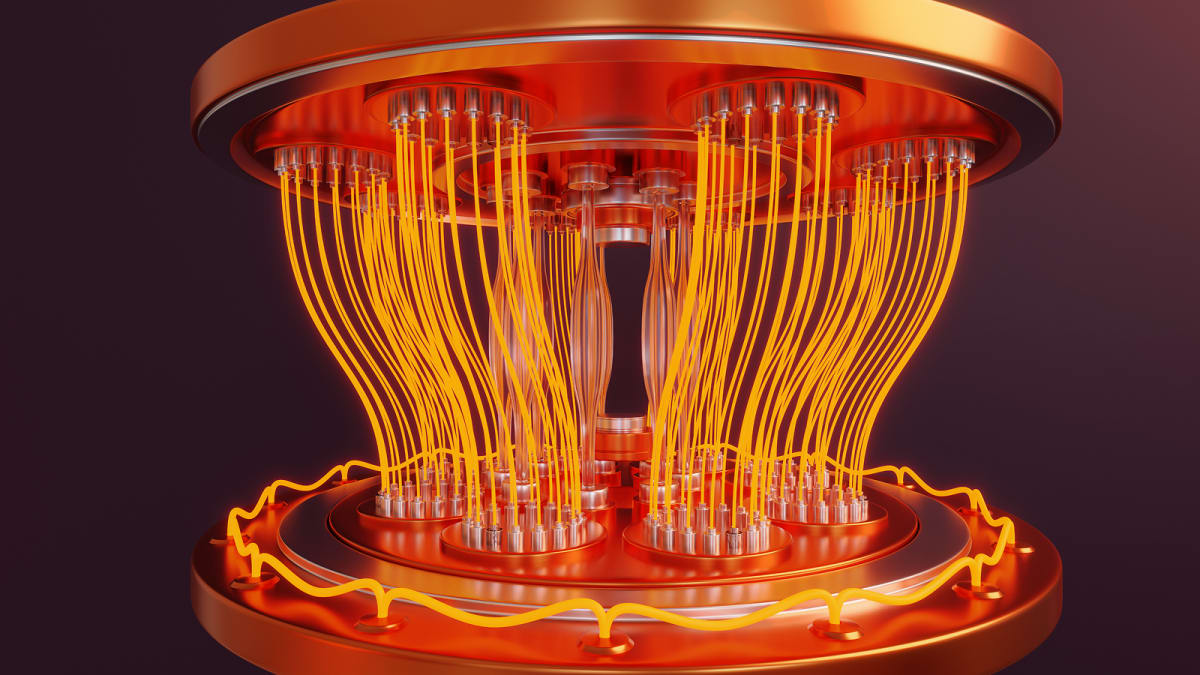
Quantum computers use "qubits" instead of regular computer bits to perform calculations. These qubits must be cooled to near absolute zero and are so sensitive that even tiny vibrations or background noise can ruin their work. It's like trying to perform brain surgery during an earthquake.
To protect against this fragility, scientists group multiple physical qubits together into "logical qubits" that back each other up. When one fails, the others catch the error. But when several fail at once, the whole system treats the mistake as correct information, and the calculation falls apart.
The research team invented a new technique called normalizer dynamical decoupling that works smarter, not harder. Instead of trying to fix each individual qubit, their method corrects errors at a higher level across the entire logical qubit. This prevents noise from building up as the system grows larger.
The results speak for themselves. Previous record holders achieved 93.7% accuracy that dropped to just 30% after 27 microseconds. The new approach hit 98.05% peak accuracy and maintained 84.87% fidelity after 55 microseconds, more than double the duration.
Why This Inspires
This isn't just about breaking records. Quantum computers promise to solve problems impossible for even our best supercomputers, from discovering new medicines to tackling climate change. But they've been held back by their inability to maintain accuracy long enough to complete complex calculations.
This breakthrough shows that combining error prevention with error correction creates something greater than either approach alone. The team proved that with smarter techniques, we can work with quantum computers' quirks instead of fighting against them.
The longer quantum computers can hold their accuracy, the more sophisticated algorithms they can run. These 55 microseconds might sound tiny, but in quantum computing time, it's an eternity that opens new possibilities.
Every percentage point of improved fidelity brings us closer to quantum computers that can tackle humanity's biggest challenges, and this team just gave us the most reliable quantum performance ever achieved.
More Images



Based on reporting by Live Science
This story was written by BrightWire based on verified news reports.
Spread the positivity!
Share this good news with someone who needs it