IEEE Volunteers Bring Electronics Labs to Rural India
In remote villages across northeastern India, 100+ students are building Arduino projects and smart homes in new electronics labs—many touching circuit boards for the first time. IEEE volunteers turned STEM from a distant dream into hands-on reality for kids who never had access to science equipment.
In the forests and mountains of rural India, students are programming sensors and building smart homes with their own hands. These aren't privileged kids in city schools. They're children from villages in Assam and West Bengal who, until recently, had never seen an Arduino board.
Pallab Kr Gogoi grew up in these rural areas and watched bright students lose their engineering dreams to a single bad test score. Without labs, mentors, or even examples of STEM careers, most kids couldn't imagine becoming engineers no matter how curious they were about science.
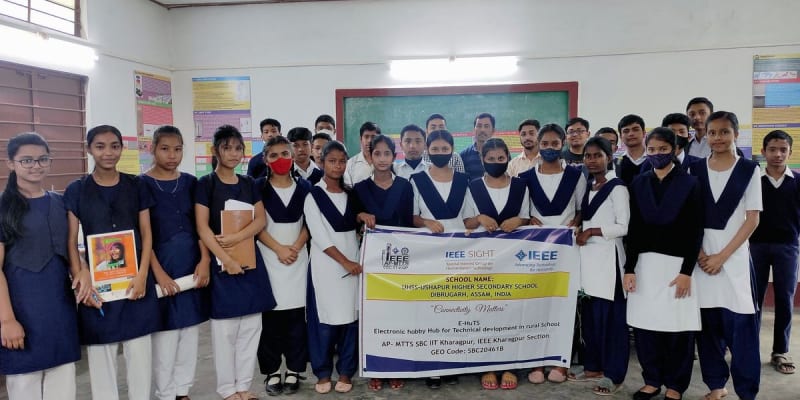
In 2020, Gogoi and volunteers from the IEEE student chapter at the Indian Institute of Technology Kharagpur launched a solution. Their Teach, Train, and Build program brought hands-on electronics training directly to five underserved schools, starting with simple LED circuits and progressing to Arduino programming and automation.
The response was immediate. Nearly 100 students in the first year dove into circuit building, sensor projects, and friendly competitions. Volunteers explained complex topics like electromagnetic concepts through relatable demonstrations that stuck.
The program's success attracted funding from IEEE's Special Interest Group in Humanitarian Technology in 2022. That support created three permanent electronics hobby labs called E-HuTS in schools across the region, giving students dedicated spaces to experiment and innovate.
At the inauguration, students witnessed something powerful: Professor Mrinal Mandal delivering a motivational talk in Bengali, their own language. Soon after, those same students built a functioning smart home using Arduino and wireless modules—technology they'd only dreamed about before.
The Ripple Effect
The Assam program ran entirely in the Assamese language, ensuring students with limited English could fully participate. Female students showed up in overwhelming numbers, many touching electronics components for the first time—a meaningful step toward closing STEM's gender gap in rural India.
More than 85 students across both regions have now developed nearly three dozen original projects, from sensor-based alarms to environmental monitoring systems. These aren't copycat assignments. They're student-driven innovations created under IEEE mentorship.
The program tracks real outcomes using a structured evaluation matrix: workshop hours, tools provided, skills developed, knowledge retention, and long-term interest. This transparent methodology makes the model replicable for other communities facing similar barriers.
The initiative earned recognition in IEEE's 2022 annual report and won the IEEE Darrel Chong Student Activity Award in 2021. More importantly, it sparked the creation of new IEEE communities across India, extending the reach even further.
In villages where poverty once collided with curiosity, students now build the future with their own hands.
More Images

Based on reporting by IEEE Spectrum
This story was written by BrightWire based on verified news reports.
Spread the positivity!
Share this good news with someone who needs it