Illinois Utility Cuts 100,000 MWh Using Smart Voltage Tech
ComEd saved Illinois customers enough electricity to power 9,000 homes for a year by tweaking voltage levels across hundreds of substations. The best part? Customers didn't have to change a single habit to see the savings on their bills.
ComEd just proved that engineering smarts can deliver real savings to everyday people, cutting energy consumption by 100,000 megawatt-hours without asking customers to do anything different.
The Illinois utility rolled out a technology called Voltage Optimization across 292 substations, quietly reducing the electricity flowing to homes and businesses by 2% to 3%. Customer appliances still work perfectly but use less power, which means lower monthly bills without anyone flipping an extra switch or adjusting a thermostat.
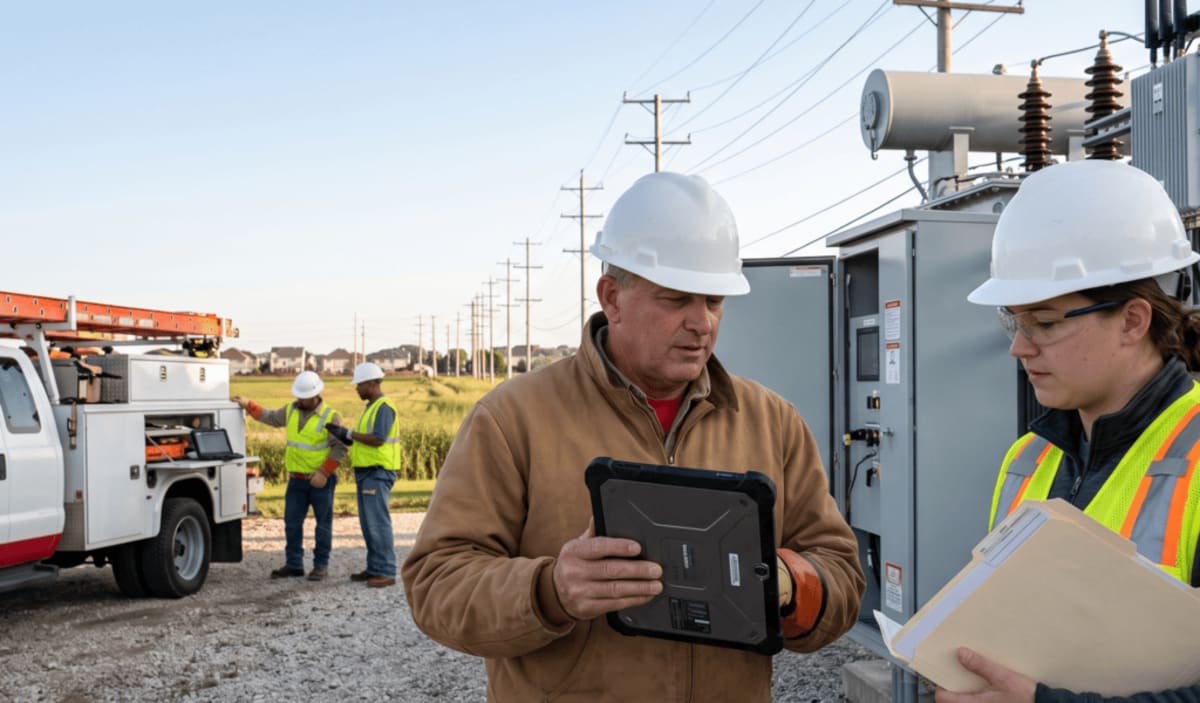
Jason Pozen, manager of distribution automation at ComEd, explained the breakthrough. The company installed remote monitoring on equipment like capacitor banks and voltage regulators, then used real-time data to fine-tune electricity delivery across the grid.
Before this upgrade, ComEd crews had to physically inspect 8,000 capacitor banks every year, driving trucks to each location on a fixed schedule. Now, intelligent algorithms analyze voltage patterns continuously and flag only the 500 units that actually need attention.
This shift from calendar-based checkups to condition-based maintenance means fewer truck rolls, faster problem-solving, and equipment fixes before failures can cause outages. The system spots subtle issues like blown fuses or controller damage before they escalate into bigger headaches.
The technology required ComEd to remap its entire distribution network and study how lower voltage levels would interact with the broader transmission system. That comprehensive approach was critical because tweaking voltage in one area can create ripple effects elsewhere on the grid.
Between 2018 and 2025, ComEd invested about $550 million in the program. The effort required coordination across transmission teams, substation crews, distribution engineers, smart meter specialists, and energy efficiency experts working together toward the same goal.
The Ripple Effect
ComEd's success offers a blueprint for utilities nationwide facing pressure to keep electricity affordable while maintaining reliability. The program proves that infrastructure investments, when done thoughtfully, can deliver measurable savings that show up on customer bills every month.
The approach also demonstrates how utilities can leverage technology they're already installing for other purposes. The same communication networks and smart meters deployed for outage management and grid monitoring can power voltage optimization programs that benefit everyone.
David Perez, ComEd's executive vice president and chief operating officer, noted that what started as a targeted efficiency study rapidly scaled into a utility-wide transformation. That kind of evolution shows how pilot programs can grow when the results speak for themselves.
ComEd plans to upgrade 16 more substations in 2025, expanding the program's reach. New substations run through four-day testing cycles to establish precise baselines before switching to continuous 24/7 optimization.
The 100,000 megawatt-hours saved translates into real money staying in Illinois residents' pockets while also reducing the environmental footprint of electricity generation across the region.
Based on reporting by Renewable Energy World
This story was written by BrightWire based on verified news reports.
Spread the positivity!
Share this good news with someone who needs it