India Adds 50 GW Renewable Energy in One Year
India just hit a massive clean energy milestone, integrating over 50 gigawatts of renewable power into its national grid in a single year. Government officials are now working to ensure the power system stays stable as the country races toward its climate goals.
India's power grid just absorbed more than 50 gigawatts of renewable energy in one year, a record achievement that puts the country firmly on track in its clean energy transition.
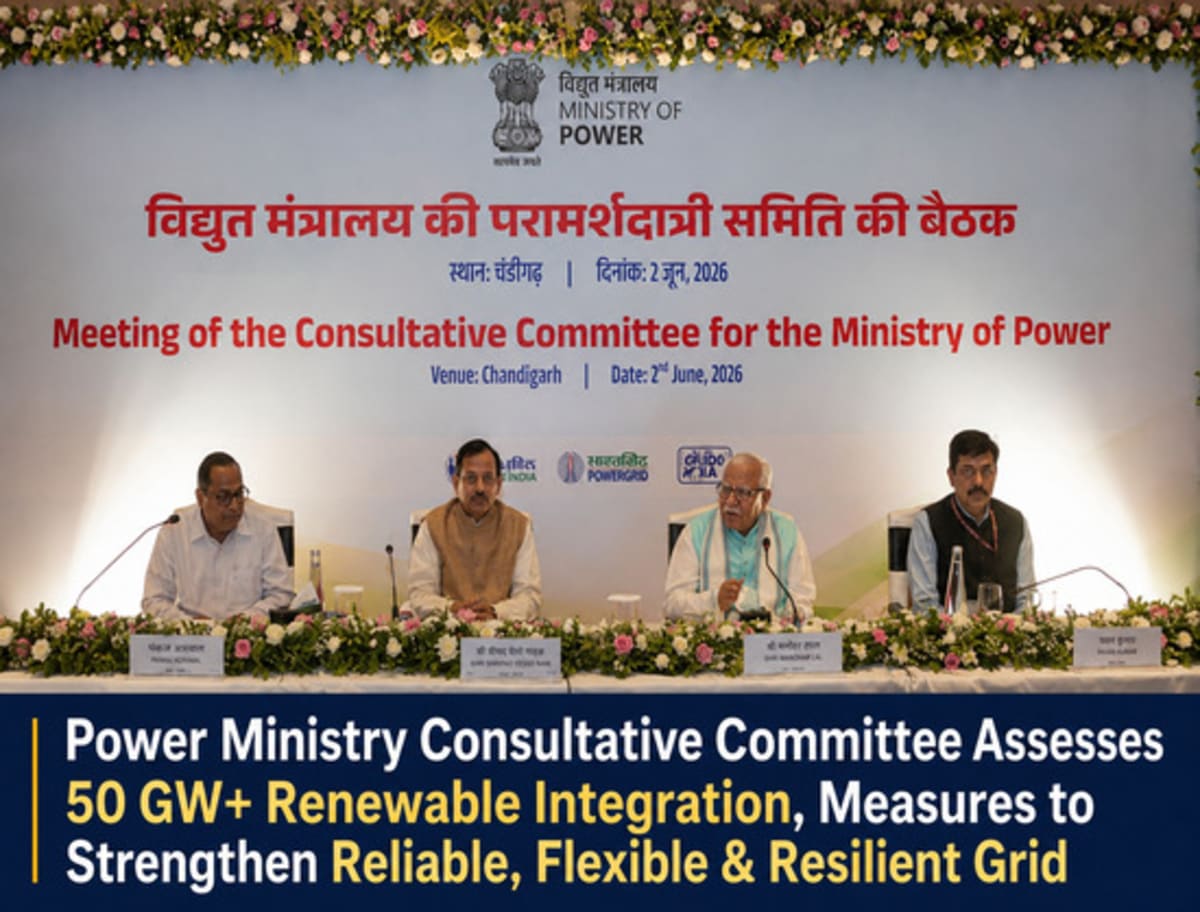
The Ministry of Power convened its advisory committee in Chandigarh this week to review how the national grid is handling the surge in solar and wind power. Union Power Minister Manohar Lal led discussions with lawmakers and officials from key energy agencies about keeping electricity reliable as renewable sources grow.
The milestone represents a massive shift in how India generates electricity. To put it in perspective, 50 gigawatts could power roughly 50 million homes, and the country added that much clean energy capacity in just 12 months.
Committee members tackled the technical challenges that come with renewable power. Unlike coal plants that generate steady electricity around the clock, solar and wind fluctuate with weather conditions. Grid operators must constantly balance supply and demand to prevent blackouts.
Officials reviewed solutions already underway, including better forecasting systems that predict when the sun will shine and wind will blow. They're also deploying energy storage batteries and special equipment called STATCOMs that help stabilize voltage across transmission lines.
The committee endorsed several initiatives to support continued growth. One priority is coordinating renewable project launches with transmission line construction so new solar farms and wind turbines can actually deliver their power without bottlenecks.
Pumped storage projects got special attention as a way to save excess renewable energy. These facilities pump water uphill when solar and wind generation is high, then release it through turbines when electricity demand peaks.
The Ripple Effect
India's renewable energy expansion touches far beyond its borders. As the world's most populous nation demonstrates that rapid clean energy adoption is possible, other developing countries are watching closely.
The country's success proves that emerging economies don't have to choose between growth and climate action. By building a flexible, modern grid that accommodates variable renewable sources, India is creating a blueprint other nations can follow.
Committee members also discussed encouraging large industrial power users to locate near renewable energy hubs, reducing the need for long-distance transmission and making the whole system more efficient. They emphasized upgrading weather monitoring stations to improve forecasting accuracy.
Officials committed to regular reviews of technical standards as new technologies like grid-forming inverters and large-scale batteries become more common. The goal is ensuring safety and reliability while encouraging innovation.
India's achievement comes as global pressure mounts to transition away from fossil fuels. With electricity demand rising alongside economic growth, the country is showing it's possible to meet energy needs while dramatically reducing carbon emissions.
More Images


Based on reporting by Google: renewable energy record
This story was written by BrightWire based on verified news reports.
Spread the positivity!
Share this good news with someone who needs it