
India AI Summit Shifts Focus to Real-World Impact
India is hosting the world's first major AI summit in a developing nation, bringing together 20 world leaders to focus on making artificial intelligence work for everyday people instead of just building more powerful models. The five-day gathering could reshape how emerging economies approach AI by treating it as public infrastructure rather than an expensive tech race.
While tech giants race to build the most powerful AI models, India is asking a different question: what if we focused on making AI actually help people instead?
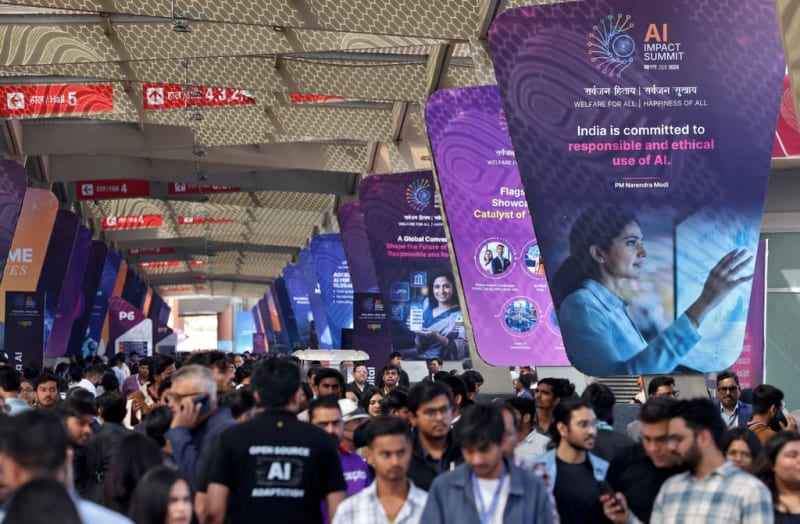
The India AI Impact Summit kicked off Monday in New Delhi, marking the first time a developing country has hosted one of the world's major AI gatherings. More than 250,000 visitors are expected, including French President Emmanuel Macron, Brazil's President Lula da Silva, and tech CEOs like OpenAI's Sam Altman and Google's Sundar Pichai.
The shift matters because most countries simply can't afford to compete with the United States and China in building cutting-edge AI systems. Instead, India is proposing that emerging economies work together to deploy AI in public services like healthcare, education, and government programs where it can make an immediate difference in people's lives.
India has already proven this approach works. The country successfully rolled out digital platforms serving its 1.4 billion people, including a real-time payment system that transformed how citizens access financial services.
Stanford University researchers recently ranked India third globally in AI competitiveness, behind only the US and China. The country's secret weapon is its massive pool of software developers and engineers who can turn AI from an abstract technology into practical tools.
The Tony Blair Institute for Global Change argues that treating AI as public infrastructure could help countries leapfrog traditional development challenges by 2035. AI could help governments deliver services faster, make better decisions, and use limited resources more efficiently.
The Ripple Effect
This collaborative approach could benefit countries worldwide. Emerging economies might pool resources to build regional computing hubs, develop AI tools in local languages, create shared data standards, and train workers together. These partnerships would cost far less than trying to outspend tech superpowers while potentially helping billions of people.
Two years ago, India launched a $1.25 billion IndiaAI Mission to support startups and build three AI research centers. While experts say these efforts are just beginning, the summit represents India's ambition to lead the Global South in showing how AI can serve people rather than just power.
OpenAI's Altman praised India's potential in The Times of India, highlighting three priorities: teaching more people AI skills, building the necessary computing infrastructure, and integrating the technology into actual workflows. Getting this balance right could make India a full-stack AI leader.
The message from New Delhi is clear: the future of AI doesn't have to be about who builds the biggest model, but who deploys it best to improve lives.
More Images



Based on reporting by South China Morning Post
This story was written by BrightWire based on verified news reports.
Spread the positivity!
Share this good news with someone who needs it