India and Canada Sign $1.9B Uranium Deal After Rift
Two years after a diplomatic breakdown, India and Canada just sealed a landmark $1.9 billion uranium agreement to power India's clean energy future. The deal marks a stunning turnaround in relations and opens the door to $50 billion in trade between the nations.
After years of frozen relations, India and Canada are writing a new chapter together with a massive uranium supply deal that could change the energy future for 1.4 billion people.
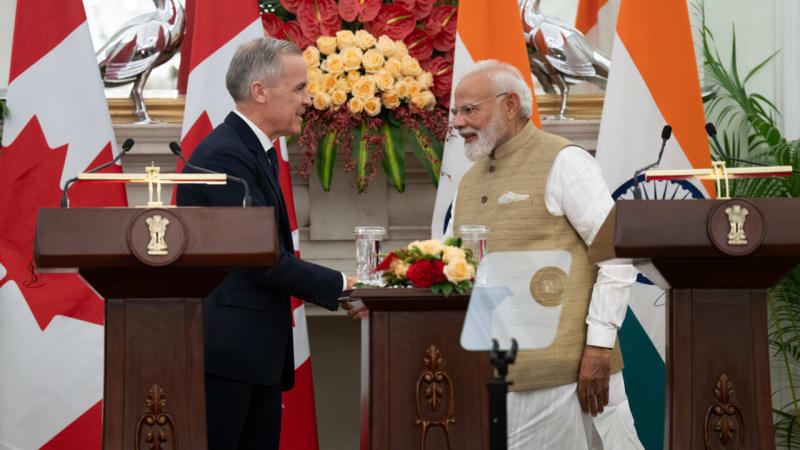
Prime Ministers Narendra Modi and Mark Carney announced the $1.9 billion agreement in New Delhi on Monday, alongside partnerships on critical minerals, renewable energy, and defense. The uranium deal will help India expand its nuclear power capacity from 8 gigawatts today to an ambitious 100 gigawatts by 2047, providing clean energy to the world's most populous nation.
The handshake moment is remarkable considering where these two countries stood just two years ago. Diplomatic ties collapsed in 2023 when Canada accused India of involvement in a killing on Canadian soil, accusations India firmly rejected. Both nations expelled diplomats, and cooperation ground to a halt.
"Our ties have seen a new energy, mutual trust, and positivity," Modi said at the announcement. Carney noted there has been more government engagement in the past year than in the previous two decades combined.
For Canada, the timing is strategic. Prime Minister Carney is racing to reduce his country's dependence on the United States, which receives over 75 percent of Canadian exports. With concerns about American tariffs under President Trump, Canada is actively seeking new economic partnerships across Asia.
The agreements go beyond uranium. Canada committed to becoming a reliable supplier of liquefied natural gas and critical minerals needed for India's manufacturing and clean technology industries. Canadian pension and wealth funds have already invested $73 billion in India, showing confidence in the partnership's potential.
The Ripple Effect
This reconciliation shows how quickly nations can move from crisis to cooperation when mutual interests align. India gets the resources to power its clean energy transition without relying on fossil fuels. Canada diversifies its trade portfolio and reduces vulnerability to economic pressure from any single partner.
The two countries are now targeting $50 billion in bilateral trade and plan to finalize a comprehensive free trade agreement by year's end. They're also launching a new defense partnership and working together on next generation small modular reactors that could make nuclear energy safer and more accessible worldwide.
The uranium flowing from Canadian mines to Indian power plants will generate electricity for homes, schools, and hospitals across South Asia. Each gigawatt of nuclear capacity can power roughly 750,000 homes while producing zero carbon emissions, a crucial tool as India balances development with climate commitments.
After India, Carney will visit Australia and Japan to continue building Canada's economic ties across the Pacific. The strategy reflects a broader global shift as countries seek resilient supply chains and diverse partnerships.
Two nations that weren't speaking two years ago are now planning decades of cooperation in clean energy.
More Images
Based on reporting by France 24 English
This story was written by BrightWire based on verified news reports.
Spread the positivity!
Share this good news with someone who needs it