India and EU Create 2 Billion Person Free Trade Zone
After 20 years of negotiations, India and the European Union just sealed a historic trade deal connecting 2 billion people and representing 25% of global GDP. The agreement slashes tariffs on nearly everything from cars to wine, opening massive opportunities for workers and businesses on both sides.
Two decades of patient diplomacy just paid off in spectacular fashion for 2 billion people across two continents.
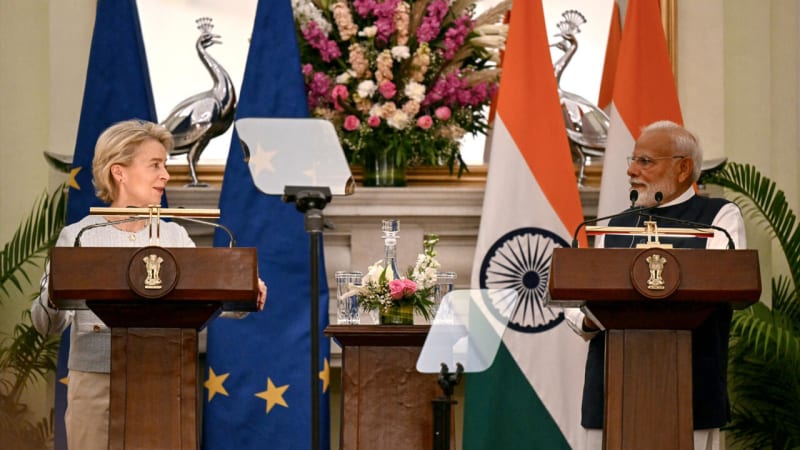
India and the European Union announced Tuesday they've finalized a sweeping free trade agreement that Prime Minister Narendra Modi called "the mother of all deals." The pact creates one of the world's largest unified markets, covering roughly a third of global trade and a quarter of the planet's economic output.
The deal will eliminate tariffs on 97% of European exports to India, saving businesses about €4 billion annually in duties. For everyday consumers, that means real changes: car tariffs drop from 110% to just 10%, wine duties fall from 150% to 20%, and taxes on foods like pasta and chocolate disappear entirely.
European Commission President Ursula von der Leyen, who attended India's Republic Day parade Monday as a guest of honor, said she expects exports to India to double. European companies gain privileged access to India's financial services and maritime sectors, while Indian textiles, jewelry, leather goods and services get preferential treatment in European markets.
For India's 1.4 billion people, the agreement means an influx of technology and investment to modernize infrastructure and create millions of new jobs. The world's most populous nation sees Europe as a crucial partner for its ambitious growth plans.
Trade between the two partners already hit €120 billion in goods last year, nearly double the volume from a decade ago, plus another €60 billion in services. This agreement supercharges that momentum.
The Ripple Effect
The timing matters as much as the substance. Both India and the EU are working to diversify their economic partnerships amid rising uncertainty from US tariffs and Chinese export controls. By turning toward each other, they're demonstrating that cooperation still works in an increasingly fragmented world.
India has spent recent years reducing its dependence on Russia for military equipment by boosting domestic manufacturing. Europe is doing the same regarding its reliance on American markets. This deal gives both regions the economic breathing room to chart more independent courses.
The agreement also includes provisions to ease movement for students, researchers, seasonal workers and skilled professionals between the regions, plus a separate security and defense pact. These human connections may prove just as valuable as the economic ones.
Von der Leyen captured the moment's significance perfectly: "We are showing a fractured world that another way is possible." When nations choose dialogue and openness over isolation, everybody wins.
More Images
Based on reporting by France 24 English
This story was written by BrightWire based on verified news reports.
Spread the positivity!
Share this good news with someone who needs it