India Builds First Village for Elephants and Caretakers
Outside Jaipur, India created Hathi Gaon, a 30-hectare planned settlement where 76 elephants and their mahout families live with proper housing, healthcare, and space to thrive. A viral photo of a painted elephant sparked global attention, but the real story is how India is rethinking centuries-old human-elephant relationships.
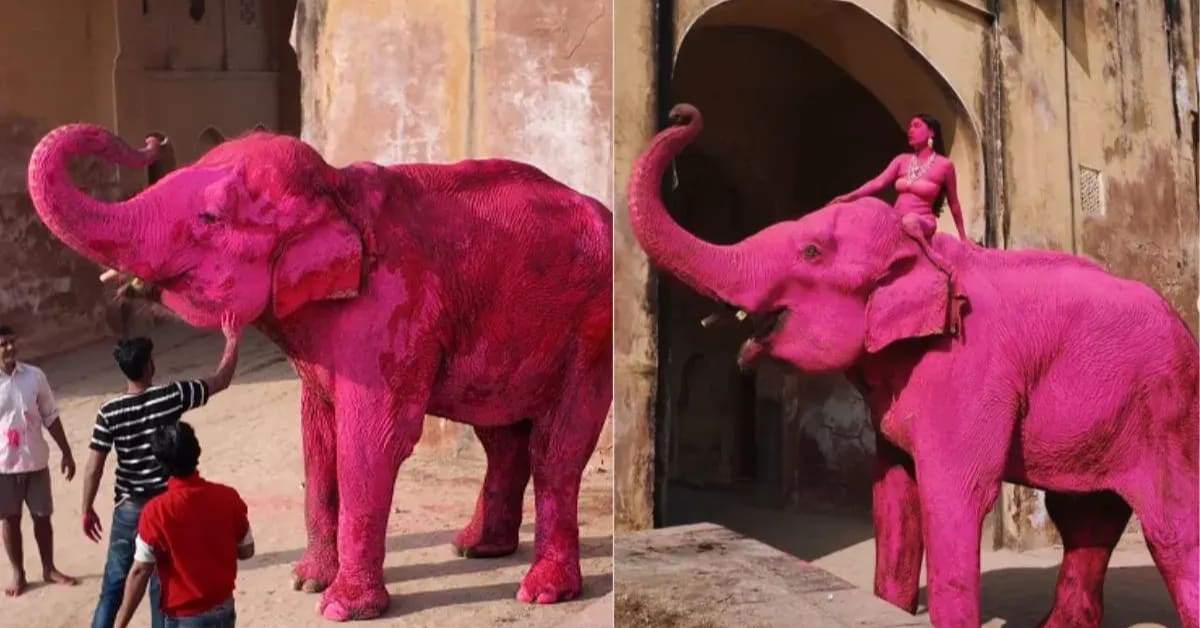
When a photographer's image of a bright pink elephant went viral last year, the internet erupted with concern. But the photo led to something unexpected: global attention on Hathi Gaon, India's first planned village built specifically for elephants and the people who care for them.
Located just outside Jaipur along Highway 248, Hathi Gaon spreads across 30 hectares near the Aravalli hills. The Rajasthan government created it in 2010 to solve a decades-old problem: elephants and their mahout caretakers living in cramped, inadequate conditions.
Before Hathi Gaon existed, Jaipur's elephants ferried tourists to Amer Fort but had nowhere proper to call home. Their mahout families squeezed into tiny spaces without basic infrastructure or veterinary care.
The government built 51 houses for mahout families, complete with electricity and running water. Alongside them, 70 spacious enclosures were designed specifically for elephant needs, each with better sanitation and room to move.
A large reservoir was added so elephants could bathe daily and cool themselves in Rajasthan's desert heat. By 2017, the Forest Department took over management, formalizing healthcare protocols and welfare standards.
Today, around 76 elephants live in Jaipur, most of them at Hathi Gaon. The elephants receive regular veterinary checkups, organic diets of fruits and vegetables, and dedicated bathing time.
Why This Inspires
Hathi Gaon represents something rare: a government initiative that honors both cultural tradition and animal welfare. In India, elephants appear in temples, festivals, and childhood stories, deeply woven into the emotional fabric of society.
Rather than banning elephant-human relationships entirely, Rajasthan chose a middle path. They created infrastructure that respects the centuries-old bonds between mahouts and elephants while dramatically improving living conditions for both.
The viral pink elephant, Chanchal, lived to 70 years old and died of natural causes last month. Officials confirmed the organic gulal powder used for the photoshoot washed off within 30 minutes and caused no harm.
But Chanchal's unexpected fame did something powerful: it forced a global conversation about how we balance tradition, tourism, and animal dignity. That conversation led thousands of people to learn about Hathi Gaon's existence and its mission.
The village isn't perfect, and questions about tourism's role in elephant welfare continue. But it shows what's possible when governments invest in solutions that consider everyone involved, including the animals.
India's experiment in creating stable, dignified homes for working elephants and their human families is still evolving, and the world is watching with hope.
More Images
%2Fenglish-betterindia%2Fmedia%2Fmedia_files%2F2026%2F04%2F03%2Fsriroopa-featured-image-template-3-2026-04-03-16-32-17.png)
%2Fenglish-betterindia%2Fmedia%2Fmedia_files%2F2025%2F11%2F20%2Fwild-at-heart-banner-image-microsite-banner-2025-11-20-16-17-04.jpg)
%2Ffilters%3Aformat(webp)%2Fenglish-betterindia%2Fmedia%2Fmedia_files%2F2026%2F04%2F03%2Fsriroopa-featured-image-template-2-2026-04-03-16-11-51.png)
Based on reporting by The Better India
This story was written by BrightWire based on verified news reports.
Spread the positivity!
Share this good news with someone who needs it