India Farmer Ditches Chemicals, Builds Jaggery Business
A farmer in India is proving that traditional methods can create modern success. His chemical-free jaggery is winning customers across six cities and reviving rural pride.
Saab Singh is turning sugarcane into something sweeter than profit: a model for sustainable farming that's capturing attention across northern India.
The farmer from Bhalehdi village in Muzaffarnagar has built a thriving jaggery business by going back to basics. He replaced synthetic fertilizers with vermicompost and traditional inputs, growing cleaner sugarcane that produces better gur, the golden sweetener central to Indian cuisine.
"Quality begins in the field," Singh explains. "If the cane is clean and harvested on time, the jaggery sets better and tastes right."
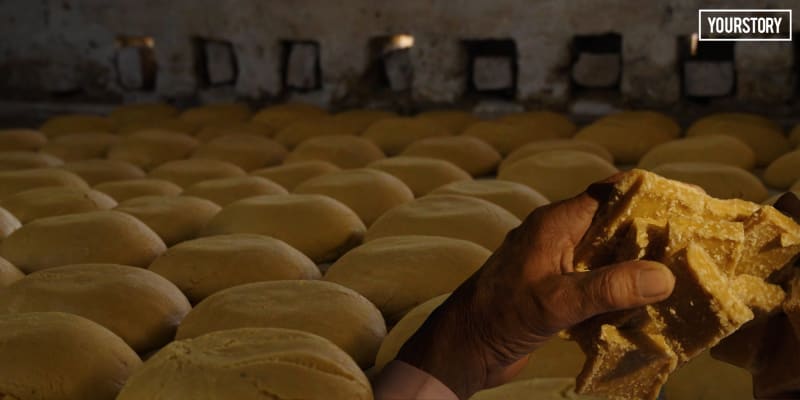
His approach connects an entire seasonal economy. Freshly cut sugarcane moves quickly from field to crusher to boiling pans, where it transforms into thick syrup over controlled heat. Continuous stirring brings it to perfect consistency before it's poured into molds to cool and set.
The district's jaggery makers have quietly expanded their offerings beyond traditional blocks. Now they create versions infused with sesame, ginger, and ajwain, each reflecting local tastes while creating new market opportunities.
Cleaner production practices have become the norm. Many units now use coverings and improved storage, building buyer trust through visible transparency.
The Ripple Effect
Singh's chemical-free approach is reaching far beyond his village. Through India's One District One Product program, which showcases regional specialties at exhibitions, he's connected with buyers from Delhi, Noida, Ghaziabad, Aligarh, Mathura, and Moradabad.
These aren't one-time sales. Customers return because Muzaffarnagar's jaggery offers something increasingly rare: a traditional food with known origins and no artificial additives.
The district recognition strengthens credibility. When buyers see Muzaffarnagar gur, they know what they're getting: a product made the right way from start to finish.
For small-scale makers, these direct connections replace uncertain supply chains. Exhibition orders create steady income streams that support farming families through seasonal shifts.
As more consumers seek foods with recognizable origins and cleaner ingredient lists, Singh's patient work in the fields is paying compound interest across the region's rural economy.
More Images

Based on reporting by YourStory India
This story was written by BrightWire based on verified news reports.
Spread the positivity!
Share this good news with someone who needs it