India Powers Economic Boom with Solar, Not Coal
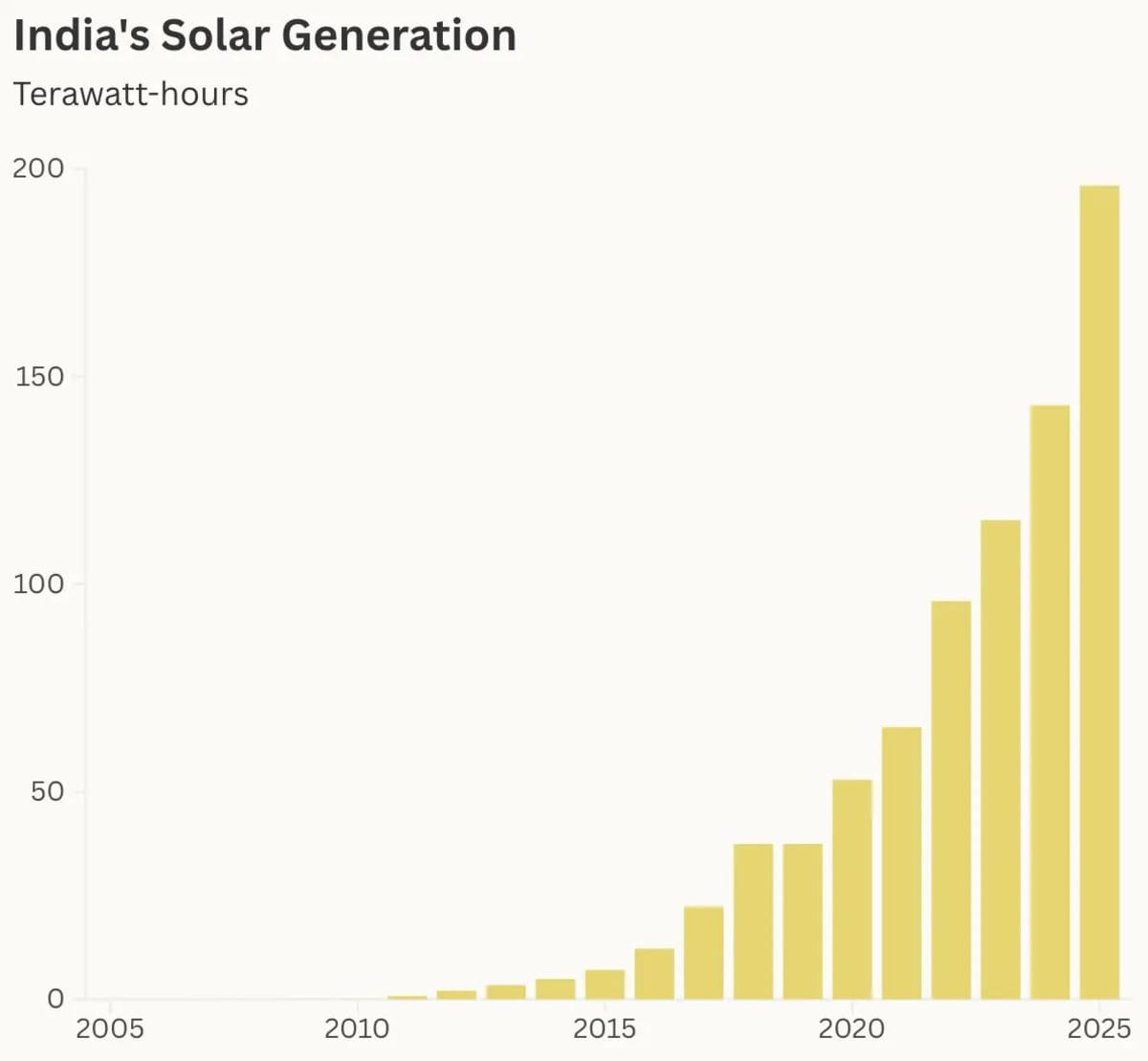
India is becoming the first major nation to industrialize primarily with solar energy instead of fossil fuels. The country's solar capacity has grown 40% annually, flipping the script on how developing economies power their growth.
While China built its economy on coal, India is building its future on sunshine.
The world's most populous nation is installing solar panels at a breakneck pace. Since 2015, India has added more than 150 gigawatts of solar capacity, growing by 40% each year. By 2030, that number will double again.
This surge is rewriting the playbook for developing nations. For decades, countries assumed they needed to follow the West's path: burn fossil fuels first, clean up later. India is proving there's another way.
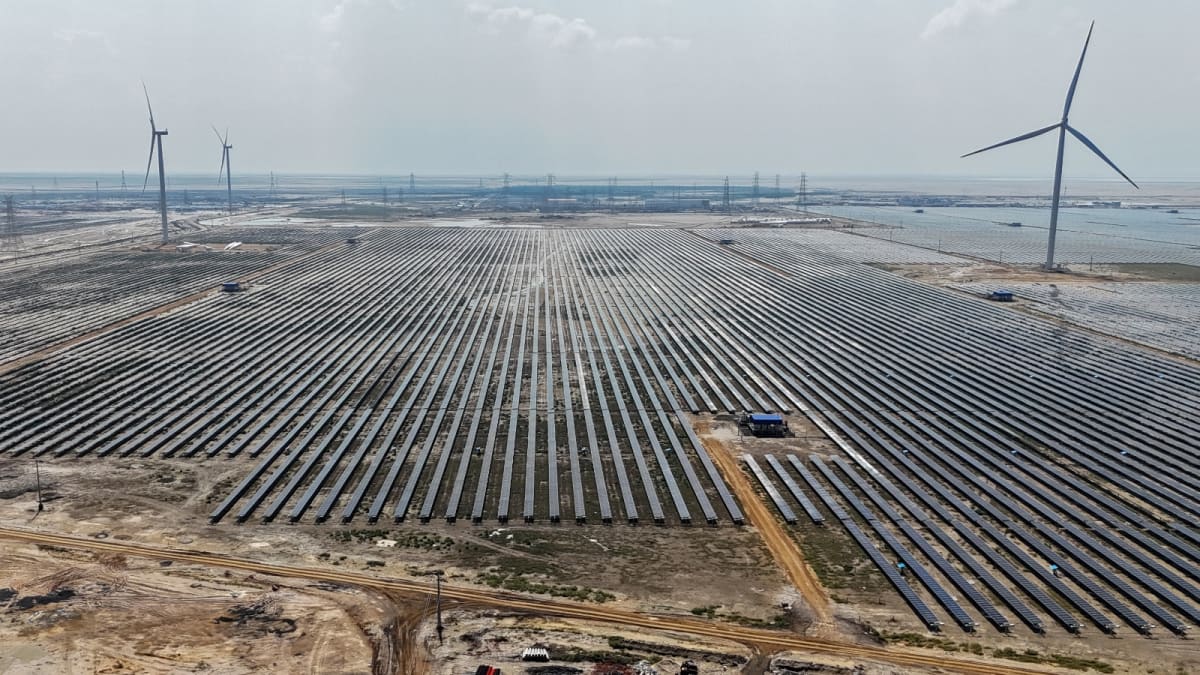
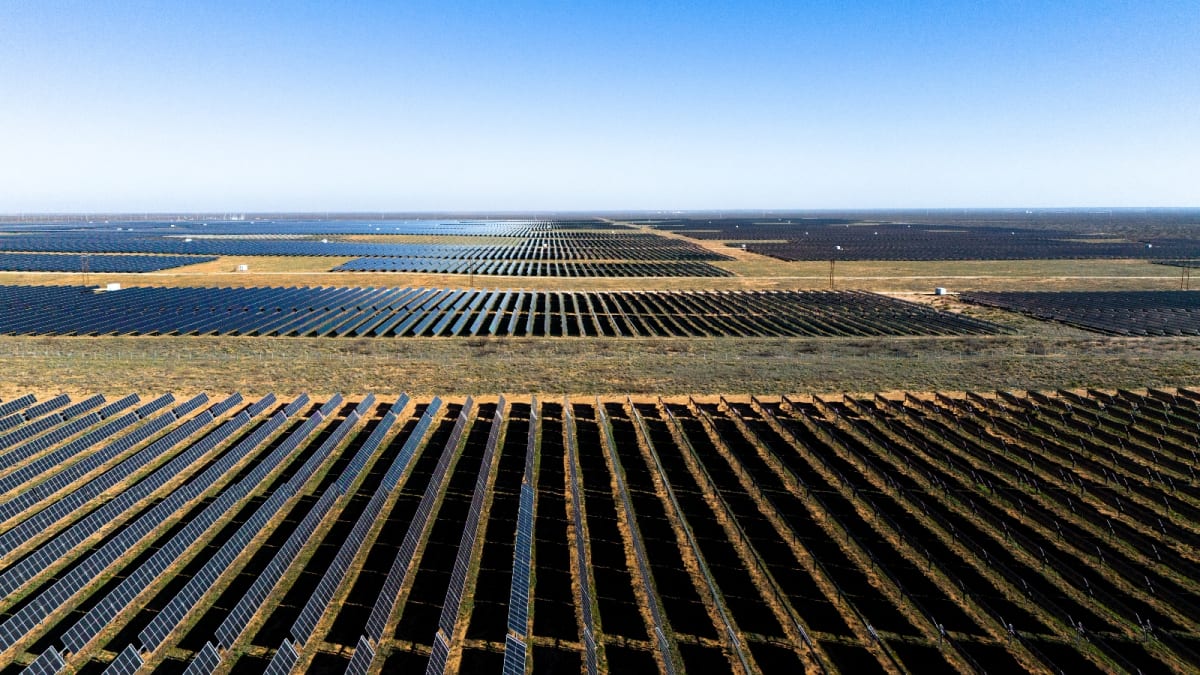
The crown jewel of this transformation sits on a vast salt desert near Pakistan. The Khavda solar park will eventually span 280 square miles and power a country the size of Austria. By 2029, it will be the world's largest solar installation, with 60 million panels generating enough electricity to replace 30 traditional power plants.
Just ten years ago, this seemed impossible. In 2015, India's government promised to double coal production. At climate conferences, officials angrily rejected pressure to abandon fossil fuels, arguing that wealthy nations had no right to deny developing countries the same energy sources they'd used.
But quietly, policy shifted. India's sunny climate and plummeting solar costs made the math simple. Today, more than half the country's installed power capacity comes from clean sources.
Coal still generates 70% of India's electricity and makes the country the world's third-largest carbon emitter. But new coal plants have slowed dramatically, and the fuel's share will drop below 50% by 2035.
The Ripple Effect
India's solar success sends a powerful signal to other developing nations across Africa, Southeast Asia, and Latin America. They're watching closely as India proves you don't need to choose between economic growth and climate action.
Cheap solar panels have made clean industrialization economically smart, not just environmentally responsible. What once seemed like a luxury for wealthy nations is now the practical choice for emerging economies.
Energy analysts note that India's approach could reshape global emissions. If other fast-growing nations follow this solar-powered path instead of China's coal-heavy model, the world gains a fighting chance against climate change.
The transformation isn't perfect. Robots clean the desert panels at night to save water. Wind turbines supplement solar when the sun sets. Storage challenges remain. But the direction is clear.
India is proving that the future of development runs on sunlight, not smoke.
More Images


Based on reporting by Google News - Clean Energy
This story was written by BrightWire based on verified news reports.
Spread the positivity!
Share this good news with someone who needs it