India Powers Industrialization with Solar, a World First
India is becoming the first major nation to fuel its economic boom with solar energy instead of coal. A massive solar park covering 280 square miles will soon generate enough clean electricity to power Austria.
The world's most populous country is rewriting the playbook for how nations grow their economies. While Europe, America, and China built their industrial power on coal, India is doing something revolutionary: building on sunshine.
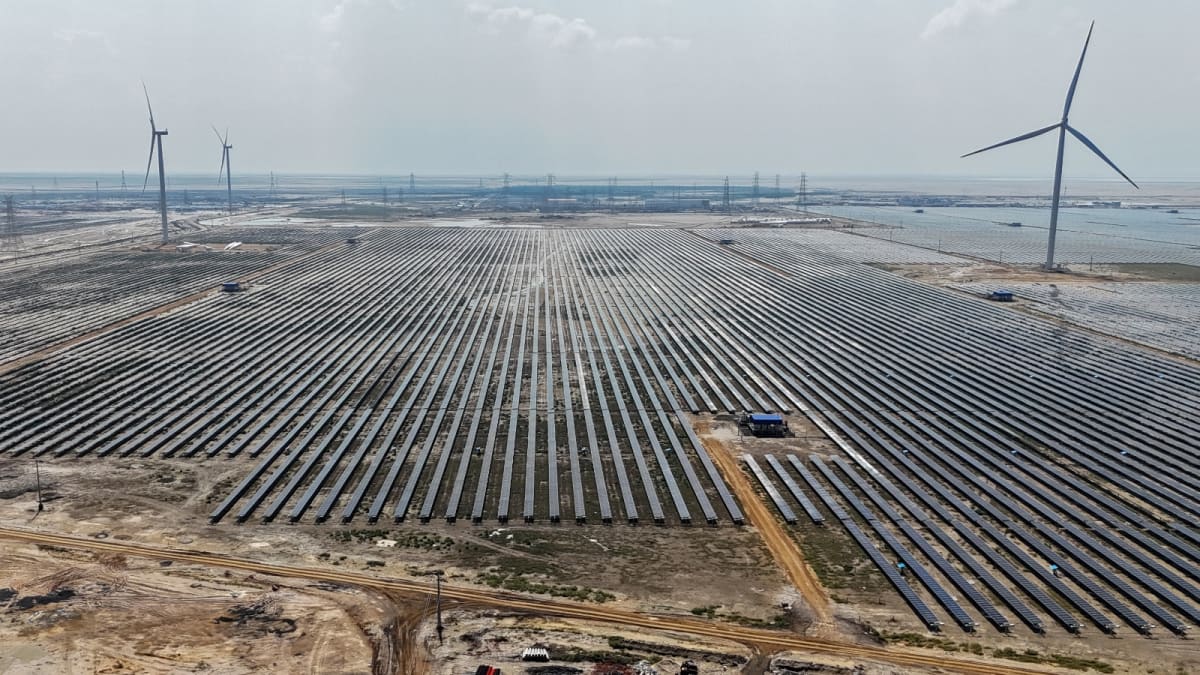
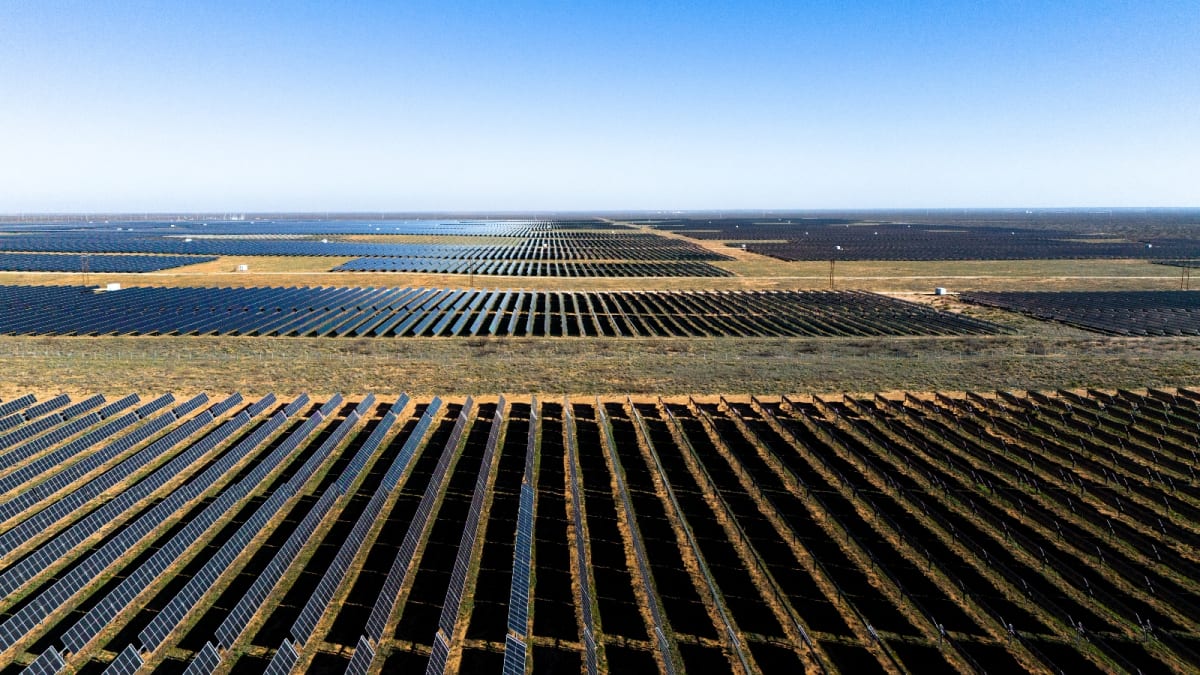
In the vast Rann of Kutch salt desert, 60 million solar panels will soon blanket 280 square miles. The Khavda solar park will become the world's largest when completed in 2029, generating 30 gigawatts of clean electricity—enough to power the entire nation of Austria.
India's solar transformation happened fast. Just a decade ago, solar power barely existed in the country beyond a few rooftop panels and village microgrids. The government seemed committed to coal, and ministers angrily defended fossil fuels at international climate talks.
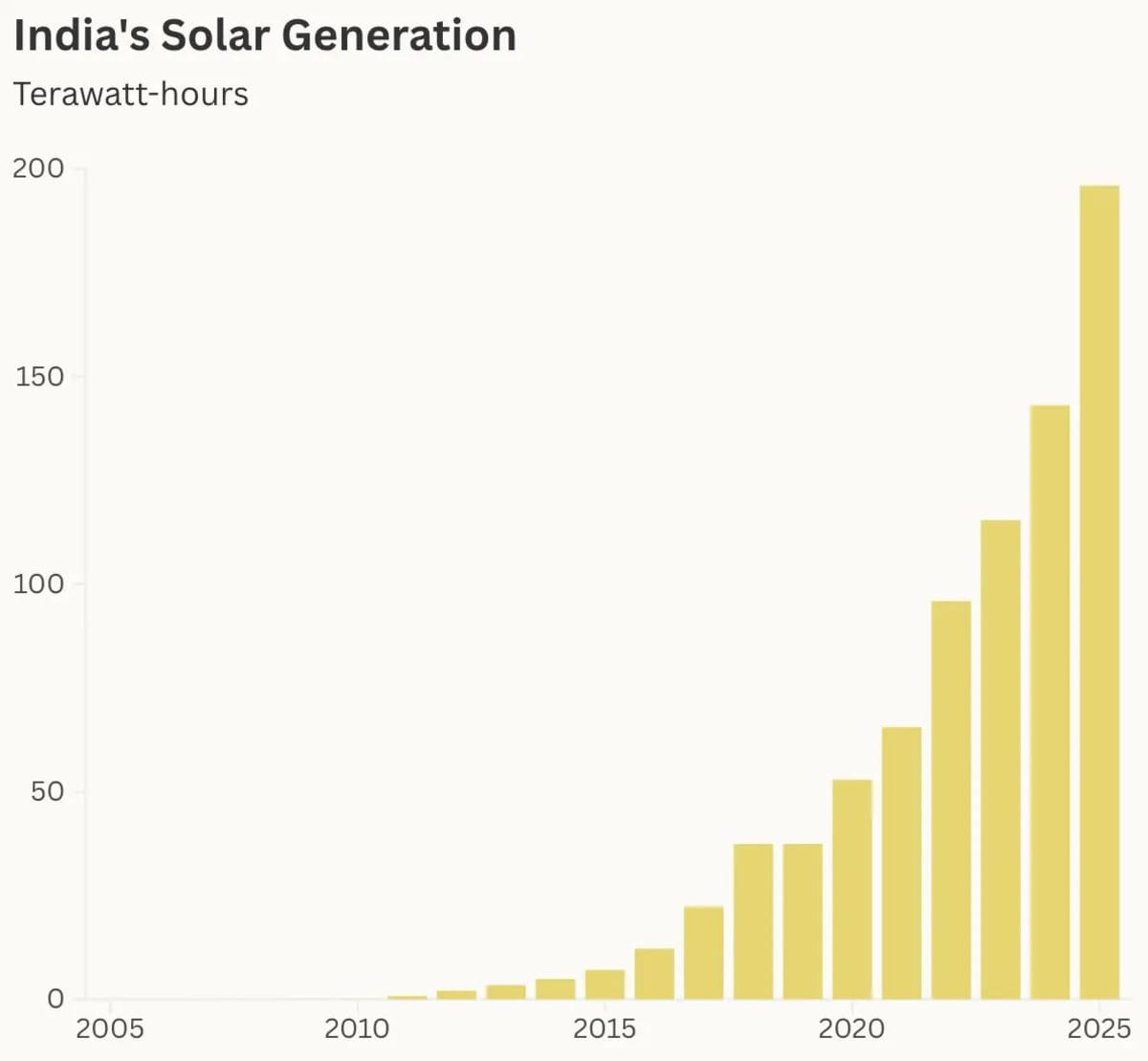
But cheap solar panels changed everything. India's sunny climate made solar a natural fit, and costs kept dropping. Since 2015, installed solar capacity has grown 40 percent every year.
The momentum is stunning. India passed 150 gigawatts of solar capacity in March and will double that by 2030. Last year marked a historic milestone: more than half the country's installed electricity capacity came from clean sources for the first time.
"China built on coal; India is building on sun," said Kingsmill Bond, energy strategist at Ember, a clean energy think tank. "And what India is doing could also be mirrored in other emerging economies."
The shift matters beyond India's borders. As the world's third-largest carbon emitter, India's energy choices ripple globally. The country's electricity demand still grows 6 percent annually as hundreds of millions gain access to modern appliances and air conditioning.
The International Energy Agency projects that solar will meet half of India's electricity growth through 2030. Wind, hydroelectric, and nuclear power will supply another quarter. Coal's share of the energy mix will drop below 50 percent by 2035.
The Ripple Effect
India's solar success shows developing nations a new path forward. Countries across Africa, Southeast Asia, and Latin America face the same challenge: how to lift millions out of poverty without repeating the carbon-intensive mistakes of earlier industrializers.
India's answer arrives at the perfect moment. Solar technology costs have fallen 90 percent since 2010, making clean energy cheaper than coal in most sunny regions. What once seemed impossible—skipping the fossil fuel phase entirely—now makes economic sense.
The Khavda project uses innovations that could work anywhere. Robots dry-clean the panels at night, removing salt and dust without using precious water. Wind turbines on the Arabian Sea coast provide nighttime power when the sun sets.
Other emerging economies are watching closely. If India can power its transformation with sunshine while its economy grows faster than China's, the playbook for global development gets rewritten.
The country still faces challenges—coal provides 70 percent of actual electricity generation, and urban air quality remains the worst in the world. But the trajectory points unmistakably toward a cleaner future, one solar panel at a time.
More Images


Based on reporting by Grist
This story was written by BrightWire based on verified news reports.
Spread the positivity!
Share this good news with someone who needs it