India Program Cuts Child Malnutrition in 800 Villages
In rural India, where three out of four children suffer from anemia, a two-year health program is proving that training local workers can transform maternal and child nutrition. The initiative reaches 800 villages by strengthening what already exists.
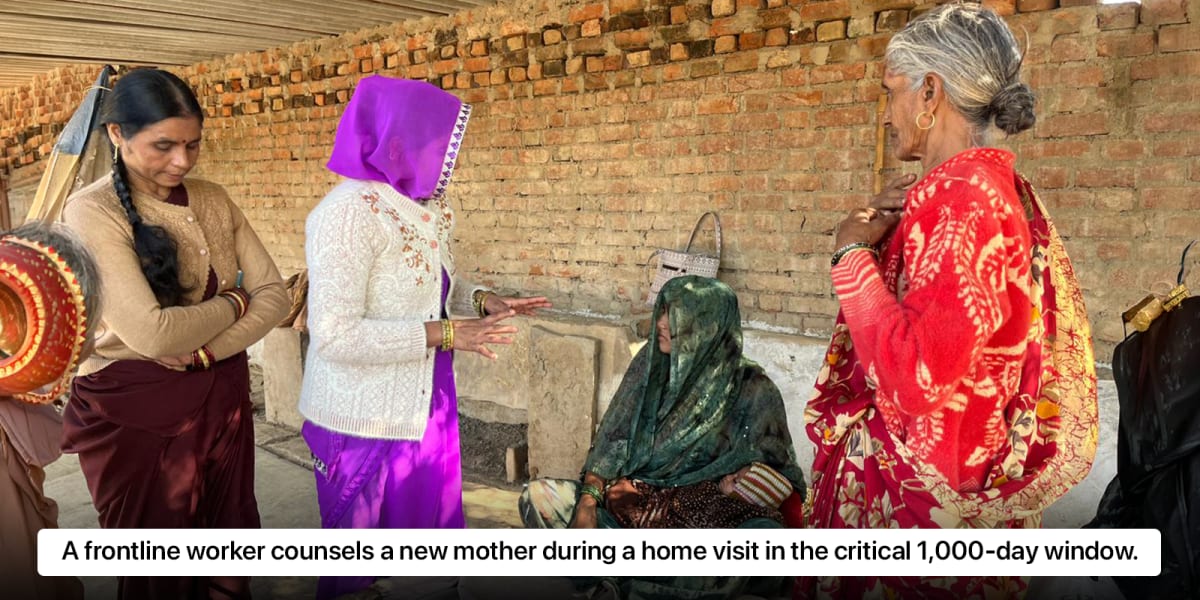
A trained community health worker in rural Madhya Pradesh spotted something troubling during a routine home visit. A newborn weighed far less than normal, and the mother appeared weak and pale.
Because of new training, the worker knew exactly what to do. She immediately referred both to medical facilities, saving the infant through a nutrition center and treating the mother's severe anemia with iron-fortified food and counseling.
This success story is multiplying across 800 villages in Morena and Chhindwara districts, where Bayer and The Antara Foundation launched a program targeting India's stubborn malnutrition crisis. The statistics paint a dire picture: 73% of young children in parts of Morena suffer from anemia, and one in three children under five remains underweight nationwide.
The program focuses on the 1,000-day window from pregnancy through a child's second birthday, when nutritional deficits become hardest to reverse. Rather than building new systems, the initiative strengthens existing government health workers who already live in these communities and speak local languages.
These frontline workers receive training on three critical stages. During pregnancy, they emphasize iron and zinc-rich diets before women even show visible signs of expecting. In infancy, they promote exclusive breastfeeding as essential rather than optional, educating mothers about their own nutrition during this period.
The toddler years bring focus to cognitive development through consistent, nutrient-dense feeding. By understanding what children need at each stage, workers deliver care that's timely and specific.
What makes this approach unusual is its focus on teenage girls, years before they become mothers. Through school sessions and community gatherings, adolescent girls learn about nutrition, hygiene, and reproductive health. A girl who starts pregnancy already anemic begins at a severe disadvantage, so the program changes the starting conditions entirely.
The initiative also tackles deeply rooted practices with respect rather than resistance. In some areas, new mothers traditionally stay confined indoors after delivery, limiting their access to food and sunlight when nutritional needs peak. Through home visits and community discussions, workers create space for dialogue about these customs without imposing change.
The Ripple Effect
The program's impact extends beyond individual recoveries. By training health workers in 191 health centers, the initiative creates lasting capacity that survives after the two-year program ends. These workers continue living in their communities, applying their knowledge to future generations.
Local demonstrations show women how to prepare nutritious meals using ingredients already in their kitchens, making sustainable change possible without expensive imports. The focus on system strengthening rather than temporary aid means improvements can spread naturally through existing networks.
If this model proves replicable, it offers a blueprint for addressing child malnutrition across India's most affected regions without reinventing healthcare infrastructure.
One trained observer in a remote village can now spot warning signs and act fast, turning a potential tragedy into a recovery story that ripples outward through families and communities.
More Images



Based on reporting by YourStory India
This story was written by BrightWire based on verified news reports.
Spread the positivity!
Share this good news with someone who needs it