India Sends 120 Deep-Tech Startups to France This June
India is showcasing 120 of its most advanced research-driven startups to global investors in Nice, France, this month. It's the country's boldest move yet to prove it builds frontier technology, not just software services.
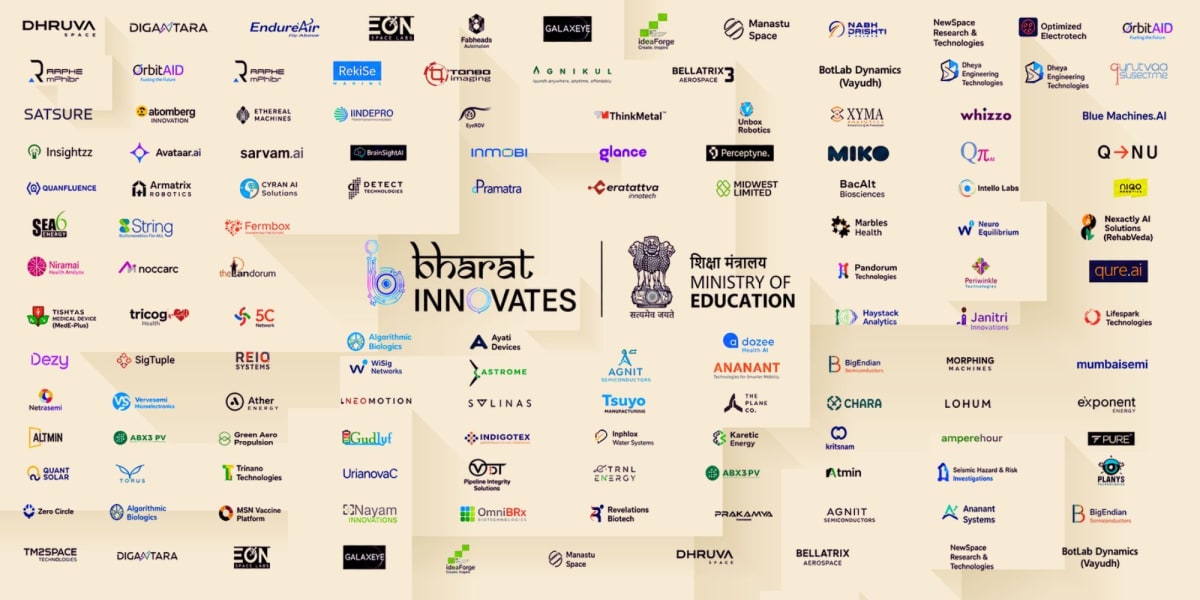
India is about to show the world it's more than a back office for software development. This June 14-16, the Ministry of Education will present 120 deep-tech startups at Bharat Innovates 2026 in Nice, France, connecting them with international investors and technology partners who understand that breakthrough science needs patient capital.
The timing matters. These companies work on hard problems that take years to commercialize, from semiconductor designs to satellite systems, and they've historically struggled to find funding that matches their timelines.
The startups represent 13 frontier sectors, with space and defense leading at 22 companies, followed by healthcare and medical technology at 20. Electric vehicle maker Ather Energy and drone manufacturer ideaForge will stand alongside AI diagnostics firm Qure.ai and small-launch-vehicle company Agnikul Cosmos. Others are tackling quantum cybersecurity, iron-air batteries, brain-mapping platforms, and green propulsion systems.
Prime Minister Narendra Modi announced the initiative in February 2026 as part of the India-France Year of Innovation. The goal is simple but rarely executed well: give founders working on real scientific breakthroughs a structured path to meet investors who can fund multi-year development cycles.
The numbers back up the ambition. India now hosts over 4,200 deep-tech startups, including 550 launched in 2025 alone, according to the Nasscom-Zinnov India Tech Startup Report 2025. Deep-tech funding jumped 37% to $2.3 billion last year, even as investors became more selective.
A warmup event in Bengaluru on May 19 showed the appetite is real. Twenty-four startups from the cohort pitched to over 90 investors managing more than $85 billion in combined assets. The Ministry designed these platforms specifically to help founders reach capital capable of supporting genuine global scale.
The Ripple Effect
What makes this different from typical startup showcases is what deep-tech companies actually build. Their products rest on genuine scientific or engineering breakthroughs, not clever apps built on existing tools. That means protected intellectual property that's hard to replicate, longer development cycles, and potentially massive, defensible payoffs.
If even a handful of these 120 companies convert international interest into lasting partnerships or manufacturing deals, India's pivot from service provider to frontier technology builder becomes real. The Ministry says investors want pilots, co-development agreements, and research collaborations, not just one-off investments.
The real test comes after Nice, when handshakes turn into contracts and research collaborations turn into products that reach markets worldwide.
More Images



Based on reporting by YourStory India
This story was written by BrightWire based on verified news reports.
Spread the positivity!
Share this good news with someone who needs it