Indian AI Startup Outperforms Google on Local Language Tests
A Bengaluru startup built AI specifically for India's messy, mixed-language documents and just beat tech giants at reading them. Sarvam AI scored 93% on complex document tests by focusing on what others treat as edge cases.
When a bank form mixes English headings with Hindi answers, or a property deed shows smudged stamps across three scripts, most AI systems struggle. Sarvam AI built its entire system around exactly these challenges, and the results just proved why that matters.
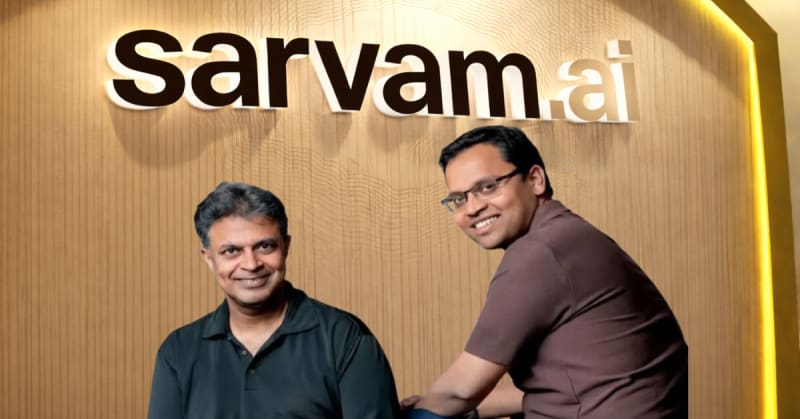
The Bengaluru startup, founded in 2023 by Dr. Vivek Raghavan and Dr. Pratyush Kumar, recently scored 93.28% on OmniDocBench, a standard test for reading complex documents. On another benchmark called olmOCR-Bench, it hit 84.3%. Both scores topped results from Gemini and OpenAI on Indian language tasks.
The difference comes down to focus. Global AI models train on documents from everywhere, spreading their learning across dozens of languages and formats. Sarvam trained specifically on Indian documents, where multiple scripts, handwriting, stamps, and photocopied smudges often crowd the same page.
That specificity solves real problems. Banks, clinics, schools, and government offices across India still rely on humans to manually read mixed-script forms and extract information. Small businesses handle invoices through messaging apps, often dealing with blurry photos of receipts that switch between languages mid-page.
Reading these documents isn't just about recognizing letters. The AI needs to understand layout: tables that don't line up, signatures overlapping text, Roman letters mixed with Devanagari script. India has 22 scheduled languages and a strong culture of code-mixing, like Hinglish, that shows up everywhere from official forms to everyday correspondence.
Sarvam also builds voice tools. Their speech-to-text works across 22 Indian languages and can detect when someone switches languages mid-sentence, the way many Indians naturally speak. Their text-to-speech tool, Bulbul v3, covers 11 languages including Hindi, Tamil, Telugu, Kannada, and Odia.
Why This Inspires
This story matters because it shows how local expertise creates better solutions than one-size-fits-all technology. When teams design for the documents people actually use, rather than treating multilingual complexity as an afterthought, the technology works better for everyone who needs it.
The benchmark scores matter less than what they represent: AI that understands Indian documents doesn't need to be built in Silicon Valley. Sometimes the best innovation comes from teams who deeply understand the specific problems they're solving, not from those with the biggest budgets.
India's digital services are growing fast, and document processing sits at the heart of that growth. Every form that gets read accurately, every voice command understood correctly, removes friction from daily life for millions of people navigating government services, banking, healthcare, and small business operations.
Sarvam's approach proves that starting with local languages and real-world messiness, rather than treating them as problems to solve later, produces AI that actually works where it's needed most.
More Images
%2Fenglish-betterindia%2Fmedia%2Fmedia_files%2F2026%2F02%2F10%2Ffeatured-img-1-2026-02-10-14-17-54.png)

%2Ffilters%3Aformat(webp)%2Fenglish-betterindia%2Fmedia%2Fmedia_files%2F2026%2F02%2F10%2Fsarvam-ai-2026-02-10-14-09-08.png)
%2Ffilters%3Aformat(webp)%2Fenglish-betterindia%2Fmedia%2Fmedia_files%2F2026%2F02%2F10%2Fsarvam-ai-2026-02-10-14-10-17.jpg)
Based on reporting by The Better India
This story was written by BrightWire based on verified news reports.
Spread the positivity!
Share this good news with someone who needs it