Indian Artists Revive Sanskrit for Modern Dance and Music
Classical performers in India are rediscovering Sanskrit not as a dead language, but as the secret ingredient that transforms good art into transcendent performance. By studying ancient texts, dancers and singers are unlocking emotional depth their instincts alone couldn't reach.
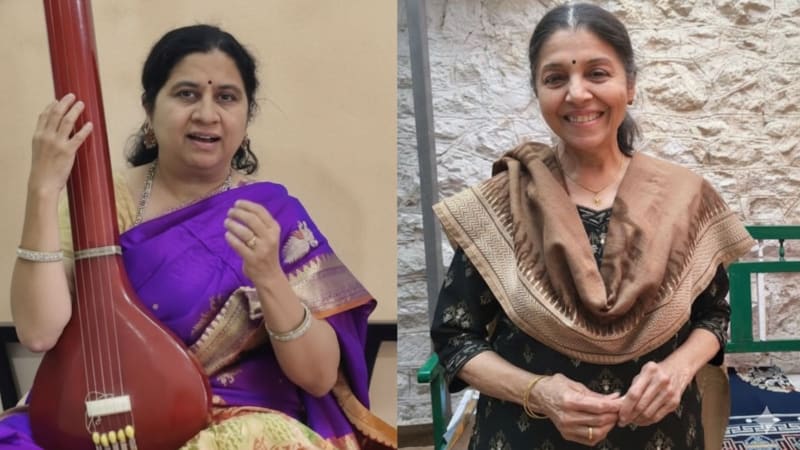
When Shreya Prabhune started reading 17th-century Sanskrit music treatises, her singing transformed overnight. The Hindustani classical vocalist had performed for years by instinct, but the ancient texts revealed something revolutionary: a logical roadmap showing exactly where each emotion lives in every note.
Prabhune is part of a quiet renaissance happening across India's classical arts scene. In Pune, performers are cracking open manuscripts like the Sangeet Parijat and Natyashastra, discovering that Sanskrit isn't just the language of their art. It's the instruction manual they've been performing without.
"Sanskrit is a gaya language, a tongue designed not merely to be spoken but to be sung," explains Anjali Malkar, a Hindustani classical music professor. When students learn it, musicality flows naturally into their speech.
For Bharatnatyam dancer Sucheta Chapekar, this connection runs even deeper. At Kalavardhini, her dance school, Sanskrit classes are now mandatory alongside movement training.
"Dance is not merely physical movements," she says. "To understand every mudra, every expression requires the language that encoded those answers centuries ago."
Why This Inspires
The impact shows up in performance. Dr. Sharayu Bhalerao, whose doctoral research compares ancient rhythm patterns with modern practice, sees students finally understanding why techniques work instead of just memorizing steps.
"A great artist is a blend of theory with practice," she explains. "The learning process goes beyond physical drill."
This matters especially now, when social media rewards flashy innovation over foundational knowledge. Bhalerao notes that contemporary artists want to break rules they've never actually learned.
The ancient texts themselves anticipated this tension. Bharatmuni, who codified Bharatnatyam in the 2nd century, distinguished between art for common audiences and art for trained performers. Modern fusion isn't betraying tradition; it's following Bharatmuni's own blueprint for flexibility.
The challenge is access. For decades, Sanskrit carried an intimidating academic aura that kept performers at arm's length. Now, teachers like Malkar are deliberately bringing it down from its pedestal.
"It is the language of all knowledge," Malkar insists. "To have academic depth as a musician today, studying Sanskrit is no longer optional."
Her advice to young performers cuts against hustle culture: Don't chase performances. Chase excellence first.
Chapekar puts it simply: "What matters is substantiality combined with musicality of language. We find Sanskrit has both traits."
For Prabhune, the 17th-century revelation about shruti (the microtones between standard notes) changed everything. Most performers hit these notes by feel, but the Sanskrit texts explain the science: every vibration carries specific emotional frequencies.
"I don't just sing anymore," she says. "I sing consciously."
Based on reporting by Indian Express
This story was written by BrightWire based on verified news reports.
Spread the positivity!
Share this good news with someone who needs it