Indian Engineers Build Quantum Network for Army, Banks
Two Bengaluru engineers started building quantum cybersecurity tech in 2016 when most people thought it was science fiction. Today, QNu Labs protects Indian Army and Navy networks, with banking and infrastructure next.
While you tap your phone to pay bills or check medical reports, invisible systems work overtime to keep that data private. Two Indian engineers spent nearly a decade making sure those systems stay strong, even as powerful new computers threaten to crack them open.
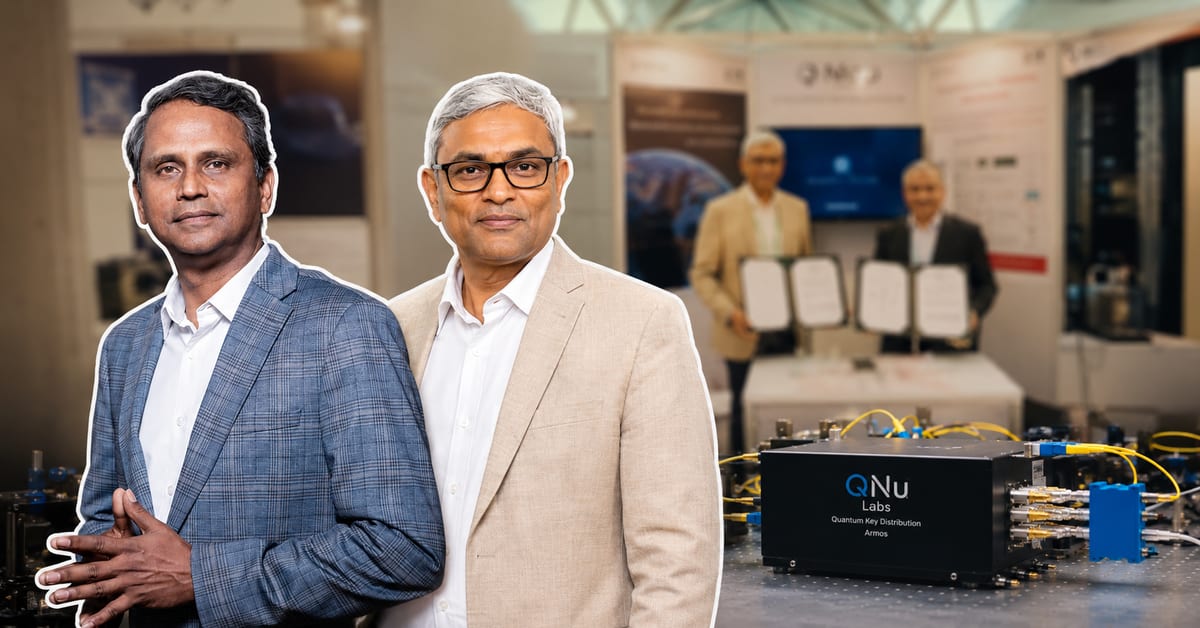
Sunil Gupta and Srinivasa Rao Aluri founded QNu Labs in Bengaluru in 2016 with a straightforward question. If India was racing to become one of the world's largest digital economies, who was preparing to protect it?
Back then, quantum computers existed only in research labs. Most people couldn't understand why anyone would build solutions for threats that seemed decades away. Friends and investors questioned the timeline constantly.
"People told us we were working on tomorrow's problem," recalls Srinivasa. "We looked at it differently. If you wait until tomorrow arrives, you've already lost valuable time."
The duo believed security needed a fundamental shift. Instead of just detecting attacks faster after systems get hacked, they wanted to make breaking in nearly impossible in the first place. That meant redesigning the digital locks that protect information, not just improving the alarms.
The science behind their work starts with something simple. Imagine sending a valuable document in a locked box where only you and the receiver have identical keys. That's basically how digital encryption works today. Every online payment and government record depends on secret digital keys that scramble information into unreadable code.
Today's encryption relies on math problems that normal computers find extremely hard to solve. Quantum computers, which use different rules of physics, could eventually crack many of these locks wide open. That future threat drove QNu Labs to build what they call quantum key distribution technology, using the strange properties of quantum physics to create unbreakable communication channels.
The company started at IIT Madras before moving to Bengaluru. For years, there was no quick payoff, just lab work and patient explanations to skeptics. The founders kept building anyway.
Nearly a decade later, their technology now protects communication networks for the Indian Army and Navy. The company has grown into what the founders describe as India's only full-stack quantum cybersecurity company, building the hardware, software, and secure applications needed to defend critical systems.
Banks and public infrastructure are next in line for protection. The company is working to roll out its technology across sectors that handle sensitive data for millions of Indians every day.
Why This Inspires
What makes this story remarkable isn't just the advanced technology. It's the decision two engineers made to solve a problem before it became a crisis. They chose the harder path of building immunity instead of just better emergency response. They trusted their instinct about India's digital future when others saw only distant risks.
The everyday moments we take for granted, those quick taps to transfer money or share documents, depend on people willing to work for years in labs before the world understands why it matters.
India's digital future got a head start because two people decided not to wait for tomorrow's crisis to arrive today.
More Images
%2Fenglish-betterindia%2Fmedia%2Fmedia_files%2F2026%2F07%2F22%2Fqnu-labs-quantum-security-2026-07-22-17-11-49.png)
%2Ffilters%3Aformat(webp)%2Fenglish-betterindia%2Fmedia%2Fmedia_files%2F2026%2F07%2F15%2Fqnu-labs-quantum-security-2026-07-15-08-30-56.png)
%2Ffilters%3Aformat(webp)%2Fenglish-betterindia%2Fmedia%2Fmedia_files%2F2026%2F07%2F15%2Fqnu-labs-quantum-security-2026-07-15-08-34-33.png)
Based on reporting by The Better India
This story was written by BrightWire based on verified news reports.
Spread the positivity!
Share this good news with someone who needs it

-1788313452597.jpg)