Indian Engineer's Farm Robots Help Thousands Grow More Food
After watching his grandmother struggle in scorching fields, Trivikram Kumar built AI robots that now help Indian farmers plant, weed, and harvest with less pain and better results. His electric machines are transforming agriculture across three states while cutting chemical use and costs.
Trivikram Kumar's grandmother spent long days bent over crops under India's punishing sun, and he couldn't forget her exhaustion. That memory drove him to launch XMachines in 2017, creating AI-powered robots that take on farming's hardest physical work.
Before building anything, Kumar did something most tech founders skip. He spent months living on farms in Telangana, showing rough prototypes and asking questions over chai. Farmers told him the truth: fewer workers willing to do backbreaking labor, costs rising faster than profits, and yields that couldn't keep up.
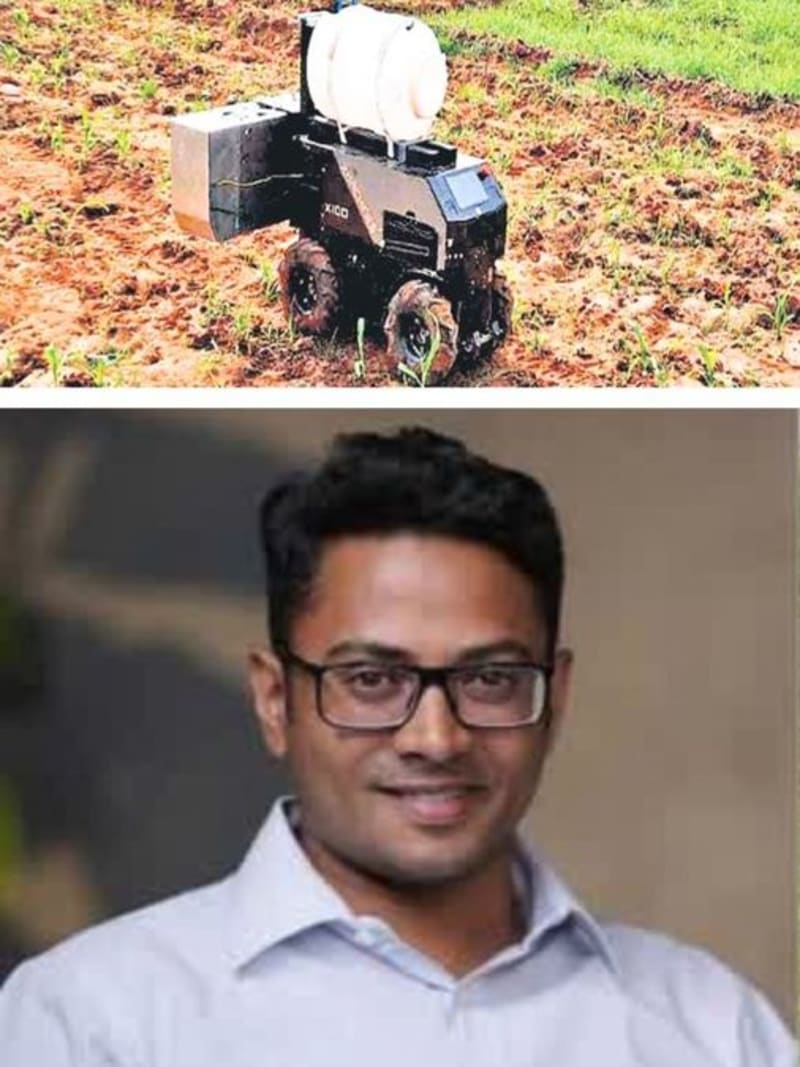
The X100 robot he designed runs entirely on electricity and thinks for itself. It can plant seeds, transplant seedlings, pull weeds, and spray crops with pinpoint accuracy. Farmers can let it work autonomously or guide it with a joystick when they want control.
The machine handles muddy paddies, rocky soil, monsoon rains, and summer heat without complaint. Its modular design means one robot does the work that used to require multiple tools and animals. Farmers across Telangana, Karnataka, and Haryana now use XMachines robots to manage their fields.
The benefits go beyond easing sore backs. Precise spraying means farmers use fewer chemicals, protecting both soil health and their budgets. Less reliance on cattle for plowing gives animals easier lives too. Yields are climbing because robots don't get tired or miss spots.
Kumar built the robots to be affordable, not luxury tech for industrial mega-farms. He designed them for the small and mid-sized farmers who grow most of India's food. His team offers support in local languages and trains farmers to maintain the machines themselves.
The Ripple Effect spreads beyond rice paddies and vegetable plots. XMachines adapted the same technology for warehouse work, maintaining solar panel farms, and factory floors. Each application creates jobs for robot operators and technicians while removing dangerous or exhausting tasks from human shoulders.
Kumar follows one unbreakable rule with his team: talk to farmers like they're family, and build machines they can actually trust. That means listening more than pitching, fixing problems fast, and never overpromising what the robots can do.
Indian agriculture feeds over a billion people, but the farmers doing that essential work often struggle the most. XMachines proves that innovation built with empathy, not just algorithms, can make both farming and farmers' lives genuinely better.
Based on reporting by The Better India
This story was written by BrightWire based on verified news reports.
Spread the positivity!
Share this good news with someone who needs it