Indian Farmers Revive 100,000 Ancient Rice Varieties
Across India, farmers are bringing back ancestral rice seeds that survived floods, droughts, and cyclones better than modern hybrids. These traditional grains are proving to be both a nutritional powerhouse and a climate lifeline.
In the villages of Jharkhand, farmers still run handfuls of rice through their fingers before deciding what to cook. Some grains are black and glossy, others carry the faint scent of earth after rain, and some turn red once boiled.
Each variety has a story older than the farms themselves. India once cultivated more than 100,000 rice varieties, each adapted to local soil, rainfall, and culture.
Then came the Green Revolution in the 1960s. High-yield hybrids replaced traditional seeds, and thousands of indigenous rice varieties disappeared from cultivation.
But today, something remarkable is happening. From the cyclone-hit Sundarbans to the dry plains of Tamil Nadu, farmers are bringing these ancestral grains back to their fields.
Tribal farmers Jhalo Devi and Basu Oraon in Jharkhand's Gumla district explained why they abandoned hybrid paddy last year. Hybrid cultivation meant higher costs, pesticide dependence, weaker taste, and lower nutritional value.
Traditional varieties like Kala Jeera, Karhani, and Mehia proved more resilient during droughts and floods. They required no fertilizers and fetched better prices in local markets.
The climate connection is turning these old seeds into modern solutions. Indigenous rice varieties naturally resist pests, floods, salinity, and erratic rainfall in ways hybrids cannot.
In Karnataka's coastal belt, Kagga rice survives saline water intrusion. Kerala's Pokkali withstands flooding and saltwater. In the Sundarbans, farmers revived Nona Bokra and other salt-tolerant varieties after repeated cyclones damaged conventional crops.
The nutritional science backs up what farming communities already knew. Traditional rice varieties contain higher levels of iron, fiber, antioxidants, and minerals than polished commercial rice.
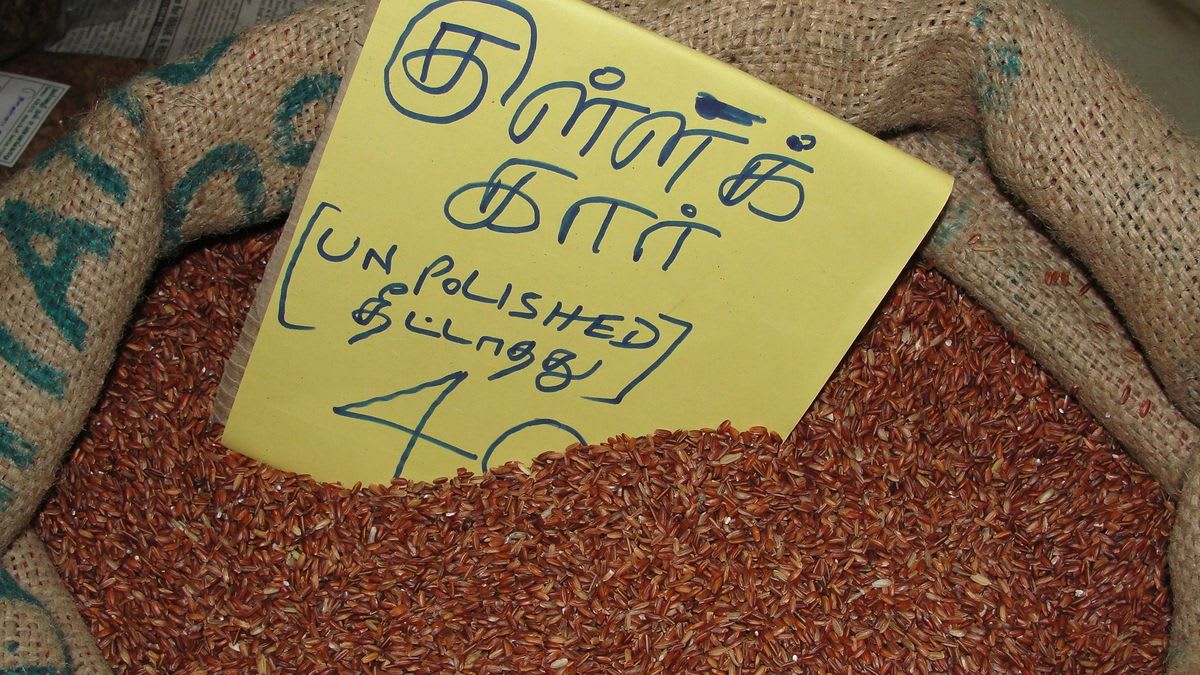
Navara rice is valued for its low glycemic properties. Kullakar is prized for its mineral density. Unpolished black and red rice varieties are increasingly marketed as nutrient-rich alternatives in urban health-food spaces.
This growing demand is changing the economics for farmers. Jhalo Devi described indigenous black and red rice as healthier and more filling than hybrids, which spoil faster after cooking.
The Ripple Effect
The revival is protecting more than just crops. Fewer than 6,000 indigenous rice varieties are believed to survive today, many of them endangered.
Women-led seed networks and small farming communities are now becoming guardians of India's agricultural biodiversity. They're sharing seeds, knowledge, and cultivation techniques that nearly disappeared.
Kerala's medicinal Navara rice is being used in Ayurvedic treatments again. Manipur's black Chak Hao appears in ceremonial meals. West Bengal's aromatic Gobindobhog has returned to festive cooking.
At a time when climate change is making farming increasingly unpredictable, these traditional seeds are becoming more than cultural memory. For many farmers facing extreme weather, they're turning into a lifeline that feeds both body and soil.
More Images
.png)
%2Fenglish-betterindia%2Fmedia%2Fmedia_files%2F2026%2F05%2F25%2Fa_kulla_kar_rice-1-2026-05-25-20-08-00.jpeg)

%2Ffilters%3Aformat(webp)%2Fenglish-betterindia%2Fmedia%2Fmedia_files%2F2026%2F05%2F25%2Frice-1-2026-05-25-20-41-29.png)
Based on reporting by The Better India
This story was written by BrightWire based on verified news reports.
Spread the positivity!
Share this good news with someone who needs it