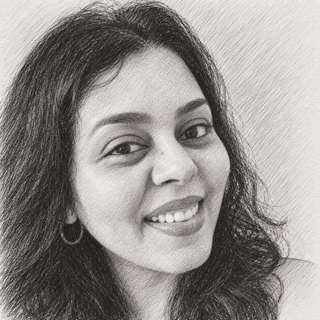
Indian Math Professor Wins $10K Ramanujan Prize
Mahesh Kakde from the Indian Institute of Science just won the 2026 Ramanujan Prize for solving problems that have puzzled mathematicians for over a century. His breakthrough work tackles challenges first posed by legendary German mathematician David Hilbert in 1900.
A mathematician in Bengaluru is proving that some of the world's hardest problems can be solved right here in India.
Mahesh Kakde, a professor at the Indian Institute of Science, has won the 2026 Ramanujan Prize for Young Mathematicians from Developing Countries. The award comes with $10,000 and recognizes his groundbreaking work in algebraic number theory, a field that studies the hidden patterns and structures within numbers.
Kakde's research tackles problems so complex they've stumped mathematicians for generations. He's made major contributions to something called noncommutative Iwasawa theory, which examines how mathematical systems change as they grow more complicated. Think of it like understanding how a small snowball becomes an avalanche, but with numbers and equations instead of snow.
His work also addresses two famous unsolved puzzles called the Gross-Stark and Brumer-Stark conjectures. These aren't simple math problems you can solve on a napkin. They explore deep connections between different mathematical concepts that most of us will never encounter outside a university.
Here's where it gets really exciting. Kakde's research has implications for Hilbert's 12th problem, one of 23 challenges posed by mathematician David Hilbert in 1900 to guide the future of mathematics. While the full problem remains unsolved, Kakde has cracked important pieces of this 126-year-old puzzle.
The professor's journey shows what's possible when talent meets opportunity. He earned his bachelor's degree at the Indian Statistical Institute in Bengaluru, then completed his doctorate at Cambridge University in 2008. After teaching at Princeton and spending time in London, he returned home to IISc in 2019.
Since then, the honors have piled up. Kakde won the Infosys Prize in 2022, spoke at the prestigious International Congress of Mathematicians, and received the Whitehead Prize from the London Mathematical Society in 2023. Last year, he earned the Vigyan Yuva Shanti Swarup Bhatnagar Award, one of India's highest scientific honors.
Why This Inspires
The Ramanujan Prize is named after Srinivasa Ramanujan, the self-taught Indian genius who revolutionized mathematics in the early 1900s. Seeing another Indian mathematician win an award bearing Ramanujan's name shows that legacy of brilliance continues today.
The prize specifically recognizes young mathematicians working in developing countries, celebrating not just the quality of research but also the determination to pursue it despite limited resources. Kakde could have stayed at Princeton or London, but he chose to build India's mathematical community from within.
His work proves that world-changing discoveries don't only happen in wealthy Western universities. They happen in Bengaluru classrooms, sparked by curiosity and sustained by dedication.
Mathematics might seem abstract, but breakthroughs like Kakde's eventually ripple into technology, encryption, and computer science. Today's theoretical work becomes tomorrow's practical innovation, and India is helping write that future.
More Images

Based on reporting by Times of India - Good News
This story was written by BrightWire based on verified news reports.
Building Something New? Try the BrightWire Tech Stack Advisor
Compare modern frameworks, cloud hosting, and AI tools tailored to your project budget and scale.
Spread the positivity!
Share this good news with someone who needs it