Indian Robots Now Inspect Ship Hulls So Humans Don't Have To
A Noida startup is replacing dangerous inspection work with robots that crawl underwater, scan for corrosion, and even clean ship hulls. Octobotics is already working with the Indian Navy and major oil companies to keep critical infrastructure safe.
Every ship, pipeline, and railway track is slowly corroding, and catching the damage before something breaks has traditionally meant sending people into dangerous places to look for cracks.
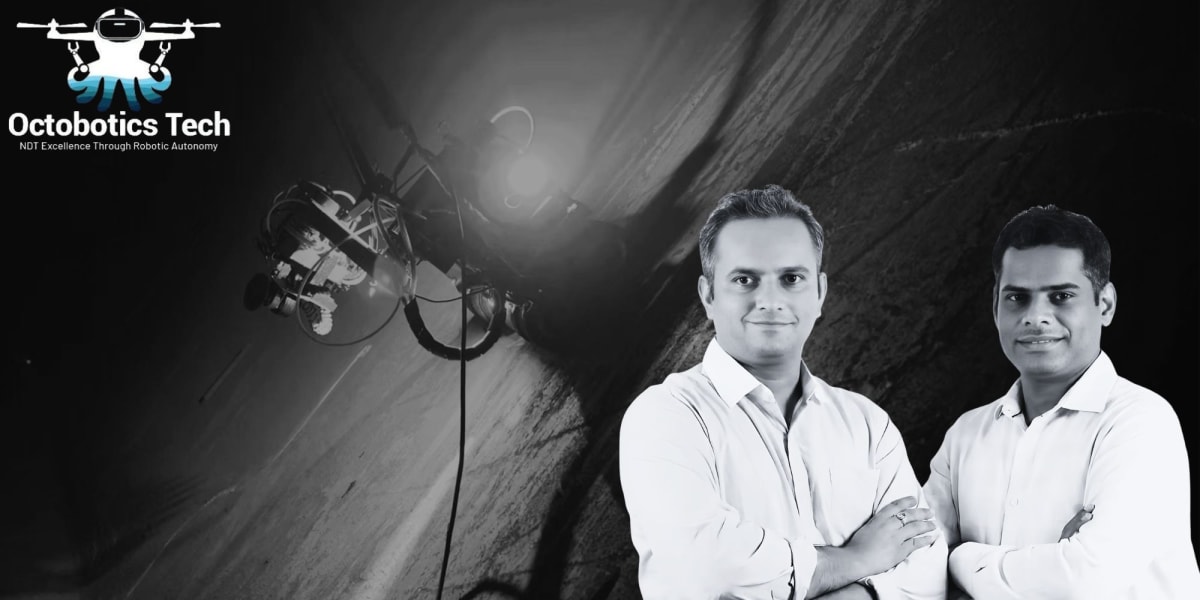
Octobotics, a startup based in Noida, builds robots to do that risky work instead. Their machines crawl underwater along ship hulls, climb to hard-to-reach spots on oil rigs, and inspect railway welds where live trains pass by.
The company was founded in 2020 by Ishan Bhatnagar and Gulshan Kumar, two marine engineers who met in Kolkata and spent years working demanding jobs at sea. Bhatnagar worked on tankers in Singapore while Kumar handled offshore drilling in Belgium. Both saw inspectors risking their lives in confined tanks and high structures, and both believed robots could do it better.
The robots Octobotics builds carry ultrasonic sensors that detect hidden flaws in metal without cutting or damaging anything. Some platforms scan railway welds for cracks. Others are underwater crawlers that not only inspect ship hulls but also blast away fouling with high-pressure water jets. One robot reaches heights and angles that would require scaffolding and safety harnesses for human inspectors.
The machines send their findings to software that analyzes corrosion patterns and predicts where failures might happen next. That means operators get early warnings instead of emergency shutdowns, and they can schedule repairs when it actually makes sense instead of guessing.
For a young company with just 12 people, Octobotics has landed impressive customers. The Indian Navy uses their robots, along with major oil refiners like IOCL, BPCL, and HPCL. They've also worked with Aarti Industries, GSFC, and a chemical company in Saudi Arabia. Last year, they brought in about Rs 2 crore in actual revenue, not just promises.
In February 2026, the company raised Rs 10 crore in seed funding led by Navam Capital. The money will help them get safety certifications needed to work in explosive environments like oil refineries, and to expand into Singapore and the Middle East.
The Ripple Effect
When inspection robots replace dangerous jobs, it's not just about safety. Better data means catching problems earlier, which prevents oil spills, train derailments, and ship breakdowns. It also means less downtime for expensive equipment. A refinery that can inspect a tank without shutting down production saves money and keeps fuel flowing. A railway that spots a crack before it spreads keeps trains running and passengers safe.
What started as two engineers wanting to solve a problem they'd seen firsthand is now protecting critical infrastructure across industries and borders, one robot at a time.
More Images


Based on reporting by YourStory India
This story was written by BrightWire based on verified news reports.
Spread the positivity!
Share this good news with someone who needs it