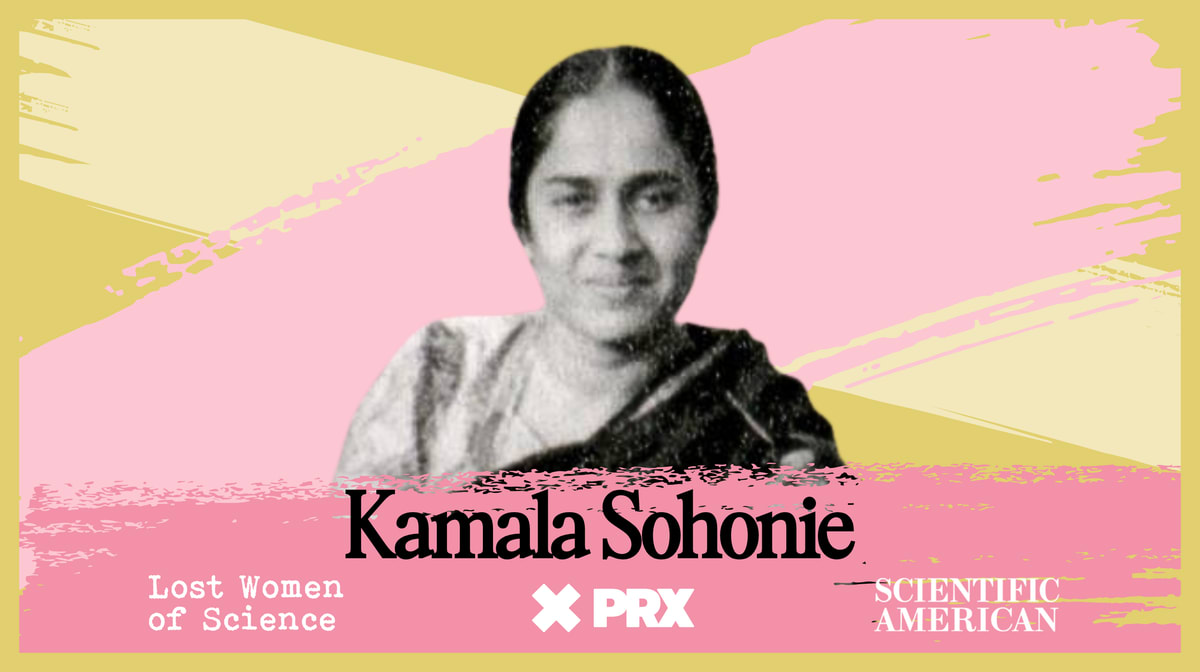
Indian Scientist Fought Her Way to Feed a Nation
After a Nobel Prize winner denied her admission for being a woman, Kamala Sohonie used Gandhi-inspired protest to become India's first female biochemistry PhD and nutrition champion. Her perseverance opened doors for generations of women scientists.
When Kamala Sohonie graduated top of her class in physics and chemistry in 1933, everyone expected India's prestigious science institute to welcome her. Instead, she received a rejection letter with a shocking reason: no girls allowed.
The man who denied her wasn't just any administrator. C.V. Raman was India's first science Nobel laureate, one of Kamala's heroes who had broken barriers as a person of color in science under British rule.
Kamala's father and uncle, both institute alumni, assumed there must be a mistake. They traveled with Kamala to meet Raman in person, armed with her stellar academic records.
Raman told them directly: there was no provision for admitting girls. For the first time in her life, a door slammed in Kamala's face because of her gender.
But Kamala didn't walk away. Inspired by Mahatma Gandhi's nonviolent resistance against injustice, she launched her own quiet protest outside the institute.
Her persistence worked. Raman eventually admitted her on one condition: she had to work harder than any male student and couldn't distract the men from their studies.
Kamala accepted. She excelled in her studies and became the first Indian woman to earn a PhD in biochemistry.
Her breakthrough discovery about proteins in plant cells advanced nutritional science. But Kamala cared most about solving India's malnutrition crisis, dedicating her career to helping feed her nation.
Why This Inspires
Kamala didn't stop at personal achievement. She became the first woman to lead Mumbai's Royal Institute of Science, transforming from rejected applicant to director of a major scientific institution.
Every door she opened made it easier for the next woman to walk through. Her refusal to accept "no girls allowed" created pathways for generations of Indian women scientists who followed.
Today, women comprise nearly half of India's science graduates. That transformation started with one determined young woman who stood outside an institute that didn't want her and simply refused to leave.
More Images
Based on reporting by Scientific American
This story was written by BrightWire based on verified news reports.
Spread the positivity!
Share this good news with someone who needs it