Indian Scientist's Saree Now at Smithsonian Museum
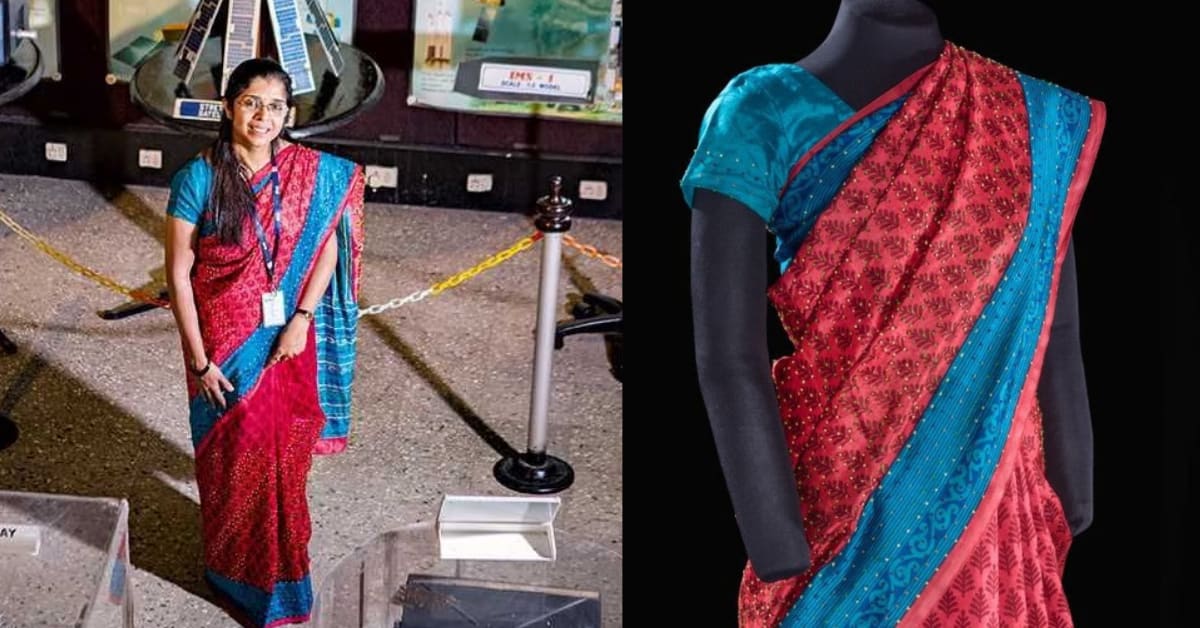
A saree worn by ISRO scientist Nandini Harinath during India's first Mars mission is now displayed at the Smithsonian National Air and Space Museum. The red and blue garment represents how India's space program challenged global stereotypes about scientists.
When visitors walk through the Smithsonian National Air and Space Museum in Washington, they now encounter an unexpected piece of space history. A vibrant red and blue saree worn by Indian scientist Nandini Harinath during India's historic Mars mission sits alongside rockets and spacecraft.
The garment represents a moment that changed how the world views space exploration. In 2014, India became the first Asian nation to reach Mars orbit on its very first attempt, joining only three other space agencies to achieve the feat.
Harinath served as deputy operations director for the Mars Orbiter Mission, known as Mangalyaan. Over two decades at the Indian Space Research Organisation, she contributed to more than 14 missions. Her journey to space science started in childhood, watching Star Trek with her family and rewatching Apollo 13 until she memorized every scene.
The Smithsonian describes the saree as having intricate patterns, now displayed on a mannequin with archival photos from the mission. But the museum chose this garment for reasons beyond its beauty.
When images of women scientists in bright sarees filled ISRO control rooms during Mangalyaan, they traveled worldwide. These photos showed scientists tracking spacecraft trajectories and celebrating launches while wearing traditional Indian dress. At a time when lab coats dominated scientific imagery, these images quietly shifted expectations.
The Mars mission itself defied odds. Deep space missions typically require multiple attempts before success. India's spacecraft was designed to last six to ten months but continued working for nearly eight years, studying Mars long after expectations ended.
Why This Inspires
The saree at the Smithsonian tells a story bigger than one mission or one scientist. It represents how cultural identity and scientific excellence can coexist beautifully. Women scientists worldwide now see themselves reflected in these images of professionals who never had to choose between heritage and achievement.
Harinath grew up in a family where her mother taught mathematics and her father worked as an engineer. That foundation of curiosity and problem solving carried her through years of mission planning and operations. The stories she watched on screen as a child about exploration and teamwork became her daily reality.
Museums preserve objects that capture turning points in human history. This saree captures the moment when India announced itself as a serious space power while its scientists wore exactly what felt authentic to them.
The display stands as proof that breakthroughs happen when people bring their whole selves to their work.
More Images
%2Fenglish-betterindia%2Fmedia%2Fmedia_files%2F2026%2F05%2F18%2Fisro-saree-2026-05-18-14-33-34.png)


%2Ffilters%3Aformat(webp)%2Fenglish-betterindia%2Fmedia%2Fmedia_files%2F2026%2F05%2F18%2Fisro-saree-1-2026-05-18-14-44-53.png)
Based on reporting by The Better India
This story was written by BrightWire based on verified news reports.
Spread the positivity!
Share this good news with someone who needs it