Indian Startup Builds First Homegrown Drone Jet Engine
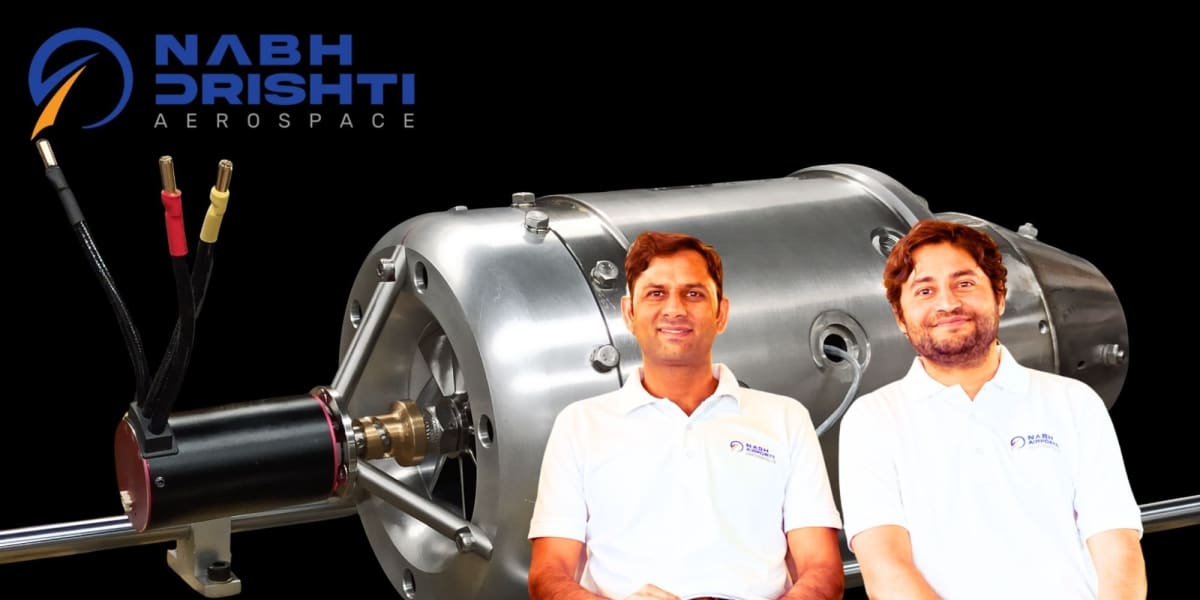
A Bengaluru company just fired up India's first locally designed turbojet engine for drones and small aircraft, breaking decades of import dependency. Nabhdrishti's breakthrough could transform how India powers its aerospace future.
India has long designed its own aircraft and drones but relied on expensive imports for the engines that power them. That gap just got a lot smaller.
Nabhdrishti Aerospace, a Bengaluru startup founded in 2023, successfully tested its ND400 turbojet engine in January 2026. The team went from blank page to successful engine ignition in just nine months, a remarkable timeline for one of engineering's toughest challenges.
Gas turbines are notoriously difficult to build. They spin at 95,000 revolutions per minute, operate at extreme temperatures, and must maintain precision for thousands of hours without failing. The global list of companies that can build them well is short, and that's shaped what Indian aerospace companies can accomplish on their own.
The three founders bring serious credentials to the challenge. Rohit Chouhan, Arjun Srivatsa, and Antanu Sadhu previously worked at General Electric, Rolls Royce, and India's Gas Turbine Research Establishment. They understood the bottleneck and decided to solve it.
Their strategy is clever: build one core turbine design and adapt it for two markets. The ND400 turbojet targets drones and small aircraft with 400 Newtons of thrust while weighing just under four kilograms. The ND2000 aims at industrial power generation, producing up to two megawatts.
Using one core for both products spreads development costs across wider markets. It also creates industrial revenue streams while the aviation work continues through testing and certification, a process that typically takes years.
The engines are designed to run on multiple fuel types, including future cleaner options like green hydrogen. That flexibility happens in the combustor, where different fuels must burn stably at different temperatures and speeds. Getting that right across fuel types was the focus of their earliest prototypes.
Nabhdrishti raised 3 crore rupees in pre-seed funding in April 2024, followed by 25.64 crore rupees (about $3 million) in March 2025. Accel led the seed round, with IIMA Ventures participating in both rounds. The company is now testing three engine prototypes and preparing for flight trials with customer drones.
The Ripple Effect
Breaking import dependency in propulsion technology doesn't just help one company. It opens doors for India's entire aerospace sector to design and build without constraint. Drone manufacturers, defense contractors, and aviation startups gain access to locally developed engines they can integrate, modify, and rely on without foreign supply chain delays.
The company aims to become India's leading propulsion provider by 2032, an ambitious goal that reflects both confidence and necessity. For a country with growing aerospace ambitions, having homegrown engine options changes what's possible.
India just took a major step toward powering its own aerospace future.
More Images



Based on reporting by YourStory India
This story was written by BrightWire based on verified news reports.
Spread the positivity!
Share this good news with someone who needs it