Indian Startup's Device Could Save Thousands From Amputation
A tiny medical device from Ahmedabad is making delicate blood vessel surgery possible for doctors without years of specialized training. The innovation could prevent countless amputations in hospitals that lack surgical specialists.
Imagine losing a limb not because medicine couldn't save it, but because no nearby surgeon had the right skills or tools. That's the reality for thousands of people in India every year, but a medical device startup is changing the odds.
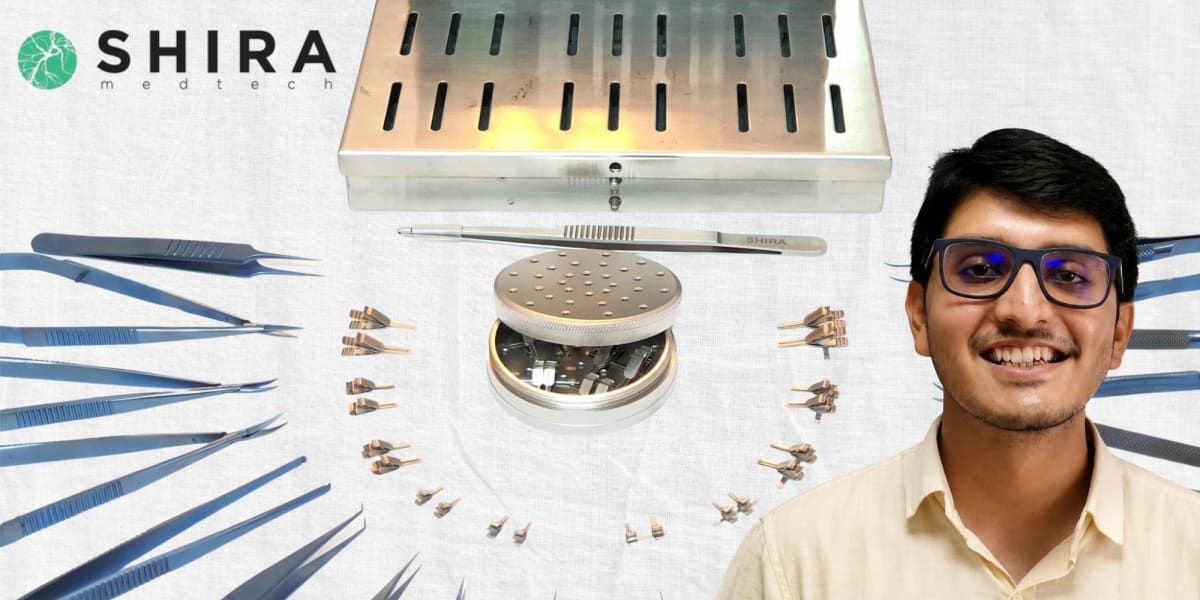
Shira Medtech in Ahmedabad has spent nearly a decade perfecting tools that make one of surgery's toughest challenges dramatically easier. Their focus is microvascular anastomosis, the precise art of reconnecting blood vessels thinner than a strand of spaghetti.
When trauma or cancer surgery damages these tiny vessels, restoring blood flow can mean the difference between saving a limb and losing it. The problem is that only a handful of surgeons can perform this microscopic work reliably, and the learning curve pushes many young doctors away from the specialty.
Founder Anand Parikh, an IIT Madras graduate, started tackling this in 2016. His first success was the Shira Clamp, a thumbnail-sized device that holds vessel ends open and steady, giving surgeons a clear view and reducing the shaky hand movements that can ruin the delicate procedure.
Surgeons have been using that clamp since 2018, but Shira Medtech's newest device goes further. It eliminates stitches entirely, allowing doctors to join vessels without threading impossibly fine sutures under a microscope for hours.
The implications reach beyond operating rooms. In a country where an estimated 12 million people live with disabilities from amputations, many of which were preventable, access to this kind of surgery could rewrite outcomes for cancer patients and accident victims in smaller hospitals.
Why This Inspires
What makes Shira Medtech's work particularly promising is that it's already proven itself beyond the lab. The devices have earned government recognition from multiple Indian departments, backing from Tata Trusts and Lockheed Martin, and the prestigious Gandhian Young Technological Innovation Award.
Their clinical results appear in peer-reviewed surgical journals, and the technology has crossed borders with approval in Malaysia. Most recently, the sutureless device won at the National Bio Entrepreneurship Competition 2025, one of India's most respected platforms for life sciences innovation.
The real test is whether these tools can deliver in everyday hospitals with average surgical teams, not just in the hands of experts. Early signs suggest they can, cutting operating time and improving reliability in settings where super-specialists simply aren't available.
For patients facing the devastating prospect of amputation, a low-cost device that puts advanced reconstructive surgery within reach isn't just innovative engineering—it's restored hope and a second chance at wholeness.
More Images



Based on reporting by YourStory India
This story was written by BrightWire based on verified news reports.
Spread the positivity!
Share this good news with someone who needs it