Indian States Win Big Investments Without Big Spending
India's traditionally poorer states are landing billions in new investments by outsmarting, not outspending, their wealthier rivals. The secret? Making business faster and more predictable instead of just cheaper.
India's investment map just got flipped upside down, and the winners aren't who you'd expect.
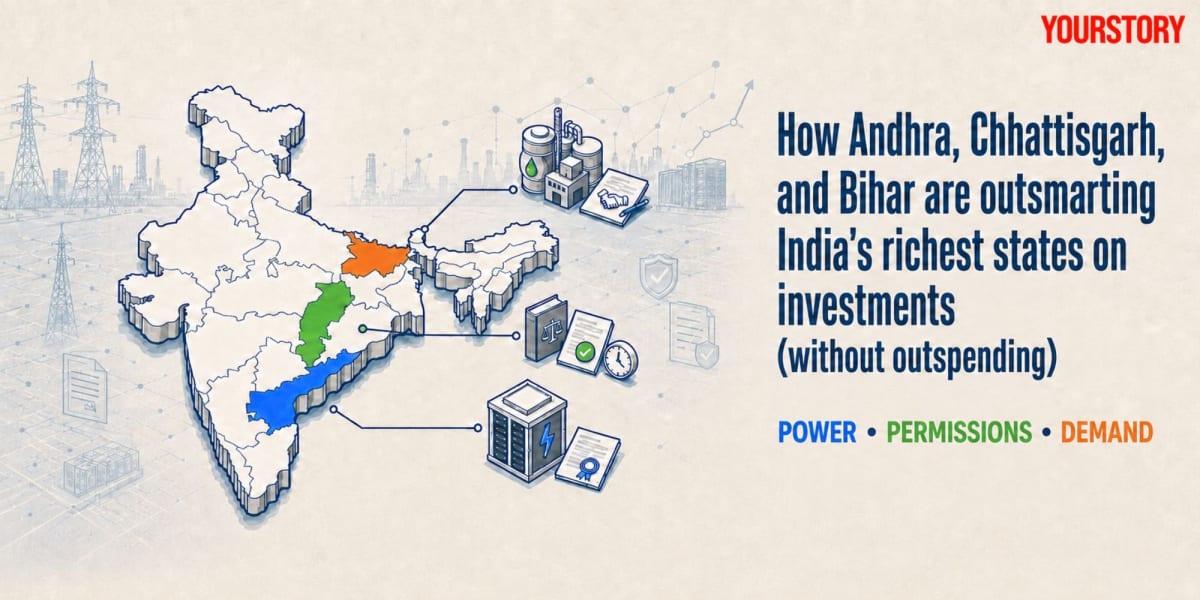
Andhra Pradesh rocketed from ninth place to second in fresh investment announcements in just two years, capturing nearly $107 billion without being the richest state. Rajasthan jumped from eighth to third. Chhattisgarh broke into the top ten for the first time, bumping out manufacturing giant Tamil Nadu.
The total prize keeps growing. Fresh investment across India swelled from $422 billion in 2024 to $699 billion for 2026, with seven out of every ten rupees coming from private companies betting their own money.
Here's the puzzle. States landing the most investment aren't always the ones ranked highest on readiness. Andhra Pradesh ranks second for investment but eighth for business friendliness. Uttar Pradesh is ninth for investment but nineteenth for readiness.
The gap tells the real story. One measure looks backward at what states built over decades. The other looks forward at where investors want to go next.
Why This Inspires
The common thread isn't subsidies or rock-bottom wages. It's something smarter and faster to fix.
Modern factories don't shop for the cheapest labor anymore. Automated plants with sensors and AI need uninterrupted power, fast internet, skilled workers, and approvals that don't vanish into bureaucratic black holes.
Look at what the winning states actually delivered. Gujarat provides 23.8 hours of daily power and industrial electricity nearly 30% cheaper than the national average. Andhra Pradesh cut power losses to 14% while most states lose 18%. Chhattisgarh scored highest among large states on making approvals predictable.
The math is encouraging. About 45% of a state's investment readiness score comes from infrastructure built over 30 or 40 years. No government can change that quickly.
But 18% of the score comes from regulatory ease and institutional quality: how many licenses businesses need, how long approvals take, how reliably land gets allocated. Those are rules, not roads. A state assembly can rewrite them in a single session.
Bihar couldn't convert its wage advantage into broad industrial growth. But when the government removed one critical unknown by guaranteeing ethanol demand, Bihar's ethanol sector took off.
The Ripple Effect
The investment boom is spreading to unexpected places. States that couldn't compete on cost alone found they could win on certainty.
Digital infrastructure matters more than ever. Andhra Pradesh logs roughly 18 digital transactions per capita compared to a national average of 4.8 for large states. That density signals to investors that supply chains, payments, and logistics will work.
The competition is pushing every state to improve. When Chhattisgarh scores higher on regulatory ease than manufacturing leader Karnataka, it sends a message: legacy advantages don't protect you anymore.
What makes this genuinely hopeful is how achievable the wins are. Fixing approval timelines costs less than building highways. Training workers costs less than decades of infrastructure investment. Any state willing to reduce uncertainty can compete.
India's industrial future isn't locked in by geography or history anymore; it's being written by states brave enough to make business predictable.
More Images


Based on reporting by YourStory India
This story was written by BrightWire based on verified news reports.
Spread the positivity!
Share this good news with someone who needs it