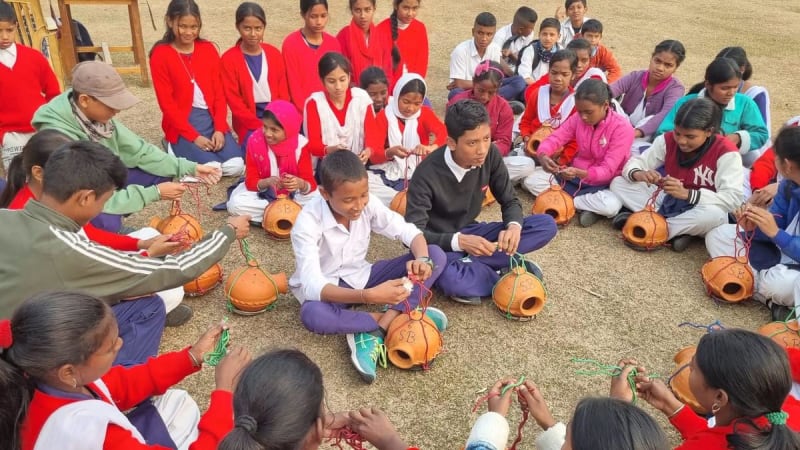
Indian Students Launch Bird Nest Conservation Movement
High schoolers in rural Assam turned a local project into a growing movement that now reaches 56 schools across two districts. Their mission: give urban birds a fighting chance by creating safe nesting spaces.
Students from tea garden families in eastern Assam are proving that big environmental wins can start small.
It began with one school handing out terracotta bird nests in their community. Now, a year later, the student-led initiative has spread to 56 schools across two districts, reaching thousands of young people who are building homes for birds losing habitat to urbanization.
Chorai Bandhob (Friend of Birds) started at Bongaon Chola High School in Golaghat district. The students, mostly from economically disadvantaged families working in nearby tea gardens, launched Bird Nest Conservation Day on February 14, 2025. Their first event was modest: distributing handmade terracotta nesting platforms to neighbors.
The response surprised everyone. By February 2026, two local organizations joined forces with the students to expand the effort. Sixteen schools in Golaghat observed the day, while 40 more schools gathered at a central venue in neighboring Majuli district.
Headmaster Girimallika Saikia, who directs the student group, explained the urgency behind their work. Many specialist bird species are vanishing from urban areas as cities expand. The birds that remain tend to be generalist species that adapt easily to human environments, creating less diverse ecosystems.
This year's motto shifted from simple awareness to lasting solutions: "space for nests, future for birds." Students planted saplings of local fruit-bearing trees that provide natural nesting spots. They also continued distributing artificial nests for immediate relief.
The choice of February 14 was strategic, not romantic. The students drew inspiration from England's Nest Box Week, which the British Trust for Ornithology has celebrated since 1997. Mid-February also falls perfectly before India's bird breeding season, which runs from March through July.
The Ripple Effect
The students learned that 20% of the world's bird species now live in human-dominated landscapes. That means people living in cities and towns hold tremendous power to help birds survive and thrive.
What makes this movement special is who's leading it. Young people from rural communities are stepping up as environmental leaders, combining traditional knowledge with conservation science. Their enthusiasm turned a school project into a regional movement in just one year.
The events featured dance performances, art exhibitions, and educational seminars. Students taught their peers and community members about which local trees attract which bird species and how to position nests for maximum safety.
The initiative represents the first organized effort of its kind in India focused specifically on urban nest conservation. As it continues growing across Assam, the students hope to inspire similar movements in other states where urbanization threatens bird populations.
These young conservationists are showing that protecting wildlife doesn't require expensive technology or government programs. Sometimes it just takes terracotta, saplings, and students who care enough to act.
Based on reporting by The Hindu
This story was written by BrightWire based on verified news reports.
Spread the positivity!
Share this good news with someone who needs it