Indian Women Revive 200-Year-Old Moonj Grass Craft
In a village near Prayagraj, India, women are breathing new life into an ancient grass-weaving tradition that once nearly disappeared. With government support and design training, these artisans are turning seasonal Moonj grass into modern products while preserving skills passed down through generations.
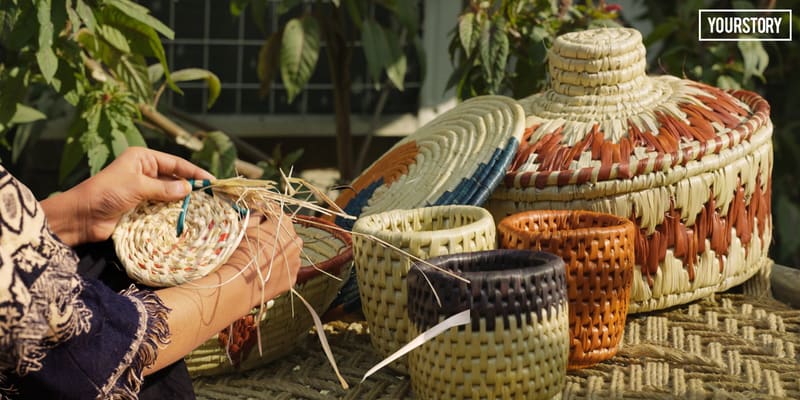
For 200 years, women in Mahwa village have harvested delicate Moonj grass and woven it into baskets, containers, and decorative pieces using nothing more than their hands, a needle, and patience. What began as a way for grandmothers to fund their own wedding trousseaus has become a lifeline for families today.
Chand learned the craft two decades ago by watching her sisters carefully wrap and tighten dried grass around a base knot. She mastered the technique slowly, balancing household duties with the painstaking work of creating a single basket that could take an entire day to complete.
The craft nearly faded into history when export networks that once connected Mahwa to international markets disappeared. By the early 2000s, few young women saw a future in the tradition their grandmothers had kept alive.
Everything changed in 2008 when Chand attended a training program run by a local NGO. Her sample products caught attention, leading to design workshops and exhibitions that taught her how to modernize traditional patterns while keeping the craft's soul intact.
Government support through the One District One Product initiative arrived around 2017, bringing design workshops, toolkits, and exposure visits. Chand earned a national award and now works with a collective of women artisans to fulfill bulk orders for contemporary homes.
The process itself remains beautifully simple. Women harvest Moonj grass during November and December, sun-dry it, and store bundles for year-round use. Before weaving, they soak the brittle grass in water for 15 to 20 minutes until it becomes flexible again.
Using a small stick called a "kaasa" to maintain structure, they build each piece layer by layer from a base knot outward. The minimal tools mask the incredible precision required to create tight, even weaves that transform humble grass into art.
The Ripple Effect
Chand's success has inspired other village women to pick up needles and learn the craft their mothers practiced. The collective now produces traditional roti containers alongside modern coasters and baskets that fit contemporary lifestyles.
The revival means steady income for families who once struggled during off-seasons. It means young women can stay in their village while earning recognition for skills that connect them to two centuries of history.
Chand plans to teach her daughter the craft, ensuring the next generation carries forward what her grandmother began. In her hands, dried grass becomes more than product—it becomes identity, resilience, and hope woven into every careful loop.
More Images

Based on reporting by YourStory India
This story was written by BrightWire based on verified news reports.
Spread the positivity!
Share this good news with someone who needs it