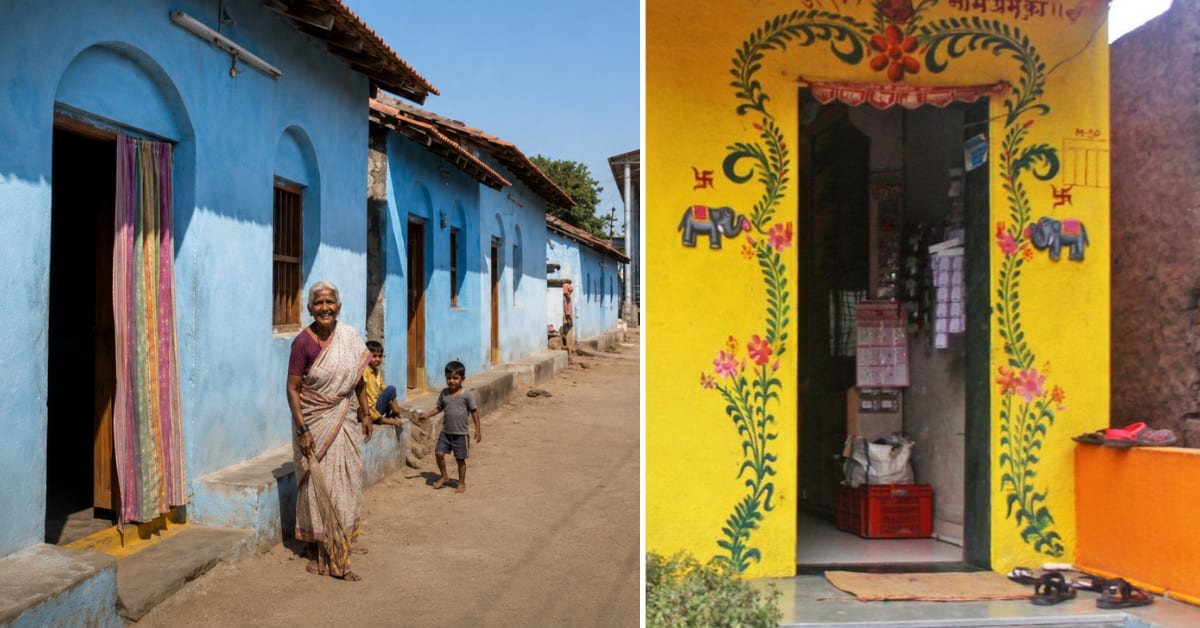
Indian Village Lives 300 Years Without Doors or Locks
In Shani Shingnapur, India, 15,000 people have trusted faith over security for three centuries, leaving homes and shops unlocked. Their belief in divine protection has created a community where locked doors are seen as unnecessary.
For 300 years, residents of Shani Shingnapur have left their front doors wide open, trusting an ancient promise over padlocks and security cameras.
The village sits 240 kilometers east of Mumbai in Maharashtra's Ahilyanagar district. Home to around 15,000 people today, it stands apart from modern India's embrace of CCTV, metal gates, and security grilles with a radically different approach: no doors, no locks, just faith.
The tradition traces back nearly three centuries to when a shepherd discovered a mysterious black stone along the Panasnala river. According to village legend, when he prodded the stone, blood emerged from it.
That night, the deity Shani reportedly appeared in a villager's dream, revealing the stone as his divine form. He promised to protect the village if residents left the stone in the open without a roof.
Over generations, this promise evolved into something bigger than a religious belief. It became the foundation of daily life, shaping how families secured their homes and how neighbors treated one another.
Children grew up learning that stealing would invite divine punishment, not just legal consequences. The idea wove itself into the village's moral fabric, creating an invisible barrier stronger than any lock.
Housewife Jayashree Gade keeps her family's savings in an unlocked tin barrel. Shops operate without securing their goods overnight. Families leave homes unattended for days without worry.
The practice reached its most striking expression in 2011 when a state-owned bank opened with a deliberately unlocked glass entrance. While customers walked through unsecured doors, cash remained protected inside a strongroom, balancing tradition with practical security needs.
The Bright Side
The village proves that shared belief can create powerful social norms. When an entire community agrees on values and consequences, those agreements can shape behavior as effectively as physical barriers.
Trust becomes self-reinforcing: when everyone believes theft brings punishment and neighbors won't steal, the system sustains itself through collective faith rather than individual fear.
The tradition hasn't remained completely untested. In 2010, a visitor reported theft from a vehicle, and stolen jewelry cases followed. As tourism increased and the outside world arrived, the boundary between protected believers and outside visitors became harder to maintain.
Some families have quietly begun adding doors and locks as the village grows and changes. The shift raises questions about whether ancient faith can fully protect against modern challenges.
Yet thousands still live by the 300-year-old promise, proving that communities built on trust can endure even as the world around them transforms.
More Images
%2Fenglish-betterindia%2Fmedia%2Fmedia_files%2F2026%2F09%2F02%2F1-2026-09-02-10-23-18.png)

%2Ffilters%3Aformat(webp)%2Fenglish-betterindia%2Fmedia%2Fmedia_files%2F2026%2F09%2F02%2F2-2026-09-02-10-23-54.jpg)
%2Ffilters%3Aformat(webp)%2Fenglish-betterindia%2Fmedia%2Fmedia_files%2F2026%2F09%2F02%2F3-2026-09-02-10-24-14.png)
Based on reporting by The Better India
This story was written by BrightWire based on verified news reports.
Spread the positivity!
Share this good news with someone who needs it