Indian Village Plants 90,000 Trees, Becomes Net Zero
A village in Maharashtra planted 90,000 trees, installed solar panels, and eliminated single-use plastic to become India's first net zero community. Sarpanch Sharada Gaydhane listened to women's health complaints and turned everyday concerns into a climate solution.
When women in Bela village complained about headaches and smoky kitchens, their leader Sharada Gaydhane realized these weren't separate problems. They were signs of a bigger change the community could address together.
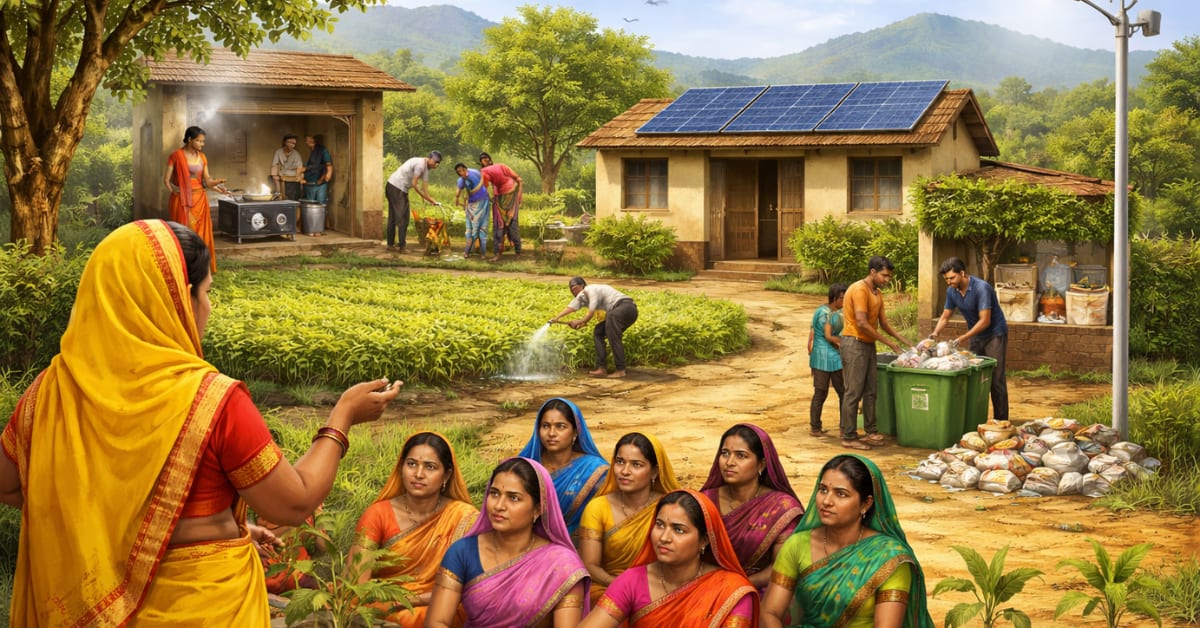
Gaydhane, twice-elected sarpanch of Bela Gram in Maharashtra's Bhandara district, started by listening. Women talked about wood-fired stoves that filled their homes with smoke and crops that no longer grew the same way despite regular watering.
Instead of accepting these as normal hardships, Gaydhane worked with residents to make practical changes. The village began planting trees at weddings and festivals, turning celebrations into opportunities for growth.
Over time, this simple practice transformed the landscape. Eventually, Bela planted 90,000 trees that now provide shade and cleaner air throughout the community.
The changes spread to kitchens next. Smoky traditional stoves were replaced with LPG connections and solar-powered alternatives, clearing the air indoors and making cooking easier for women.
Solar panels appeared on homes, childcare centers, and the village office. Energy use across Bela shifted quietly but significantly.
The village then tackled waste at its source. Households began sorting their trash at the doorstep, and single-use plastic gradually disappeared from daily life.
The Ripple Effect
These connected efforts added up to something remarkable. Bela became India's first net zero village, balancing its carbon emissions with the carbon absorbed by its trees and clean energy use.
The work earned Bela the 2024 Rashtriya Panchayat Puraskar, a national award recognizing outstanding village governance. The recognition brought Gaydhane to Mumbai Climate Week in February 2026, where she shared how grassroots action can create measurable climate impact.
What makes Bela's story powerful isn't just the net zero achievement. It's how the village got there by addressing real problems people faced every day.
Gaydhane put it simply: "Waste can be converted into wealth if thought properly." Her leadership focused on rethinking existing resources rather than waiting for outside help.
Being elected twice gave her the continuity needed to see these changes through. What started as responses to health complaints became a new way of living that other villages can follow.
More Images
%2Fenglish-betterindia%2Fmedia%2Fmedia_files%2F2026%2F03%2F30%2Fsriroopa-featured-image-template-15-2026-03-30-18-18-49.png)
%2Fenglish-betterindia%2Fmedia%2Fmedia_files%2F2026%2F04%2F01%2Fmumbai-beach-cleanup-2026-04-01-11-52-08.png)
%2Fenglish-betterindia%2Fmedia%2Fmedia_files%2F2026%2F03%2F27%2Fsriroopa-featured-image-template-11-2026-03-27-17-12-08.png)
Based on reporting by The Better India
This story was written by BrightWire based on verified news reports.
Spread the positivity!
Share this good news with someone who needs it