Indian Women Build $1M Craft Business From Home Networks
In Mainpuri, India, women are turning traditional embroidery into sustainable income through neighbor-to-neighbor training and shared production. What started as household stitching has grown into a thriving craft economy that keeps mothers earning while caring for families.
Women in Mainpuri, India, built a thriving embroidery business without ever leaving their neighborhoods, and now their hand-stitched work is reaching markets across the country.
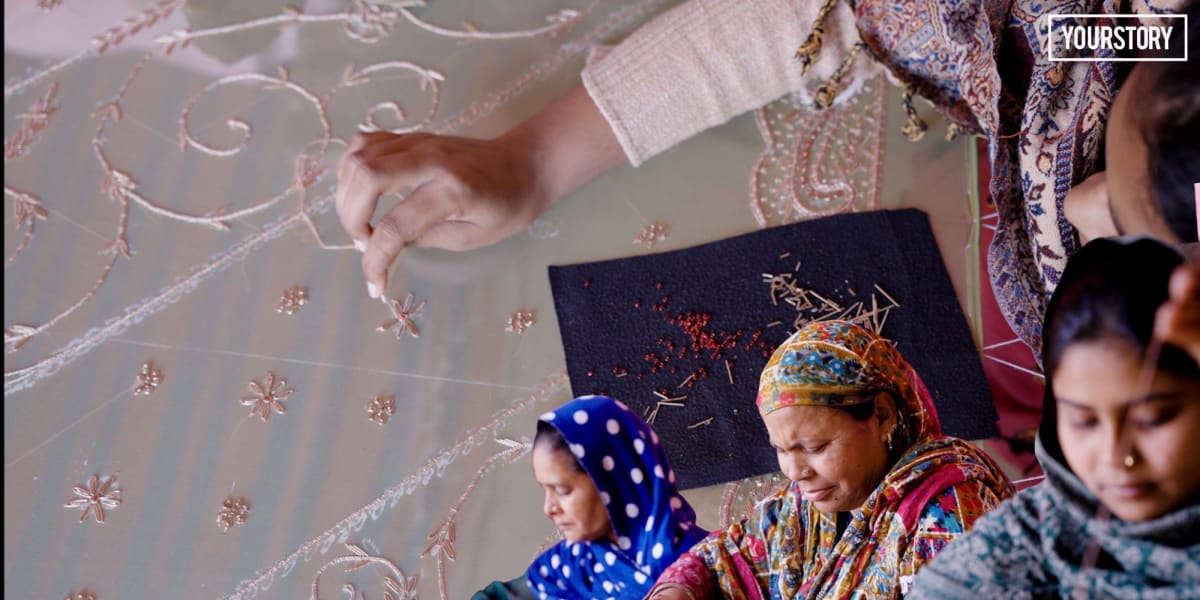
The craft is called zari-zardozi, an intricate embroidery technique that decorates wedding garments and formal wear. But what makes this story remarkable isn't the beautiful stitching. It's how knowledge spreads from kitchen to kitchen, creating income for hundreds of women who never have to choose between work and family.
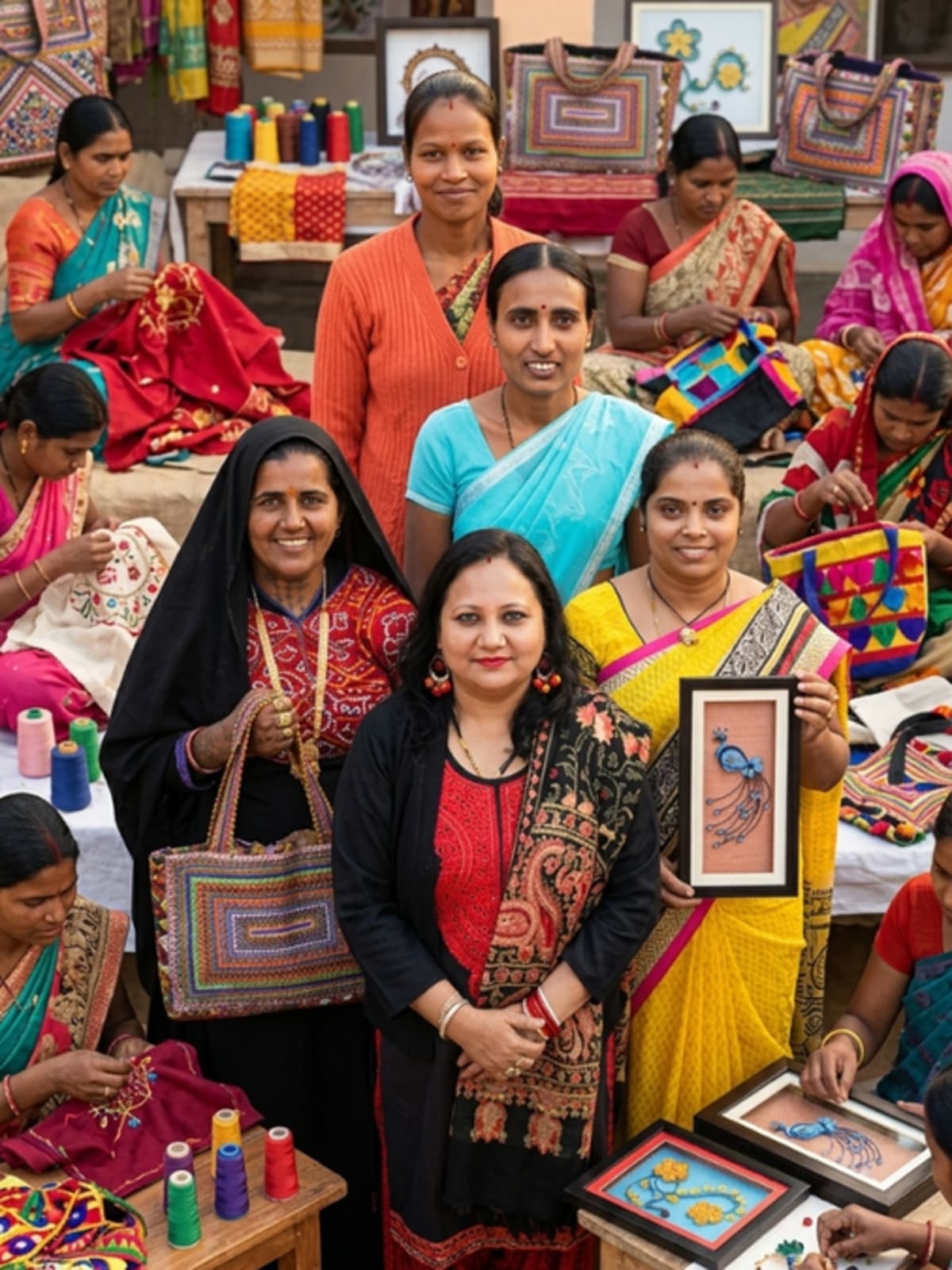
Imrana from Sikandarpur learned the craft on her family's sewing machine, watching neighbors perfect their technique. Today she's part of a village network where women sit together, share skills, and pass half-finished pieces from hand to hand. One woman starts the border work, another reinforces corners, a third adds finishing touches.
This informal apprenticeship costs nothing and fits around school pickups and meal preparation. When orders come in steadily, women can plan their work between household tasks and know exactly when to hand off each piece. The system works because everyone checks quality at handover points, ensuring that garments touched by five different hands look like they came from one skilled artisan.
Government support through India's One District One Product program brought sewing machines, small loans, and exhibition opportunities to Mainpuri's embroiderers. These resources helped women connect with buyers beyond local markets and participate in craft fairs where their work commands better prices.
The model proves especially powerful because it requires no factories, no commutes, and no childcare costs. Women earn while remaining anchored in their communities, and skills spread organically through observation and practice rather than expensive training programs.
The Ripple Effect
This neighborhood-based craft network is changing what economic opportunity looks like in rural India. When one woman learns a new border technique, she naturally shares it with the neighbors sitting beside her, multiplying skills without multiplying costs.
The steady work means predictable income that women control directly. They're not waiting for distant factory jobs or relying on seasonal agricultural wages. Instead, they're building a resilient local economy where traditional craft meets modern market access.
Quality remains high because reputation matters in close-knit communities. A sloppy corner or uneven border affects not just one worker but the entire network's credibility with buyers.
The success in Mainpuri is creating a template other regions are watching closely. It shows how women's traditional skills can generate sustainable livelihoods when paired with better market connections and simple quality controls.
Hundreds of women now earn from work that respects both their cultural heritage and their family responsibilities, proving that economic progress doesn't require leaving home behind.
More Images

Based on reporting by YourStory India
This story was written by BrightWire based on verified news reports.
Spread the positivity!
Share this good news with someone who needs it
%2Ffile%2Fattachments%2F2992%2F688635092_1403790941795291_6434669868162454614_n_856400.jpg)