Indiana Hospital Saves Patients $340K Through Drug Program
A rural Indiana hospital is using a federal drug discount program to keep cancer patients in treatment and seniors from choosing between groceries and prescriptions. Good Samaritan Hospital has redirected over $340,000 in savings directly to patients who couldn't afford care. ##
When Rob Meadows walked into Good Samaritan Hospital with side pain, he never imagined hearing the words "Stage 4 lymphoma" at age 40. But the diagnosis was just the beginning of his worries.
Cancer treatment would drain his savings, possibly forcing him to stop the medications keeping him alive. That's when a federal program called 340B stepped in and changed everything.
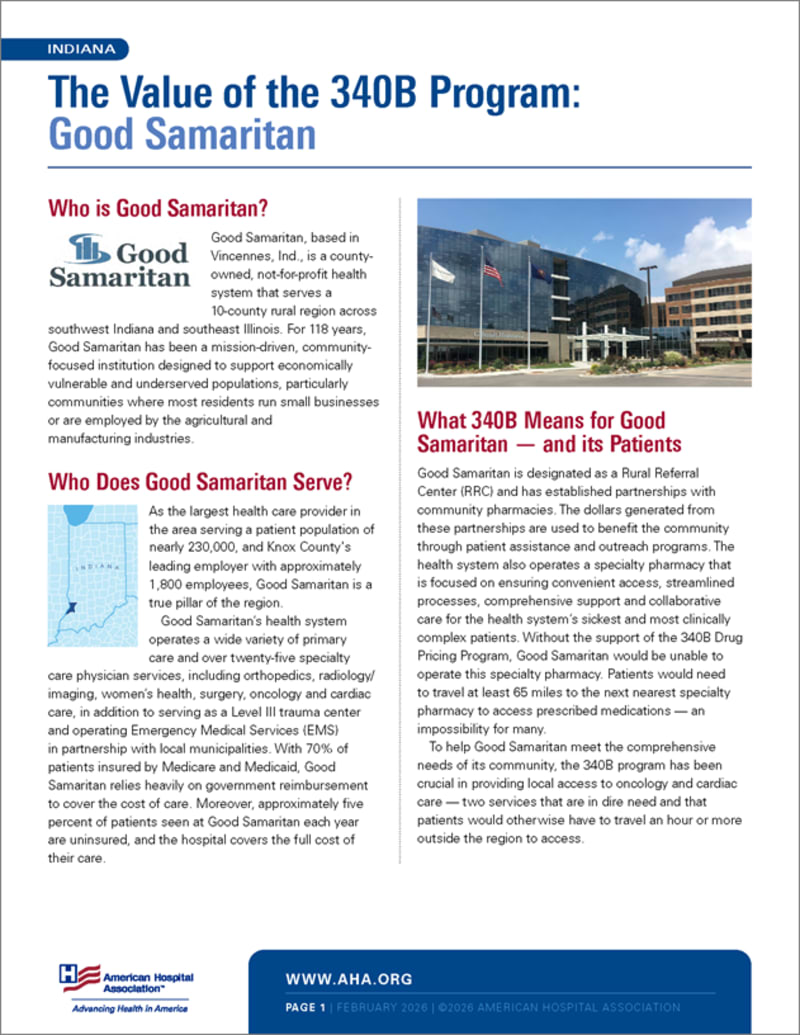
Good Samaritan Hospital in Vincennes, Indiana, serves 230,000 patients across 10 rural counties where most people work small farms or factories. Seven out of 10 patients rely on Medicare or Medicaid, and five percent have no insurance at all.
The hospital uses the 340B Drug Pricing Program to buy medications at reduced costs, then passes those savings directly to patients. Since April 2024 alone, they've contributed over $340,000 to help people afford wheelchairs, oxygen equipment, hospital beds, and lifesaving prescriptions.
For Rob, it meant continuing his cancer treatment without going broke. The discounted medication kept him fighting when he felt most vulnerable.
The program does more than help individual patients. Good Samaritan operates the only specialty pharmacy within 65 miles, meaning cancer and cardiac patients don't have to choose between treatment and a two-hour drive each way.
Hospital employees benefit too. Good Samaritan passes along discounted weight loss medications to its 1,800 workers, helping them stay healthy without insurance battles.
THE RIPPLE EFFECT
When one hospital stretches its dollars further, an entire region feels the difference. Patients stay in treatment instead of skipping doses. Families keep their homes instead of choosing between rent and medication. Workers stay healthy and productive.
Good Samaritan proves that smart programs can multiply care without multiplying costs. They're not just treating illness, they're preventing the financial disasters that often follow diagnosis.
Rob completed his cancer treatment and remains in remission. He's one of thousands who got care they desperately needed but couldn't afford, all because a rural hospital found a way to make medicine accessible.
When hospitals invest savings back into patients, everyone wins.
##
Based on reporting by Google News - Good Samaritan
This story was written by BrightWire based on verified news reports.
Spread the positivity!
Share this good news with someone who needs it