India's Anija Resort Brings Kayaking to Rural Odisha
A quiet village in Odisha has transformed into an eco-friendly adventure destination where visitors can kayak down the Nagavali River, trek through cashew plantations, and experience rural life without sacrificing sustainability. The resort employs locals and sources organic produce while protecting 500 trees across 30 acres.
A sleepy village in southern Odisha is proving that adventure tourism and environmental care can go hand in hand.
Anija Golf Resort sits along the Nagavali River in Rayagada district, where mango and cashew trees outnumber buildings. What started as one person's dream in 2012 has grown into a 30-acre retreat that preserved nearly 500 fruit trees while adding something new to rural India: river kayaking.
Visakhapatnam hospitality veteran Seshagiri Mantri spent years searching for untouched places perfect for water sports. When he found the Nagavali riverbanks, he saw potential that didn't require clearing forests or displacing communities.
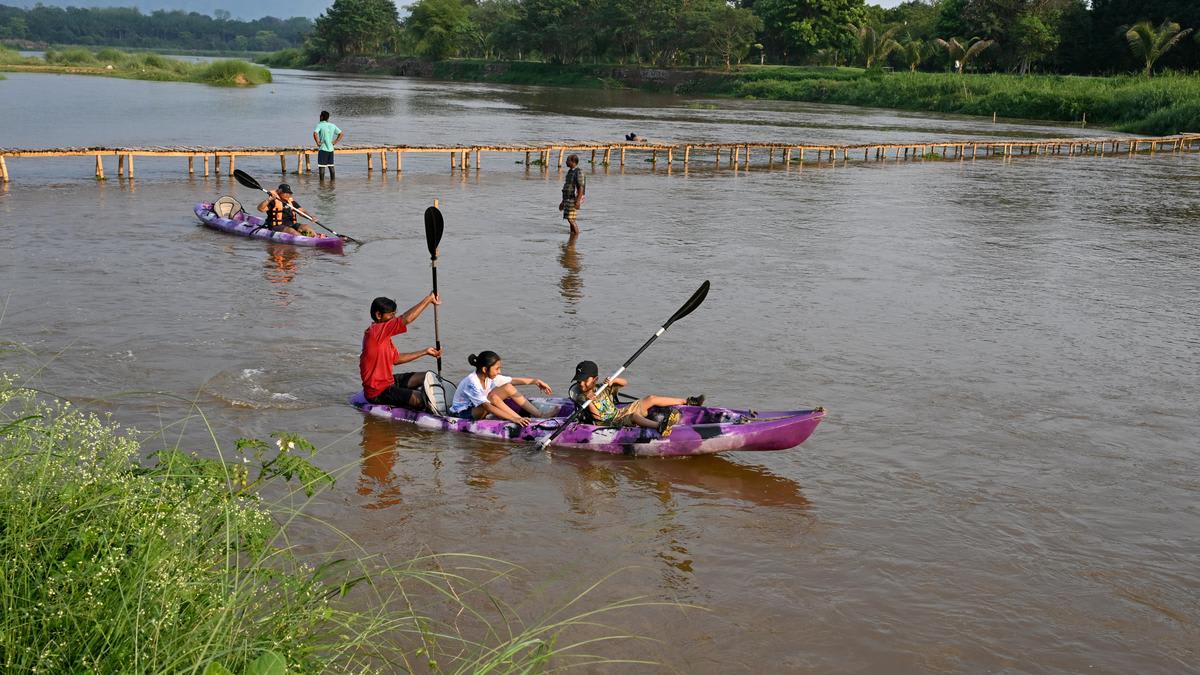
Today, the resort offers tandem kayaking on the gentle summer waters of the Nagavali. The river stays accessible during warmer months, making it ideal for beginners who've never held a paddle. Visitors also enjoy coracle rides, archery, volleyball, and ATV rides along the sandy banks.
A four-kilometer nature trail winds through nearby Vempallavalasa village, passing through paddy fields and cashew plantations before climbing 200 meters to a cave called Muggu Gruham. From that hilltop, trekkers can spot the Eastern Ghats rising in the distance and watch the Nagavali snake through the valley below.
The Ripple Effect
The resort's impact extends beyond vacation fun. Management works directly with surrounding villages to source organic vegetables and greens from local farms. Nearby residents fill employment roles, creating steady income in an area that previously relied solely on seasonal crops.
The sustainability focus runs deep. The organic garden supplies the kitchen, reducing food miles to nearly zero. The tree canopy provides natural cooling, cutting energy needs. Local employment means traditional knowledge about the land guides conservation decisions.
Day trips extend the adventure further. Jimidipeta waterfall sits 12 kilometers away, while the two-tiered Durgapadu falls cascade 200 feet during monsoon season 37 kilometers from the resort.
Summer temperatures hover around 32 degrees Celsius, but steady breezes from the river make outdoor activities comfortable. The setting offers something increasingly rare: a place to disconnect from screens and reconnect with slower rhythms.
What makes Anija special isn't just the kayaking or trekking. It's the proof that rural areas can attract visitors without destroying what makes them worth visiting in the first place. The resort demonstrates that protecting trees, employing locals, and growing organic food aren't obstacles to tourism—they're the foundation of something better.
Anija sits 175 kilometers from Visakhapatnam, accessible by road with Kuneru as the nearest railway station. The model is simple: preserve what's already beautiful, add thoughtful activities, and invite people to experience rural India at its most authentic.
Based on reporting by The Hindu
This story was written by BrightWire based on verified news reports.
Spread the positivity!
Share this good news with someone who needs it