India's Economy Grows From Colonial Decline to Global Leader
Nearly 80 years after independence, India has transformed from economic devastation under British rule to become the world's fastest-growing major economy. The country's GDP per capita has climbed from just 32% of the global average in 1940 to 46% today, with growth accelerating to 6.4% in 2026.
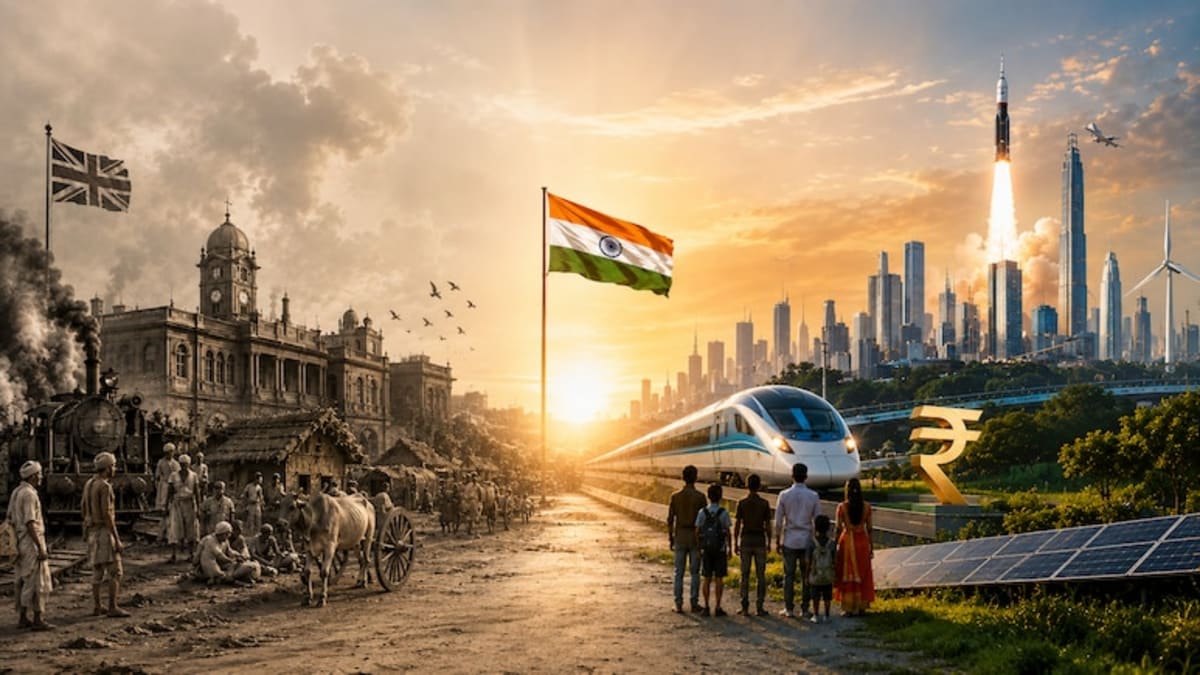
India is writing one of history's most remarkable economic comeback stories, rising from the ashes of colonial exploitation to become a powerhouse driving global growth.
The numbers tell a stunning tale of recovery. In 1820, before British control tightened, India's GDP per capita stood at 83% of the global average. By 1940, after decades of colonial rule, that figure had crashed to just 32%. The British Raj had systematically hollowed out what was once a thriving economy.
Independence in 1947 marked the beginning of a long climb back. Progress came slowly at first as the new nation grappled with the chaos of Partition and the challenges of building from scratch. But the foundation was being laid for something extraordinary.
The real turning point arrived in the early 1990s when India embraced economic reforms that opened doors to global markets. Growth took off like never before. By 2025, GDP per capita had recovered to 46% of the global average, nearly double what it was at independence.
Today, India isn't just recovering. It's leading. The International Monetary Fund projects India will grow at 6.4% in 2026, outpacing China at 4.6%, Brazil at 2.4%, and the United States at 2.3%. No other major economy comes close.
India's global economic footprint has exploded over four decades. The country accounted for just 1.6% of world GDP in 1980. Today that share has doubled to 3.3%, and projections show it crossing 4% by 2030. That growing influence translates into real power in global trade negotiations and international policy decisions.
The export story showcases this transformation perfectly. India's share of global merchandise exports languished below 1% until 2003. Now it stands at 2.52%, a transformation driven by everything from pharmaceutical supplies during the Covid pandemic to emerging manufacturing strength. Government initiatives like production-linked incentive schemes are accelerating this momentum.
With a nominal GDP of $4.15 trillion in 2025, India ranks as the world's sixth-largest economy. Japan and the United Kingdom sit just ahead in fourth and fifth place, their leads shrinking each year.
The Ripple Effect
India's resurgence sends waves of hope across the developing world. It proves that nations can recover from even the deepest economic devastation. Countries that suffered under colonial extraction now have a blueprint for rebuilding prosperity on their own terms.
The transformation also creates opportunities far beyond India's borders. As Indian consumers gain purchasing power, markets expand for goods and services worldwide. As Indian companies innovate and compete globally, they drive progress that benefits everyone.
The next frontier is translating rapid GDP growth into higher incomes and broader prosperity for India's 1.4 billion people. But the trajectory is clear: a nation once systematically impoverished is now lifting itself and others toward a brighter economic future.
More Images


Based on reporting by Google News - Economic Growth
This story was written by BrightWire based on verified news reports.
Spread the positivity!
Share this good news with someone who needs it