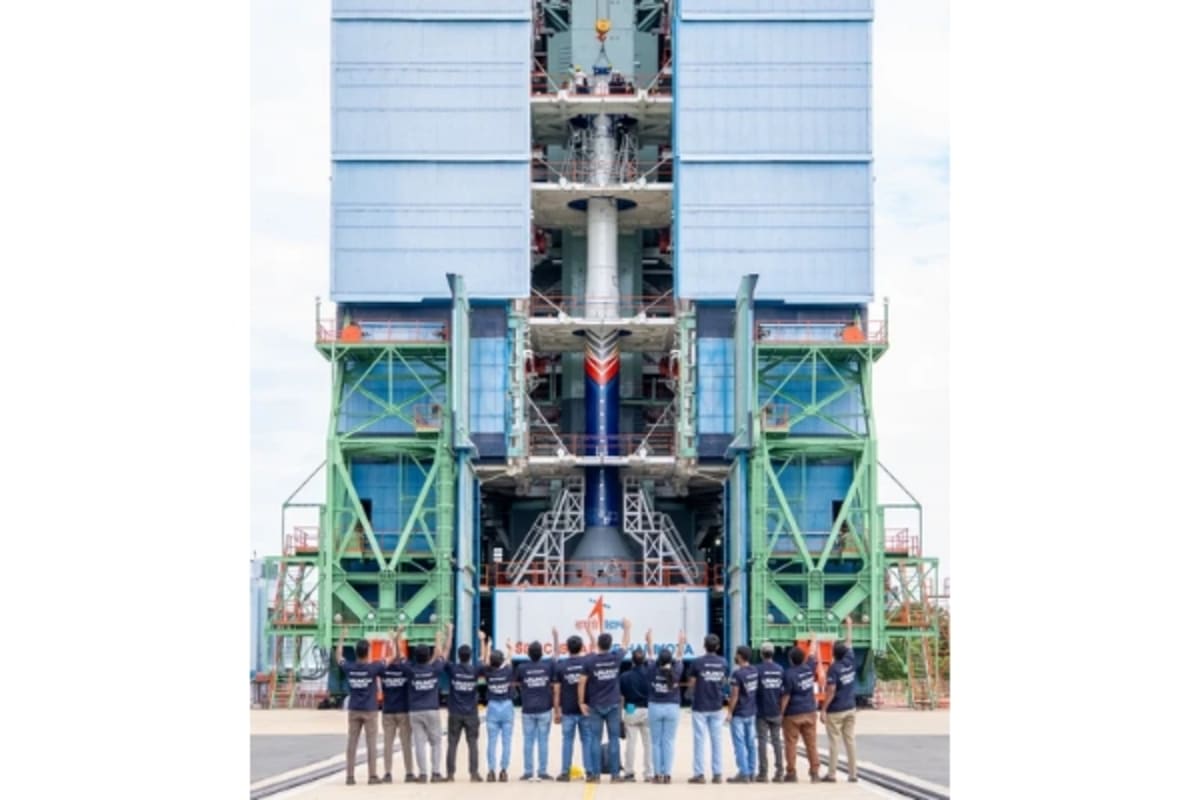
India's First Private Orbital Rocket Launches Successfully
Skyroot Aerospace just made history with India's first fully private orbital rocket launch, proving the country's space startups can compete on the world stage. The Vikram-1 mission deployed cutting-edge satellites and opened doors for affordable space access across the nation.
India just joined an elite club of nations with private companies capable of launching satellites into orbit, and the milestone arrived Saturday with a roar.
Skyroot Aerospace successfully launched its Vikram-1 rocket under Mission Aagaman, marking India's first completely privately developed orbital flight. The launch deployed multiple advanced payloads, including a robotic arm designed to remove space debris and Earth observation satellites that will deliver high-resolution intelligence.
The achievement places India alongside the United States and China as the only countries where private companies have reached orbit. Skyroot recently became India's first space technology unicorn, signaling strong investor confidence in the sector's future.
The mission carried three groundbreaking payloads into space. Cosmoserve Space's EMBRACE robotic arm will demonstrate technology for cleaning up dangerous orbital debris. Grahaa Space's SOLARAS S3 satellite will provide advanced Earth observation capabilities. Skyroot also tested its own SCOPE technology platform.
Lt. Gen. A.K. Bhatt, Director General of the Indian Space Association, called the launch a defining milestone that shattered legacy boundaries. He emphasized that Indian private companies demonstrated they can handle end-to-end space missions without government support at every step.
The Ripple Effect
The success will make space more accessible for Indian startups and researchers who previously relied on expensive international launch services. Lower costs mean satellite operators can deploy and refresh their constellations more frequently, dramatically improving the quality and timeliness of Earth observation data.
Emerging companies focused on practical applications can now afford dedicated satellite assets tailored to specific industry needs. This opens possibilities for improved agricultural monitoring, disaster response, climate research, and telecommunications across India's vast geography.
The launch sends a powerful signal to global investors that India's private space sector has matured into a competitive, bankable industry. With growing demand for small satellite launches worldwide, Skyroot's success positions India as a cost-effective alternative to established launch providers.
Space analytics firm Suhora Technologies noted the mission will enable more responsive launch services. CEO Krishanu Acharya highlighted how this breakthrough lowers barriers for downstream space applications, allowing more Indian innovators to participate in the space economy.
The achievement comes as India accelerates efforts to capture a larger share of the global space market, which analysts project will exceed $1 trillion by 2040. Private companies now complement the Indian Space Research Organisation's work, creating a dynamic ecosystem where innovation thrives.
India's space journey just entered an exciting new chapter where private ambition meets national capability.
Based on reporting by Google: space mission success
This story was written by BrightWire based on verified news reports.
Spread the positivity!
Share this good news with someone who needs it