
India's Floating National Park Shelters Earth's Last Sangai
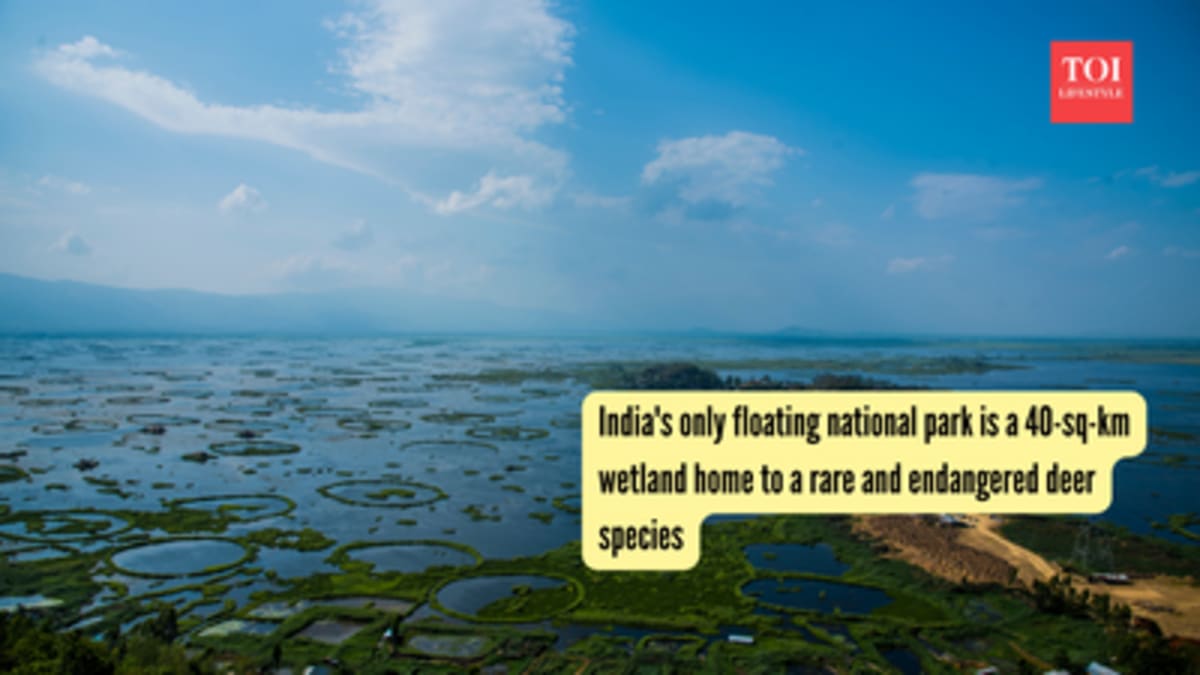
A 40-square-kilometer wetland that actually floats on water is protecting a deer species found nowhere else on Earth. Keibul Lamjao National Park in Manipur is the world's only floating national park and the last home of the endangered Sangai deer.
Imagine walking through a forest where the ground beneath your feet rises and falls with the water below. This isn't fantasy—it's Keibul Lamjao National Park in Manipur, India, the only floating national park on the planet.
Located on Loktak Lake about 50 kilometers from Imphal, the park drifts atop massive floating mats called phumdis. These aren't ordinary islands—they're living carpets of decomposed plants, soil, and organic matter that shift with the lake's water levels while supporting entire ecosystems.
The park's most precious resident is the Sangai, a graceful brow-antlered deer that locals call the "dancing deer" for its elegant gait. This isn't just rare—it's the species' last natural habitat anywhere on Earth. After near extinction, conservationists established the sanctuary in 1966, upgrading it to national park status in 1977.
Ancient legends surround these gentle creatures. One tale tells of a prince from Manipur's Luwang clan who transformed himself into a Sangai. Another recounts how a hero gifted his beloved a pregnant Sangai, releasing her into Keibul Lamjao's wilds—supposedly the ancestor of today's population.
The Ripple Effect
The floating ecosystem does far more than protect one deer species. Hog deer, otters, fish, and diverse plant life thrive among the phumdis, while surrounding communities depend on Loktak Lake for fishing and farming. This delicate balance shows how protecting wildlife directly supports human livelihoods.
UNESCO has placed the Keibul Lamjao Conservation Area on its Tentative List for World Heritage recognition. The designation acknowledges what makes this wetland globally important—not just its uniqueness, but its proof that nature can create solutions we'd never dream possible.
The park covers the southern edge of Loktak Lake, northeast India's largest freshwater lake. The phumdis keep the lake's ecology balanced through their constant, gentle movement across the water.
Nature quietly built something impossible here—a forest that floats, sheltering life found nowhere else.
More Images



Based on reporting by Times of India - Good News
This story was written by BrightWire based on verified news reports.
Spread the positivity!
Share this good news with someone who needs it


