India's Hillside Wellness Center Works With Nature, Not Against It
A new wellness complex in Maharashtra proves luxury doesn't have to fight the landscape. By stepping down a coastal hillside instead of flattening it, architects created a sustainable retreat that actually enhances its surroundings.
A stunning new wellness center in India is showing the world how to build with nature instead of bulldozing through it.
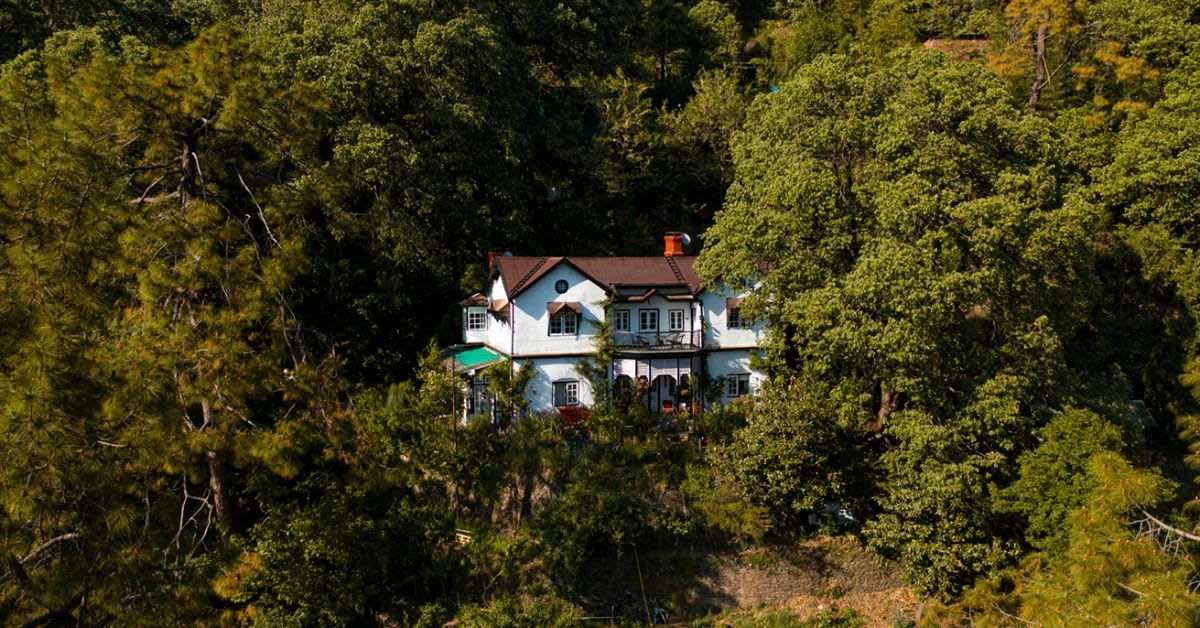
Crest Nine, designed by Sanjay Puri Architects, opened in January 2026 on a steep coastal hillside in Anjarle, Maharashtra. Rather than cutting into the hill to create flat building surfaces like traditional construction, the architects let the building cascade down the natural slope in a series of graceful curves.
The result is a 32,000 square foot complex that feels like it grew from the landscape rather than was imposed on it. Curved buildings connect through landscaped courtyards and ocean-view decks, creating a rhythm between built spaces and natural openings.
The entrance sits at the top of the hill, keeping the full scale hidden from the road. Visitors descend via curved ramps and staircases, gradually discovering the facility as they move through it.
Inside, the complex houses an indoor sports room, gymnasium, restaurant, bar, and four guest suites. The lower level features three swimming pools, a health club, cafeteria, and multifunctional deck, all accessible through a dramatic circular courtyard wrapped by an open staircase.
The architects used locally sourced laterite stone for the walls, giving the building texture and regional character. Deep overhangs protect outdoor spaces from intense sun and monsoon rains, while the metal roof completes the climate-responsive design.
The Bright Side
About 70% of Crest Nine's spaces don't need air conditioning. Natural ventilation, strategic sunlight placement, and passive cooling keep most areas comfortable year-round, dramatically reducing the complex's carbon footprint.
The project took just over four years to complete at a cost of $3.08 million. By prioritizing natural systems over mechanical ones, the designers created a luxury destination that treads lightly on its environment.
Landscaped pockets throughout the center draw light, air, and movement into interior spaces. These green areas don't just look beautiful; they actively cool and ventilate the building while encouraging social interaction.
This approach to architecture offers a blueprint for development in challenging terrain. Instead of dominating steep sites with massive retaining walls and flat platforms, buildings can work with existing topography to create something more beautiful and sustainable.
When architecture listens to the land, everybody wins.
More Images


Based on reporting by New Atlas
This story was written by BrightWire based on verified news reports.
Spread the positivity!
Share this good news with someone who needs it