India's Monsoon Love Songs Still Echo After Centuries
In North India, women have sung Kajari folk songs every monsoon season for hundreds of years. These ancient melodies turn rain, longing, and nature into music that keeps communities connected.
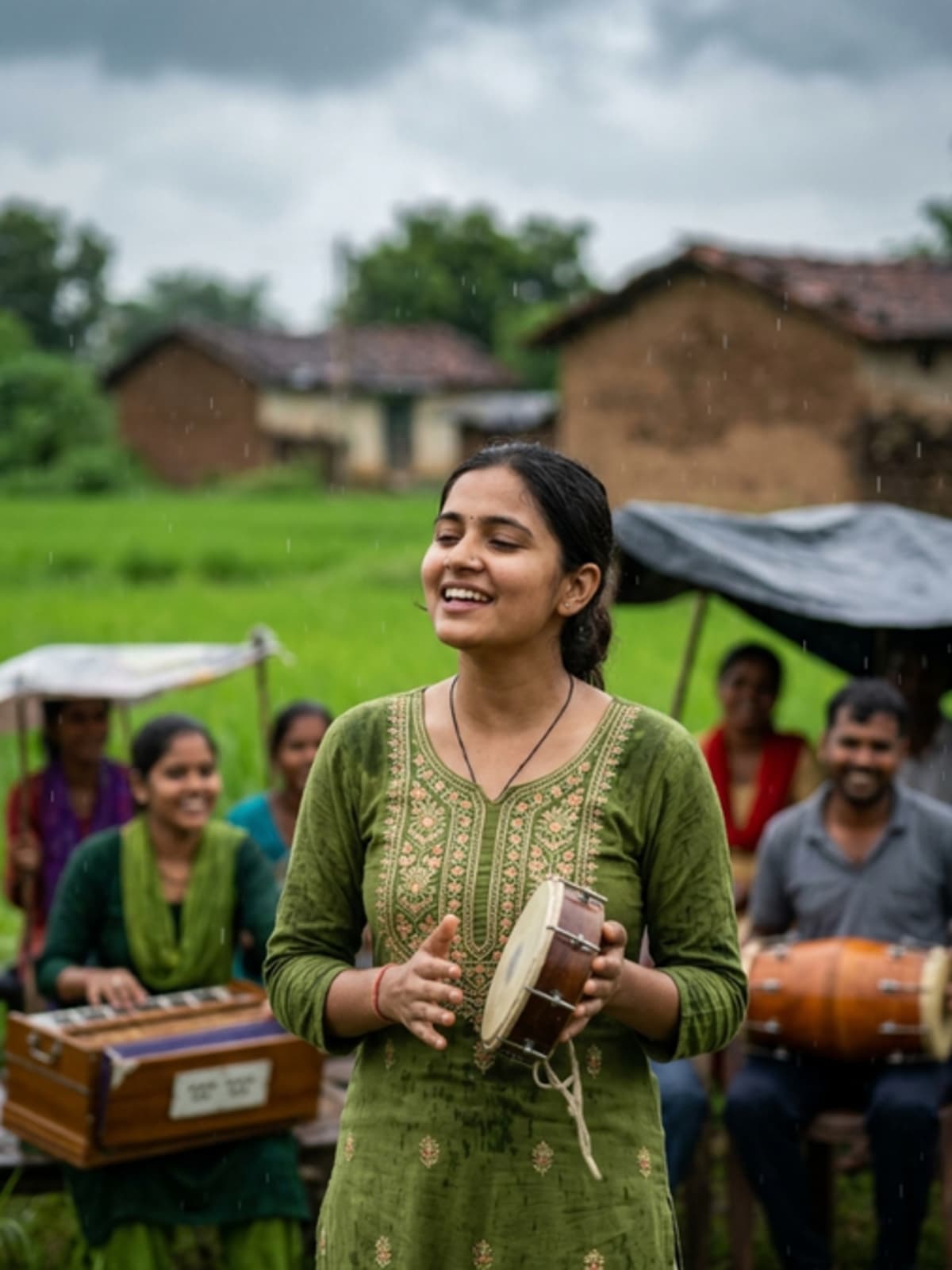
When the monsoon clouds gather over North India each year, they bring more than just rain. They carry the voices of women who have sung the same melodies for centuries, weaving stories of love, loss, and hope into songs called Kajari.
Kajari is a folk music tradition born in the fields of eastern Uttar Pradesh and western Bihar. Women created these songs while working the land during Sawan, the monsoon month, when fresh rains brought life back to their crops and communities.
The name itself tells a story. Kajari comes from kajra, the dark kohl that mirrors the deep gray of rain clouds. Some locals also connect it to Kajali Devi, a goddess worshipped near Mirzapur, making the tradition both cultural and spiritual.
These weren't songs written for stages or recorded in studios. Women sang them in courtyards and rice paddies, their voices rising as they planted seeds and watched the earth drink in the monsoon. The music moved with the rhythm of their work and the seasons.
Many Kajari songs speak of viraha, a Hindi word for the ache of separation. They tell stories of women waiting for husbands who left for distant cities to find work, a reality that echoed through generations of rural life. Rain becomes both a comfort and a reminder of absence.
In these songs, nature speaks. The papiha bird, peacocks, and even crows become messengers carrying words between separated lovers. The natural world doesn't just provide scenery; it becomes part of the conversation, bridging impossible distances.
Why This Inspires
Kajari has survived entirely through oral tradition, passed from grandmother to mother to daughter. No written scores, no formal recordings for most of its history, just voices teaching other voices. In doing so, these songs preserved local dialects, farming wisdom, and emotional truths that might otherwise have disappeared.
Today, as monsoon season arrives, Kajari still fills village courtyards across North India. Modern life hasn't silenced these ancient melodies; instead, they remind new generations that rain carries memories, hope blooms with the harvest, and some stories are too powerful to forget.
The songs prove that the simplest traditions, born from daily work and honest feeling, can outlast empires and centuries alike.
Based on reporting by The Better India
This story was written by BrightWire based on verified news reports.
Spread the positivity!
Share this good news with someone who needs it